Kader Attou and his Cie Accrorap is one of the foremost representatives of French hip hop/contemporary dance.
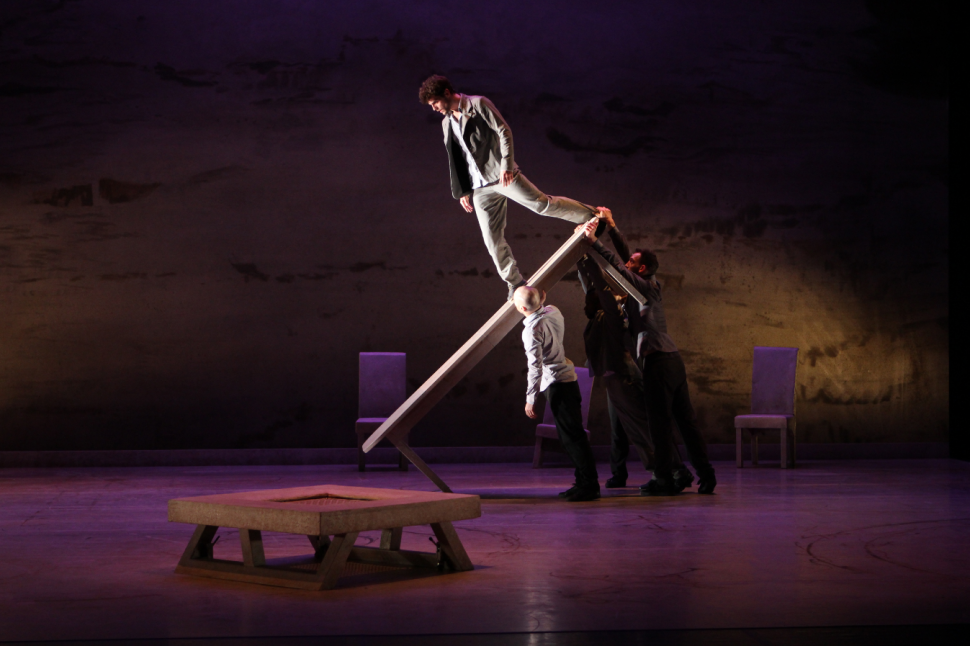
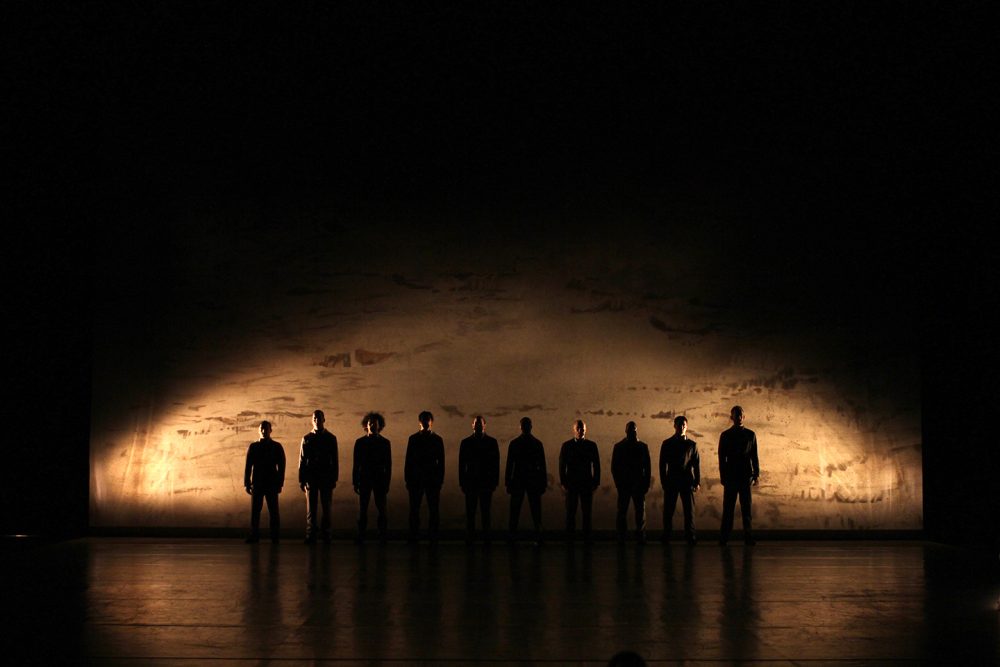
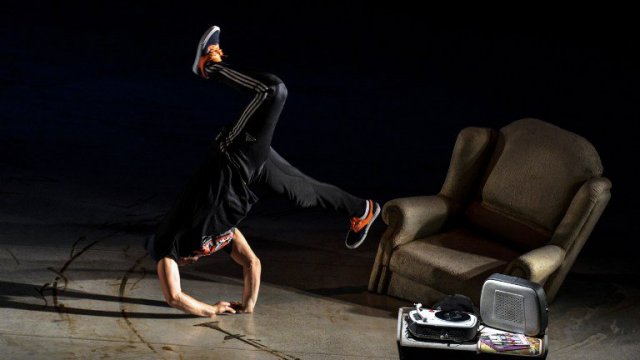
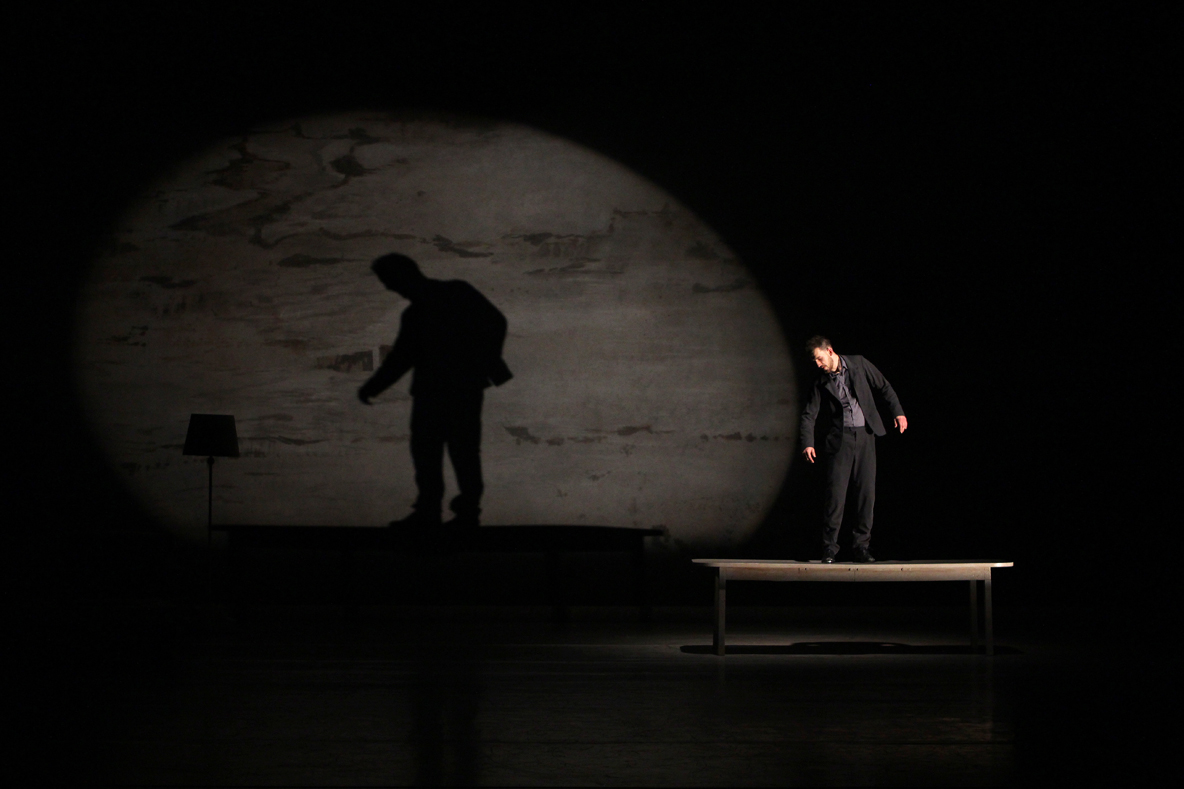
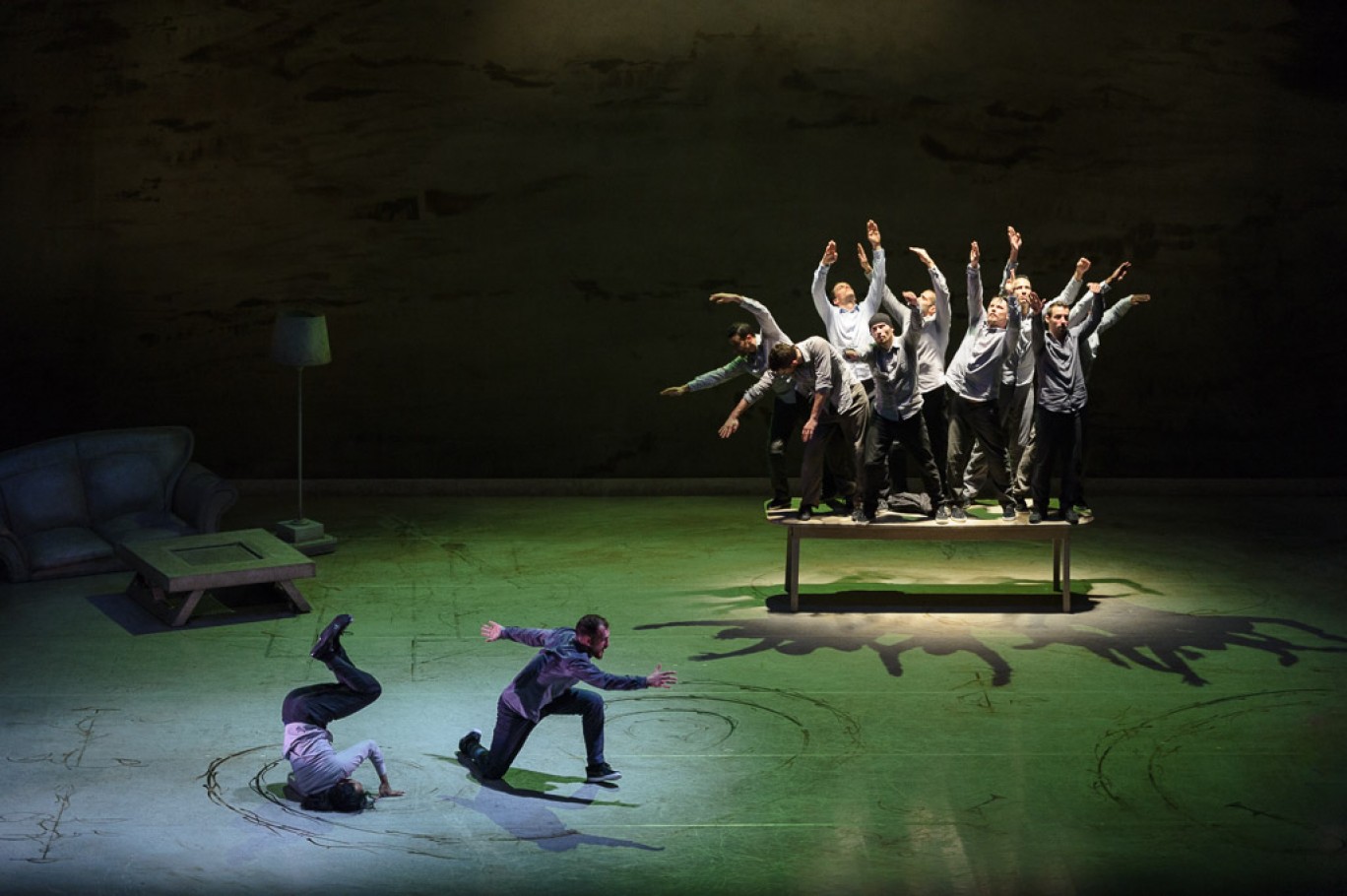
Their dance expression is a synthesis of street dance, acrobatics and contemporary dance. The Roots treats us to 11 exceptional dancers on stage, each with a particular style. The universe on stage is made up of everyday things – a table, an LP crackling on a turntable – childhood memories. The music plays a key role as it moves and convenes the dancers: Brahms, Beethoven, and electro-funk – the melodies open doors to a community in the dance. The Roots is an explosive performance, like a journey into the core of street dance: physical accomplishment, cohesion and dancing pleasure.
Creation 2013
Artistic director and Choreographer : Kader Attou
Cast : Babacar “Bouba” Cissé, Bruce Chiefare, Virgile Dagneaux, Erwan Godard, Mabrouk Gouicem, Adrien Goulinet, Kevin Mischel, Artem Orlov, Mehdi Ouachek, Nabil Ouelhadj, Maxime Vicente
Scenography : Olivier Borne
Original sound creation : Régis Baillet – Diaphane, along with additional music
Lights: Fabrice Crouzet
Costumes designer: Nadia Genez
Length : 1h30
Piece for 11 dancers
*Light, sound and stage technicians Fabrice Crouzet
Czech Theater DNA Award 2016 HERALD ANGEL AWARD 2015
AUDIENCE AWARD AT BE FESTIVAL 2015
MESS FESTIVAL AWARD 2015
TOTAL THEATRE AWARD 2015
NOMINATION Dance Piece of the Year Prize 2014
Theater News Prize 2014
Best Light Design 2014
Directed by: Jiří Havelka;
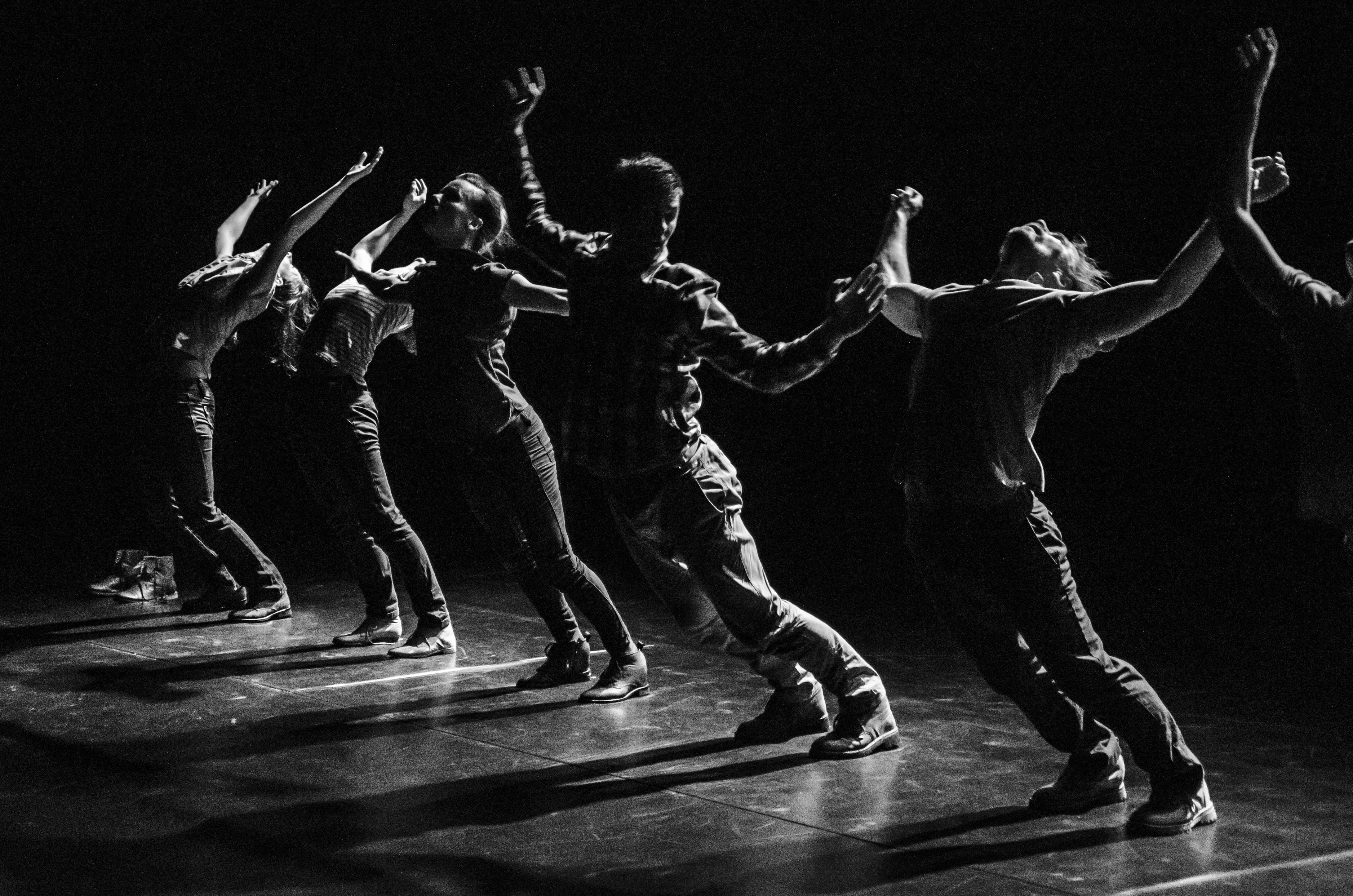
Choreography and dance: Veronika Knytlová / Marta Trpišovská, Tereza Ondrová / Soňa Ferienčíková, Martina Hajdyla Lacová / Helena Arenbergerová, Karolína Hejnová / Sára Arnsteinová, Petr Opavský / Michael Vodenka, Robo Nižník, Jaro Ondruš / Rado Piovarči;
A – Presentation of the collaboration by Golnaz Behrouznia
A1
Studio 8 contacted me by showing its interest in my visual universe and my space installation.
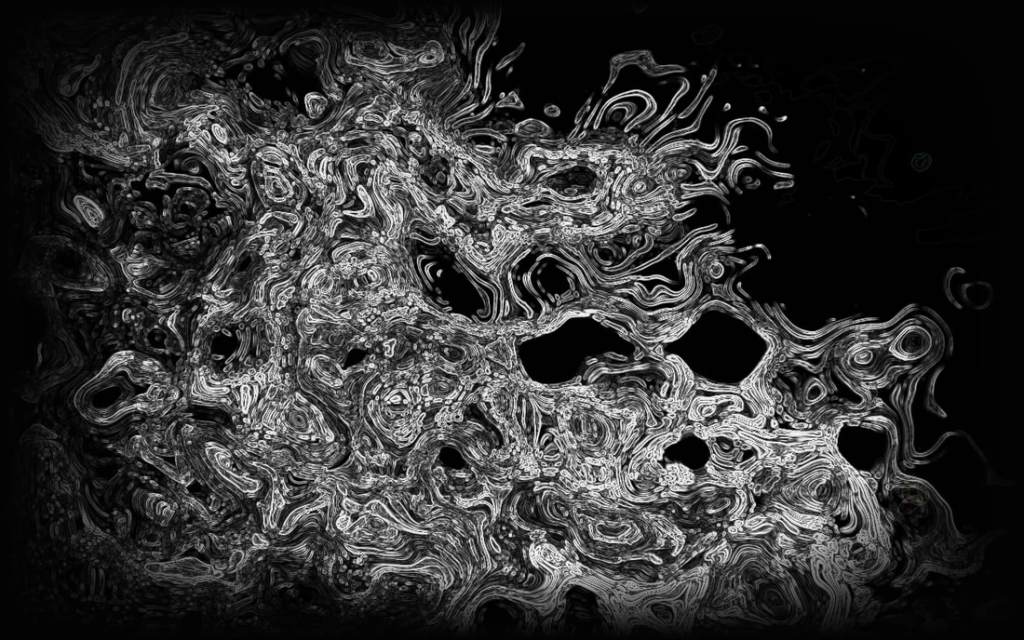
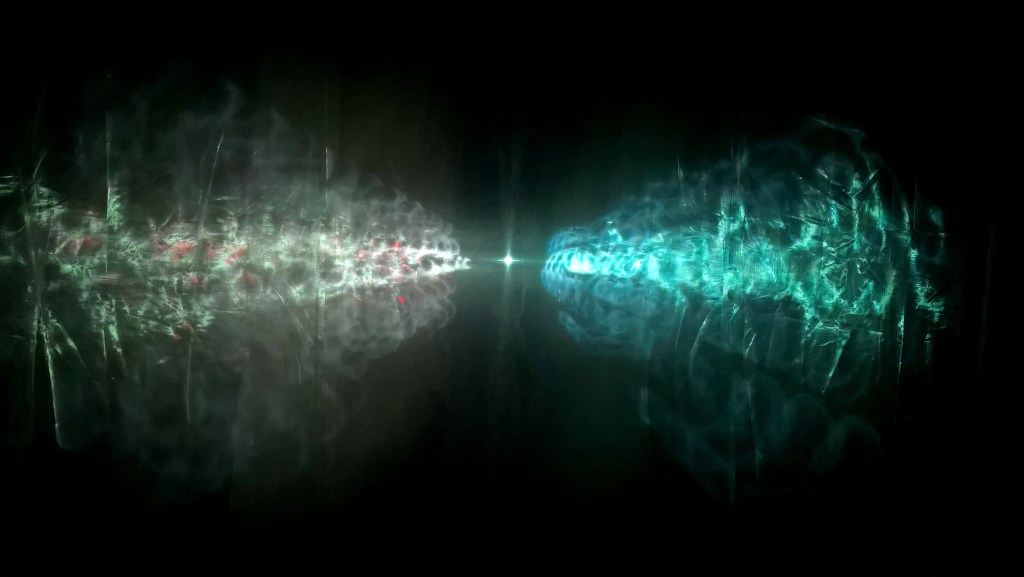
I have visual work related to organic shapes, curves, aquatic environment, microscopic world or environments.
My mediums are between sculpture -drawing in motion -video or multimedia installation.
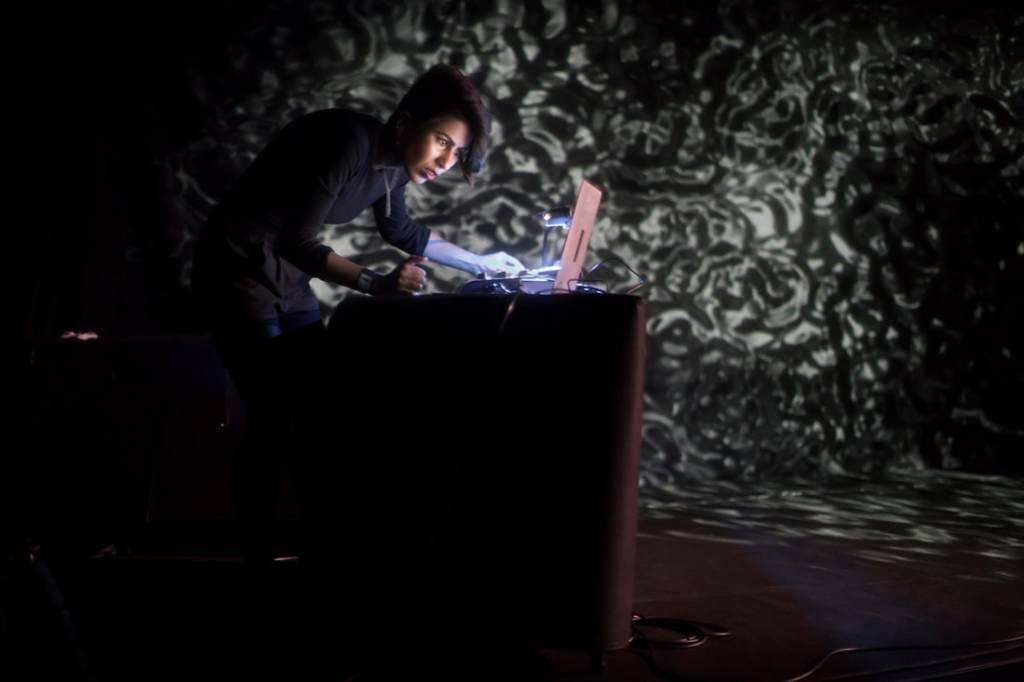
In my multimedia installations, the video projection has always faced a support in sculpted volume, thus seeking to give an embodiment to its contents related to life.
It is a meeting of plastics and digital materials and practices.
A2
I proposed to Studio 8 to work on Time out of Time with the sound artist and computing designer François Donato my partner in Imaginary Systems, with whom we have conducted several collaborations in connection with my universe. Our works have already met several times and there is a coherence that can be established.
François Donato is inspired by and interested in Studio 8’s project, he agrees to join the project. Thus the collective Imaginary Systems will collaborate with Studio 8 in the creation of the show Time out of Time.
A3
Imaginary Systems, echoing Studio 8’s project with its concept and choreography around liminality theme, will bring its visual creation, its scenic thinking, its sound creation by the two artists with above all the perception and the artistic line of the project team, for realization of the work Time out of Time worked out by Ab Al Hadi.
The whole work cannot be created and developed for the preliminary presentation of 2019 August 25, but only a part for it with a duration of about 30 minutes. The time is very short to interact/dig/create in an advanced way.
B – Golnaz Behrouznia ideas for the visual aspect & the stage
For the project that Studio 8 wants to address with my visual work on the theme of Liminality and all that derives from this concept, I think of a real influence of the image on the reading of choreography, of a tangle of choreographic work and my images because the two constitute together visual matters of the stage.
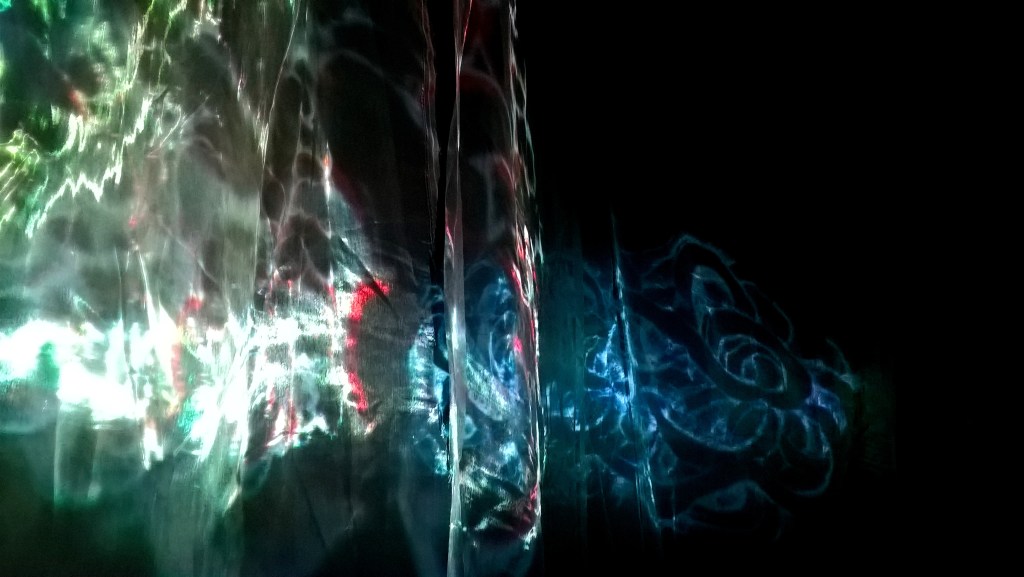
In the performance Time out of time, I think the image creates a virtual set for the stage. By building spaces, performance environments, by showing thresholds, by setting up partitions in the stage, we can set up a universe that transports the audience in its perception of dance nested in the images.
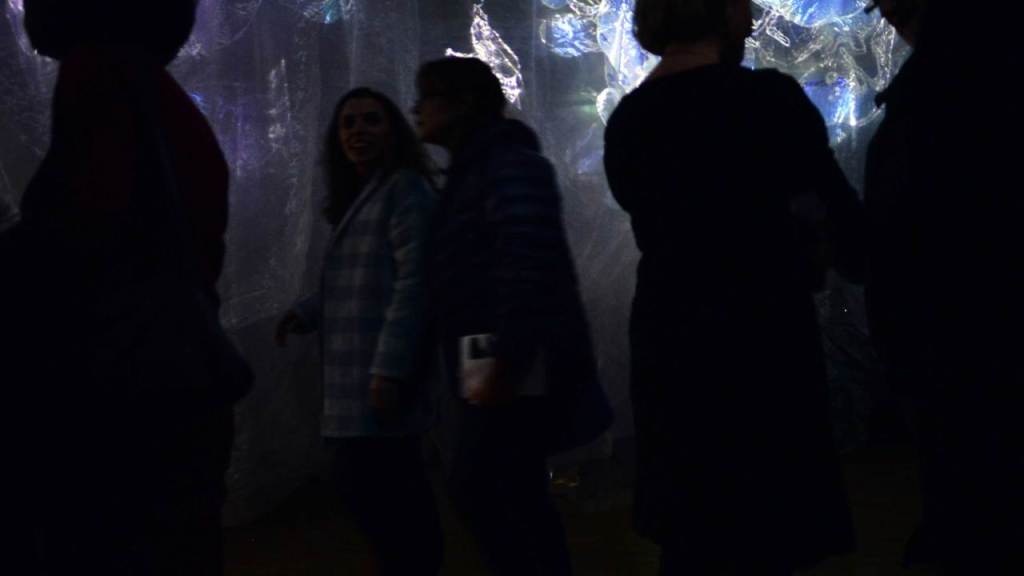
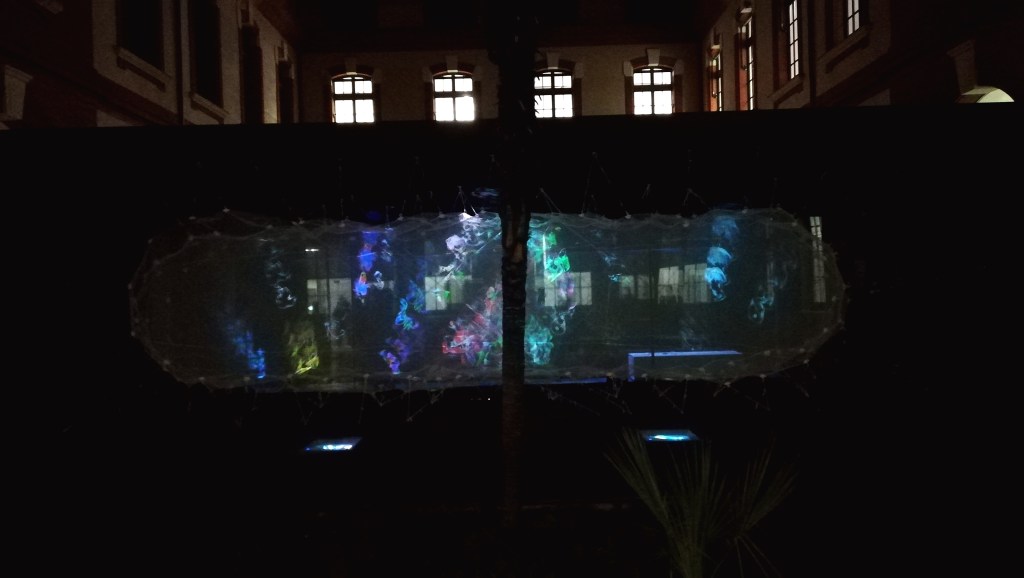
3 levels of tulle or fabrics on the stage should be arranged in parallel with the stage, in connection with the choreography and the structure of the show. These fabrics can partially cover the stage in various places, some of them may use the total width.
The dancers can find themselves, in front between and behind the fabrics, depending on what we decide together between the image, the choreography and the sound.
A strong relationship of the image with sound makes the scene credible and embodies the universe of the decor. Sound gives a reality to the evolution of the image. They echo each other.
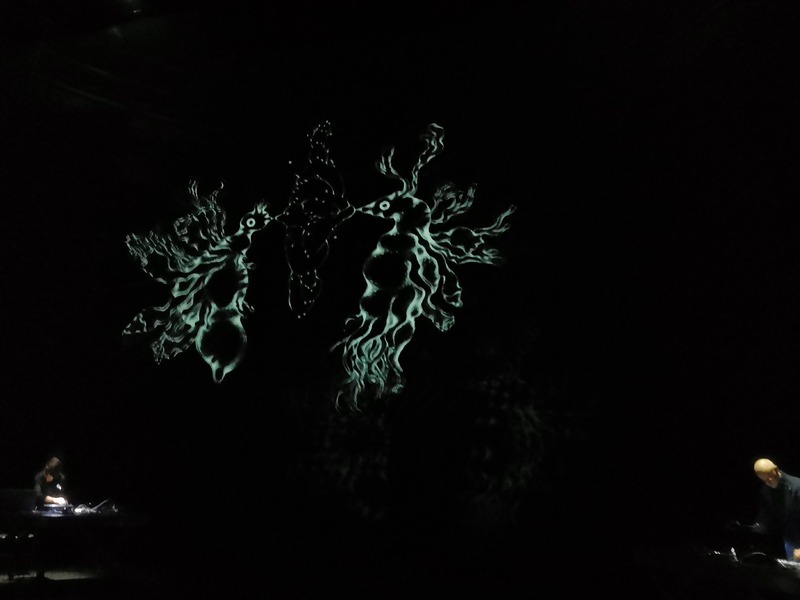
The images created by the videos are of two kinds: from drawings in motion and from materials generated by computer.
For drawings and shapes, more exchanges with Studio 8 can inspire me to design them more in tune with this team.
These images create fluid spaces in waves and movements on the stage.
At certain moments they can create 2 different environments at the same time.
Luminality influences me on the question of very delayed rhythms on various phases. Expressive climbs with slow calms.
There will be a sense of floating. Vertigo at times. Abstract materials. Aerial or liquid: as if sometime the performers were in a sea or on the contrary under fluid clouds.
The images create sorts of entrances, mouths in the space of the stage.
C – François Donato thoughts about sound and liminality
Liminality
-> emergence
-> threshold, limit between two states
-> void and appearance
-> instability / stability
-> identity
The liminality would be simultaneously a place and a time that mark the possible transition from one state to another, at the psychological, relational level in particular. It is the breaking of a previously well-established continuum that reveals the possibility of change, a reconfiguration of the context and the exchanges that take place there.
In the multimedia choreographic project Time out of Time, the presence of a composed sound creation can articulate around this notion by working more specifically on the following situations:
emergence of sound from silence: an appearance process that does not involve development but merely implies an initial energy that can generate movement (note that the image can also function on this principle);
the transition thresholds between a sound presence given by the dancers on stage and its extension and development in a composedd sound broadcast on loudspeakers.
The process of organising a noisy and immersive sound material to articulate a musical writing, especially rythmic, or the appearance of a spoken speech, of a real situation. In particular it would be interesting to go and record, capture sound environments of Amman that bear the traces of identities and struggles that cross this region of the world.
Even if it is not a question of politicizing an artistic discourse or of falling into the literality of identity claims, I find it interesting to look for contexts where particular sound elements reveal both cultural roots and social reality.
Of course these tracks have to resonate with the visual and choreographic work. It will therefore be necessary to highlight the specificities of the writing of the sound according to the orientations chosen in common in order to avoid unnecessary redundancy between the elements of the show and to give priority to the openness of the imagination, the multiplicity of possible references and semantic complexity.
The sound must come here to weave the possible reference context of what happens on the stage, both in the action of the bodies and in the writing of the images. Whether this context is a reality from the outside brought back to the stage or the development of a dreamlike universe that extends beyond it, the dynamics of gestures and images.
From a device and performance point of view :
We can envisage at this stage both a fully determined composition with fixed durations and a generative composition, some aspects of which may vary from one performance to another. This will depend on time and financial conditions, the second solution requiring a greater investment of time and on-site presence.
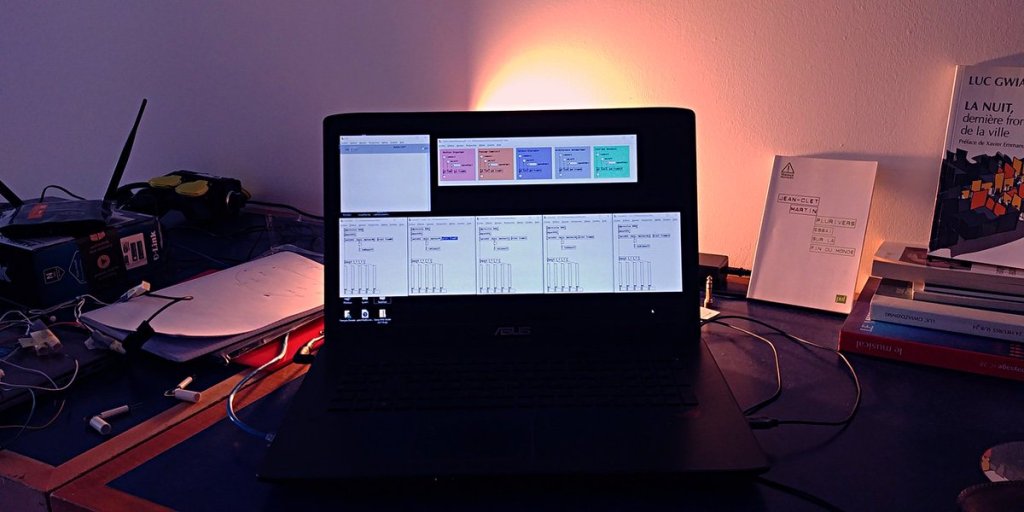
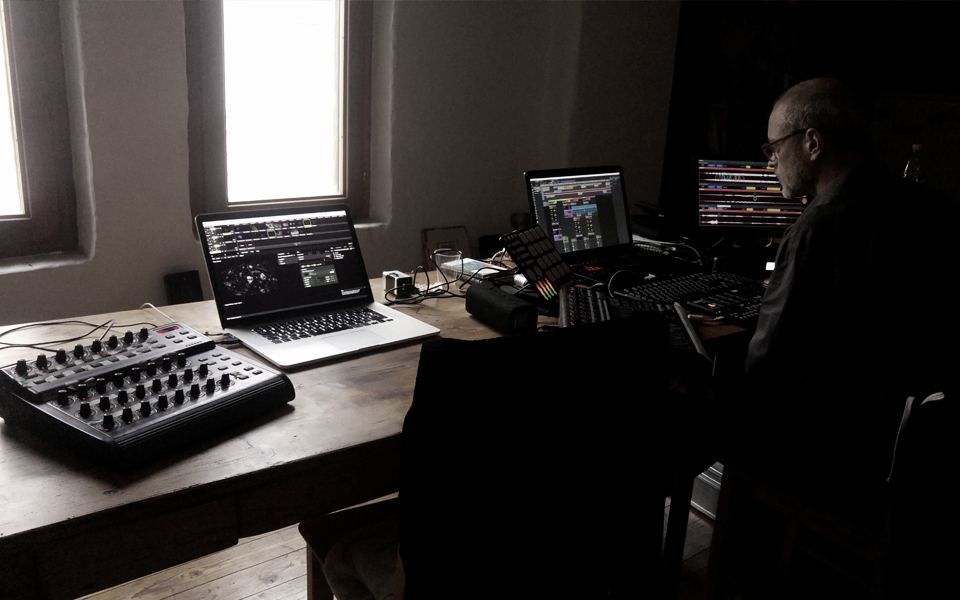
In any case, it is surely preferable to think of a complete integration of image and sound diffusion within a software environment such as MaxMSP or Touch Designer or Hollyhock Factory.
From these dissemination tools, we can also imagine a direct link between bodies in motion and the behaviour of sounds and images. A form of interaction can be defined that would allow choreographic writing to change the course of visual and sound continuity by choosing in real time from among several possible options. This can be established quite simply and inexpensively with a set of piezzo sensors connected to the inputs of an Arduino board that would send this information to the computer.
Another element of the device is essential for the sound dimension, it is the choice of a multichannel diffusion system allowing at the same time a very localized and immersive writing in order to extend the main notions to the entire space of the representation.
D – A multimedia Timeline
To create visual materials that echo Studio 8’s project and interact with François’ sound materials to have things on hand when I come to Jordan in July.
We see together, we test, so I continue adapting and finalizing these subjects in interaction with the choreography.
The choreography on its side, adapts and reinvents itself according to the visual and sound subjects for the stage in order to create a true creation and a coherence. The sound work is for me a soul to the whole visual scene: the image device + the choreography.
I finalize my work until the end of July for a delivery in
August.
François Donato finalises the sound work on his side and integrates the visual and sound materials in his interface for the first presentation on August 25th .
E – Imaginary Systems preliminary statements
Scenography:
Floating fabrics, carrying moving images, are consistent with the notions of threshold and passage derived from the one of liminality.
Audio and visual echoes with concepts and choreography:
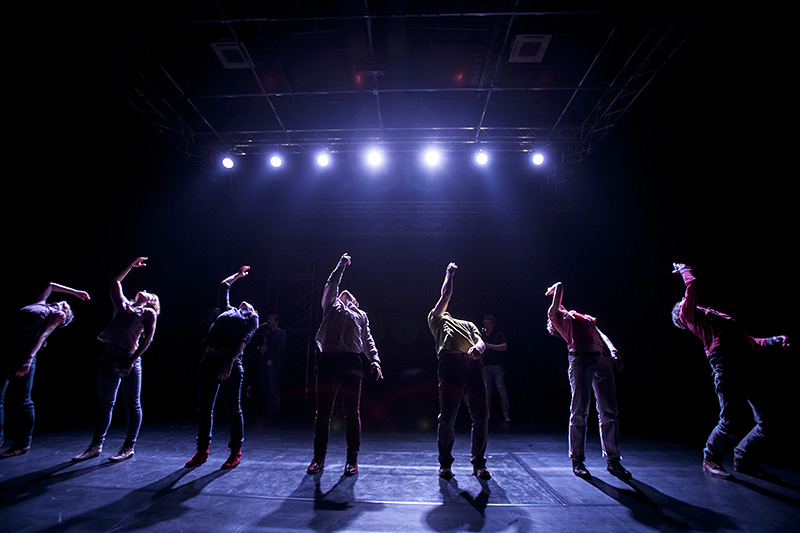
Seein the work of Ab Al Ali noted on the online sketchbook about ideas of movements and positions of the dancers, it appears quite clearly that it is a matter of starting from fairly simple and stable situations, often online disposal, which are modified by an imbalance that triggers movement.
This is consistent with our idea of differentiating spaces on the stage through the projection of images.
The idea of fluid materials in evolution of mass, speed and density is echoed in François’ proposal to work on the processes of organising a noisy material (the background noise of our society of communication ?)
towards well-defined musical structures (related to structured language).
The notion of passage, or threshold, being evidenced by the round-trip between the two states with variable mutation processes in speed and density.




 Time out of Time: