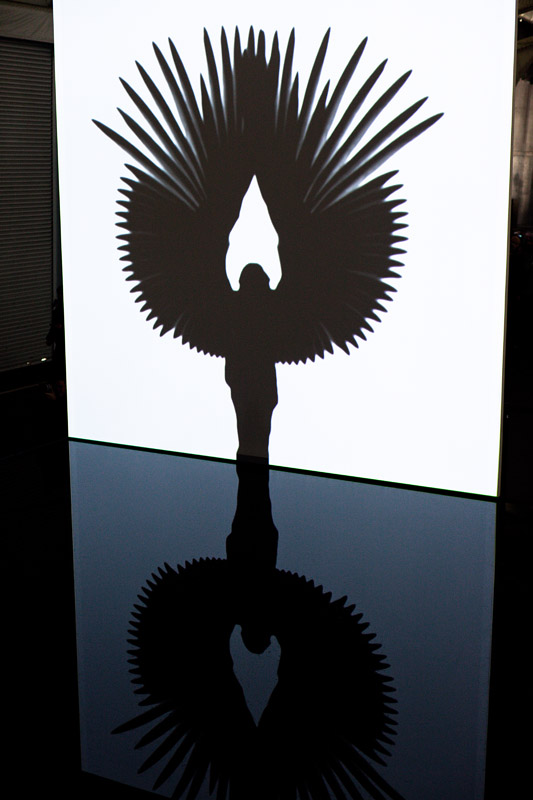
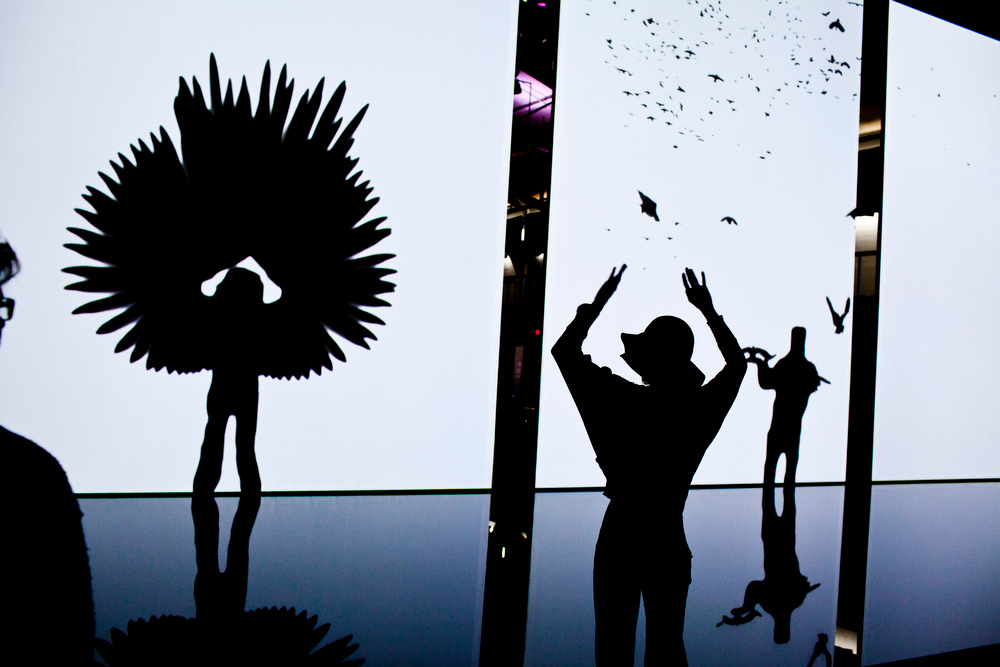
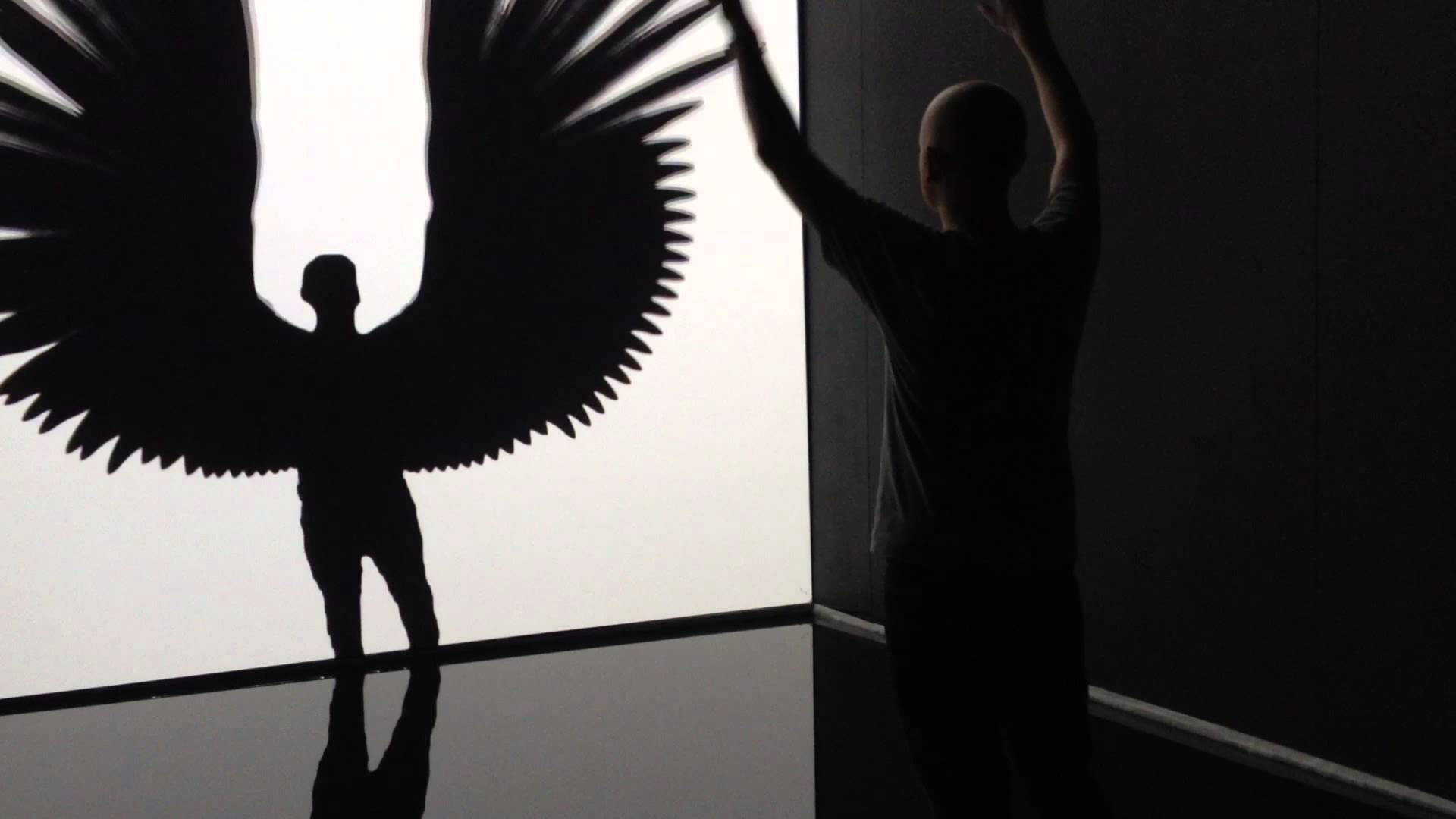
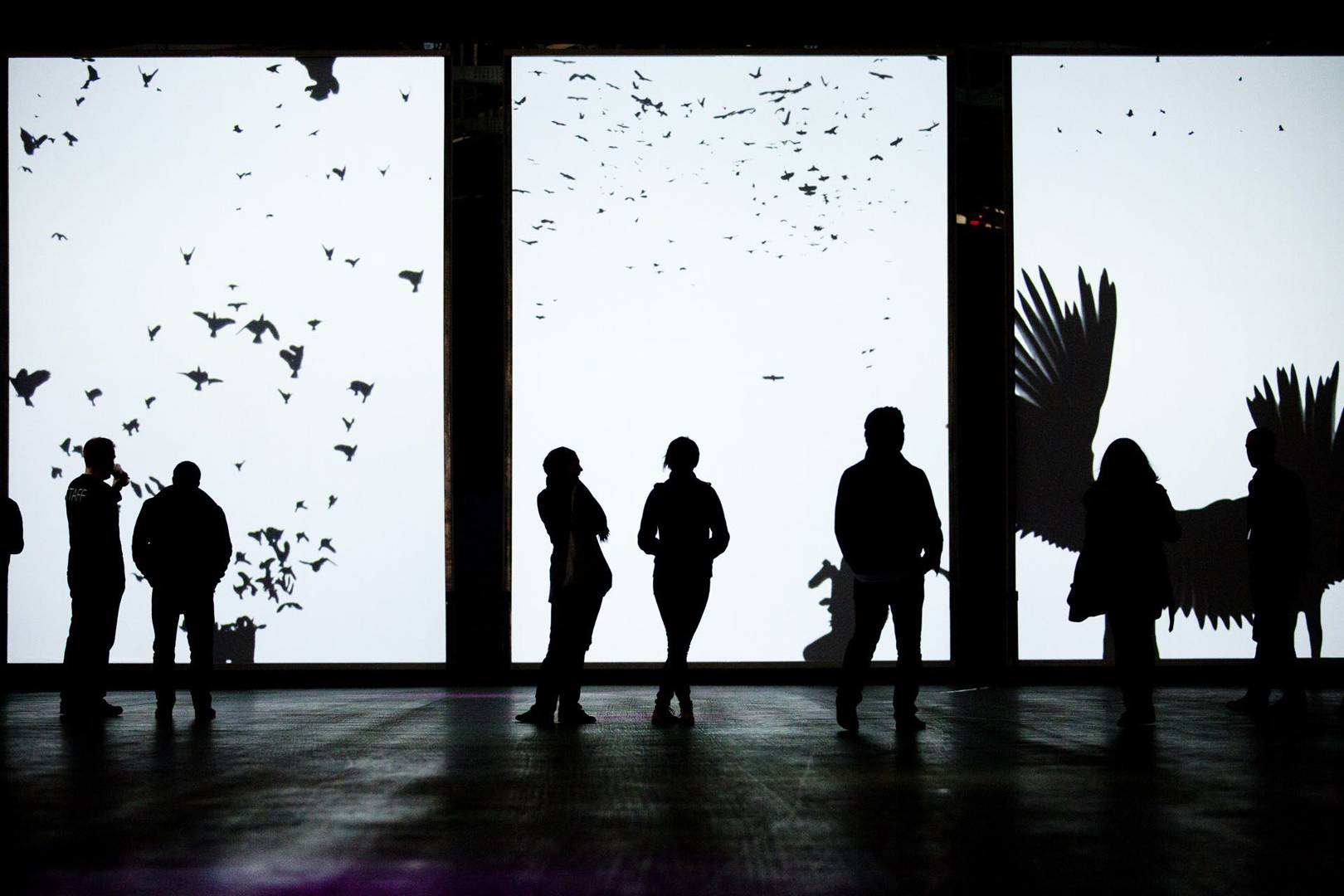
Milks’ 2012 project, The Treachery of Sanctuary, is a giant triptych that takes viewers through three stages of flight through the use of Kinect controllers and infrared sensors. Milks’ 2012 project, The Treachery of Sanctuary,
The Creators Project | San Francisco, CA
Photo by Bryan Derballa
Time, Line, Form, Color, Light as Subject, Linear Forms
Open Form, Mixed-Media, Contemporary Conceptualism
Performance Art, Focus on Materials, Geometric, Film/Video
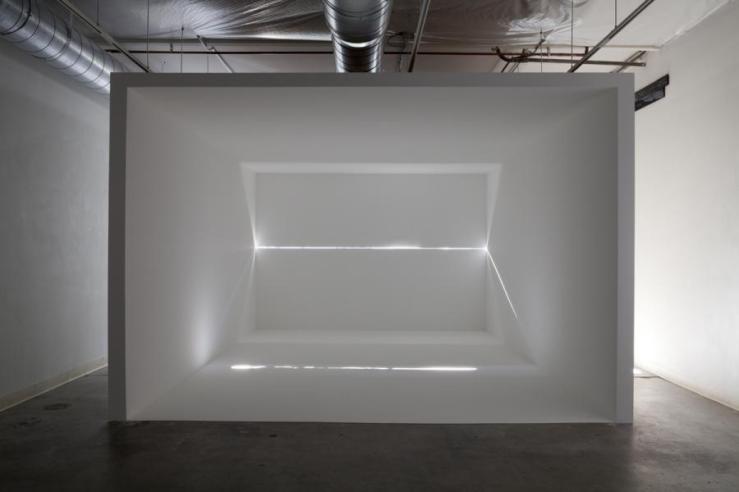
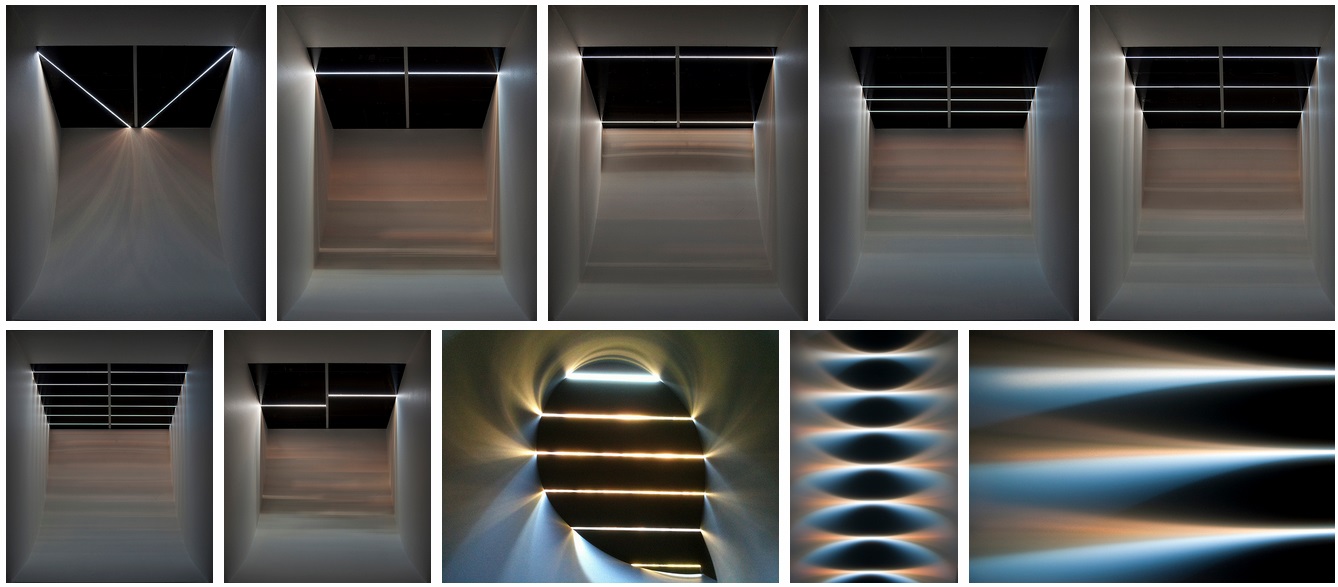
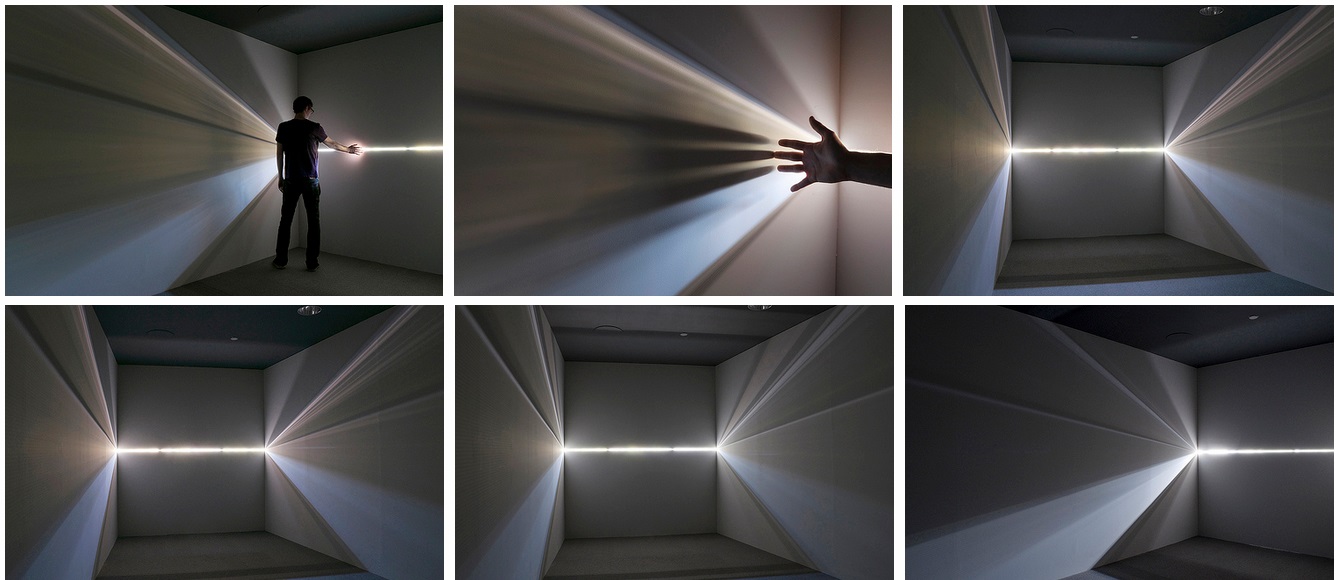
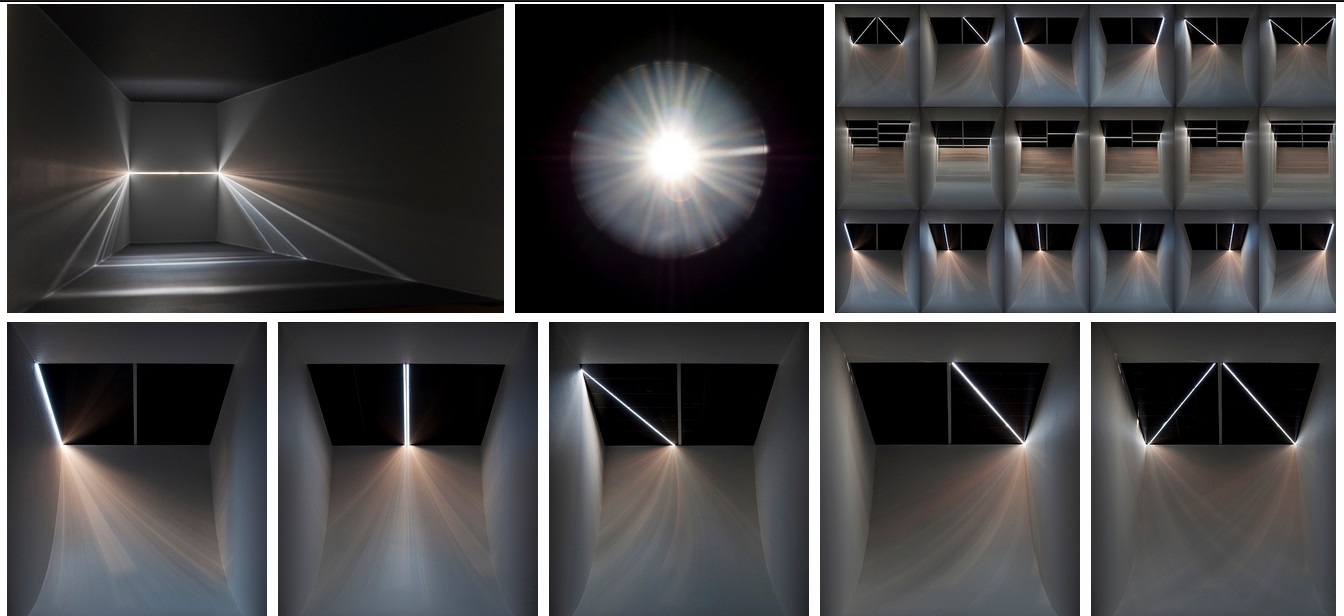
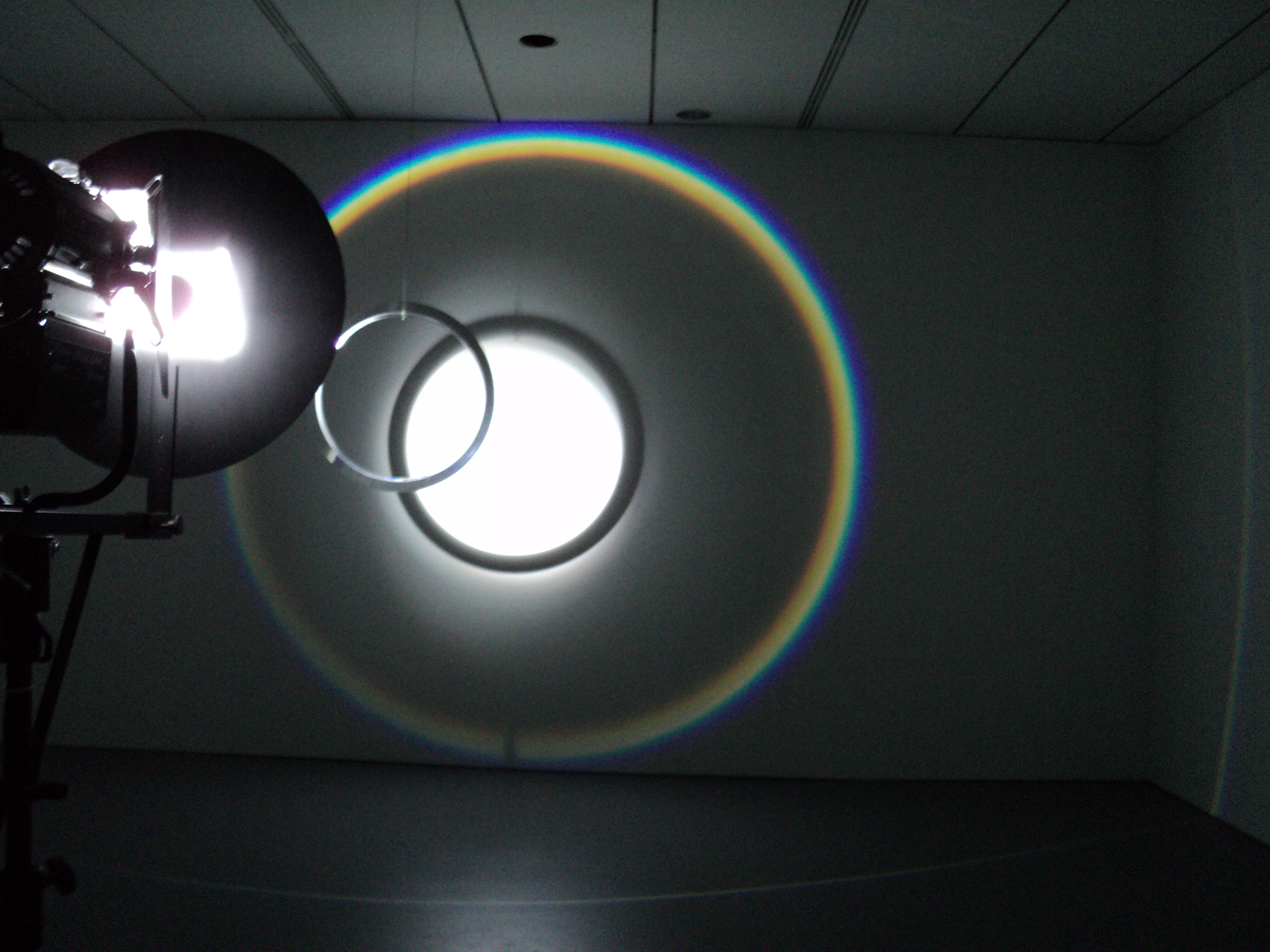
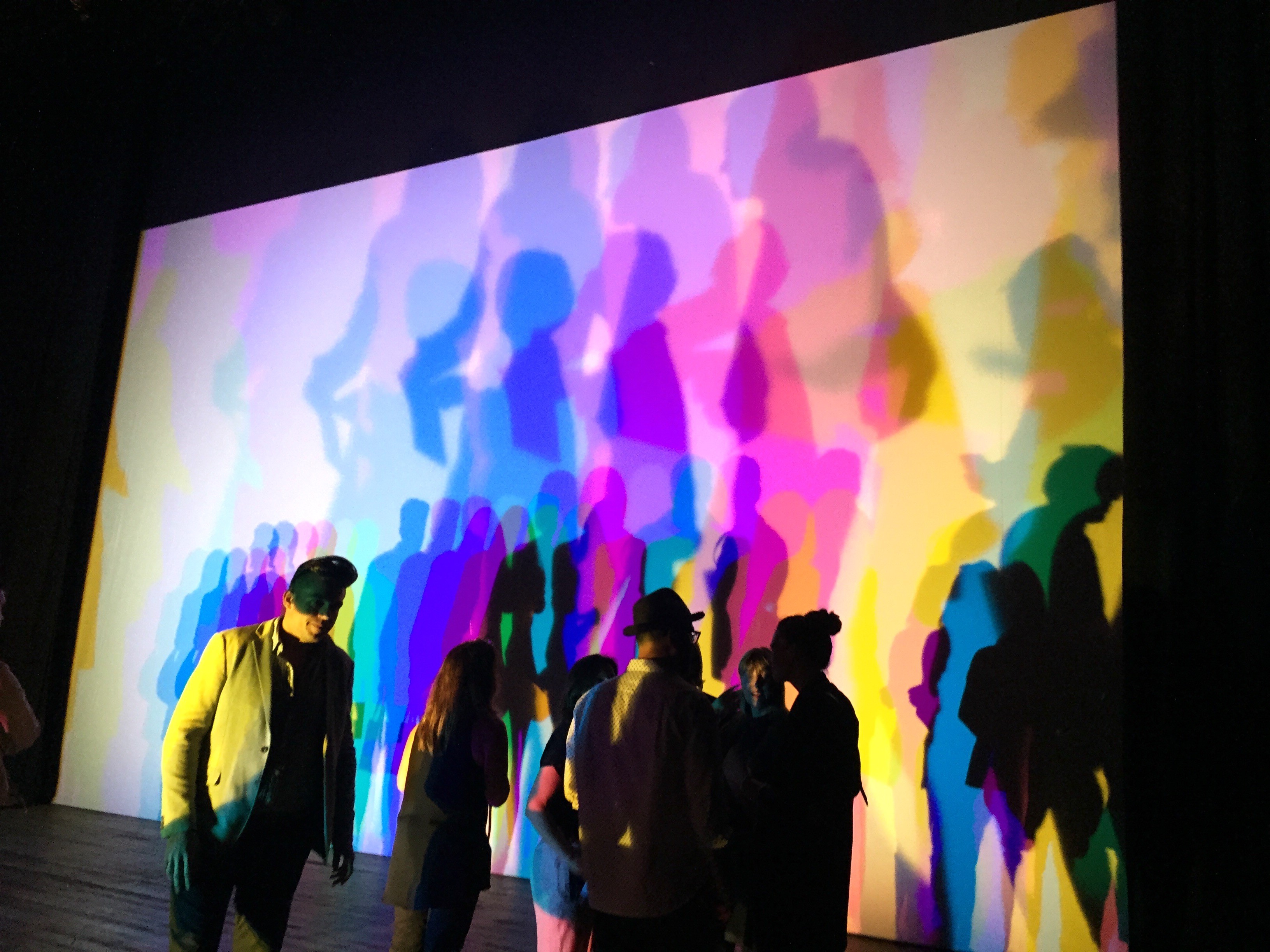
“My light installations use the camera obscura as a point of departure. They are immersive optical environments, idealized spaces with discreet openings. In translating the outside world into moving fields of light and color, the projections make an argument for an unfixed notion of sight.”
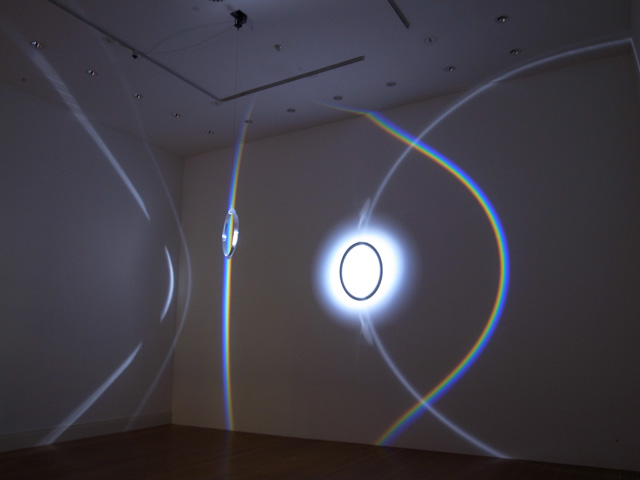
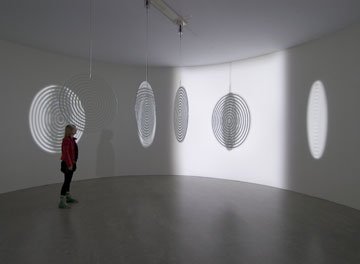
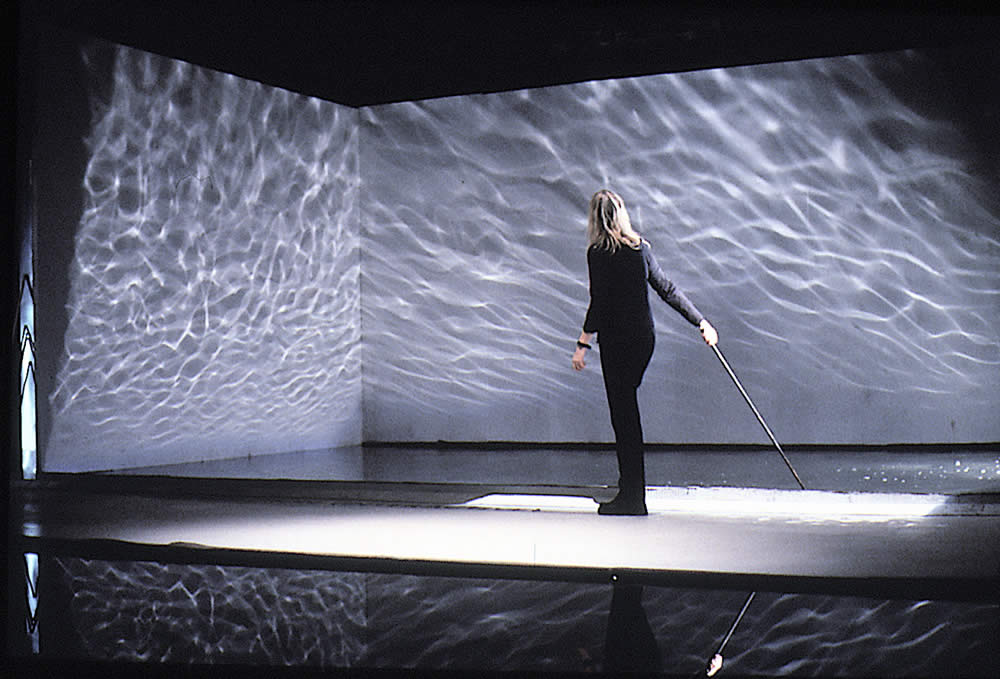
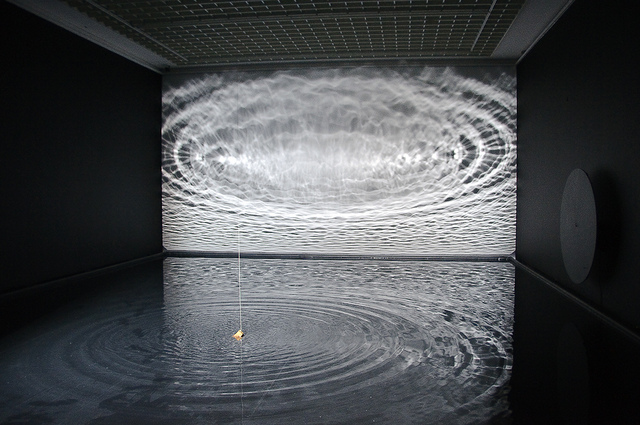
Olafur Eliasson is a Danish-Icelandic artist known for sculptures and large-scale installation art employing elemental materials such as light, water, and air temperature to enhance the viewer’s experience.
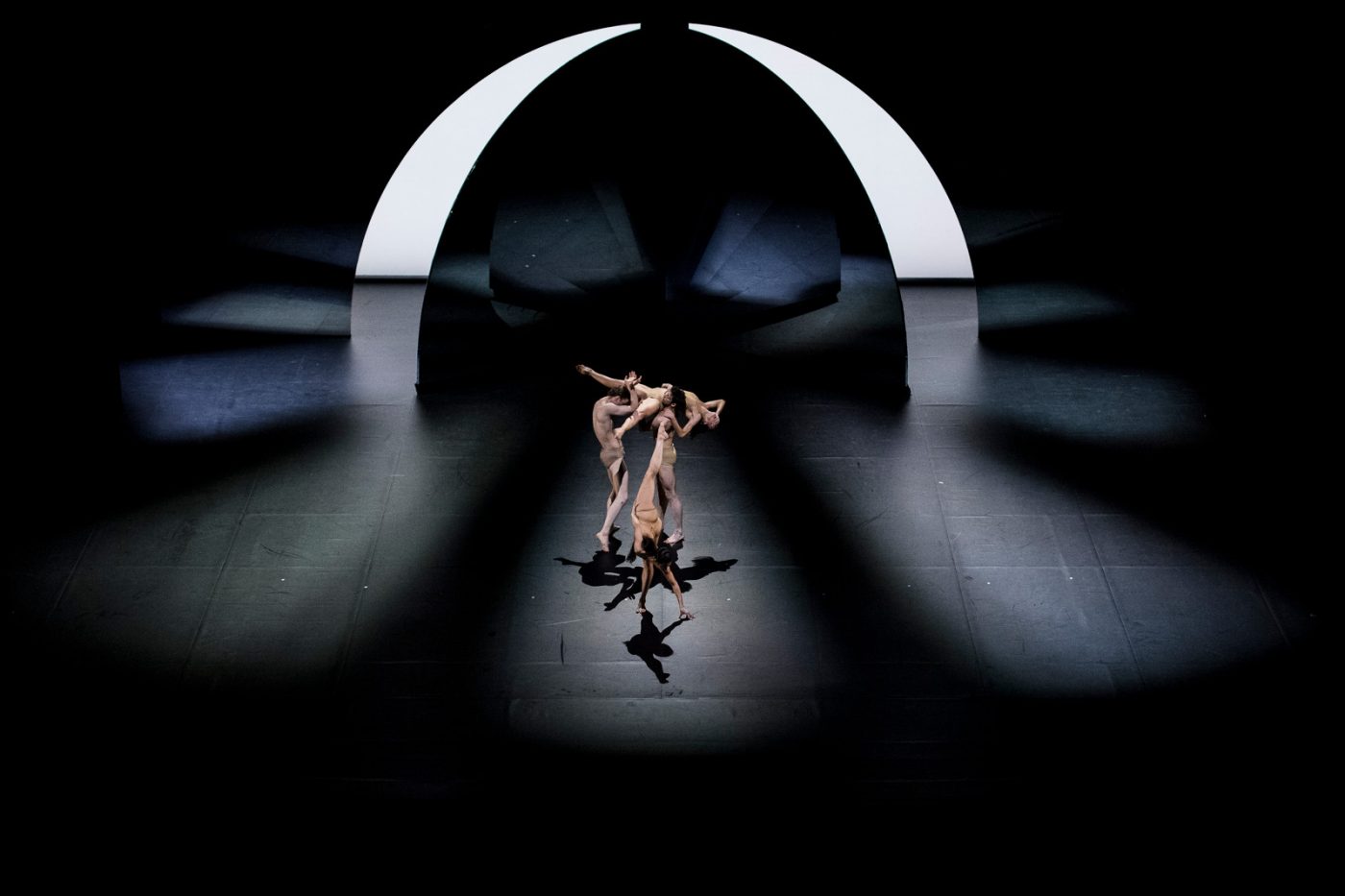
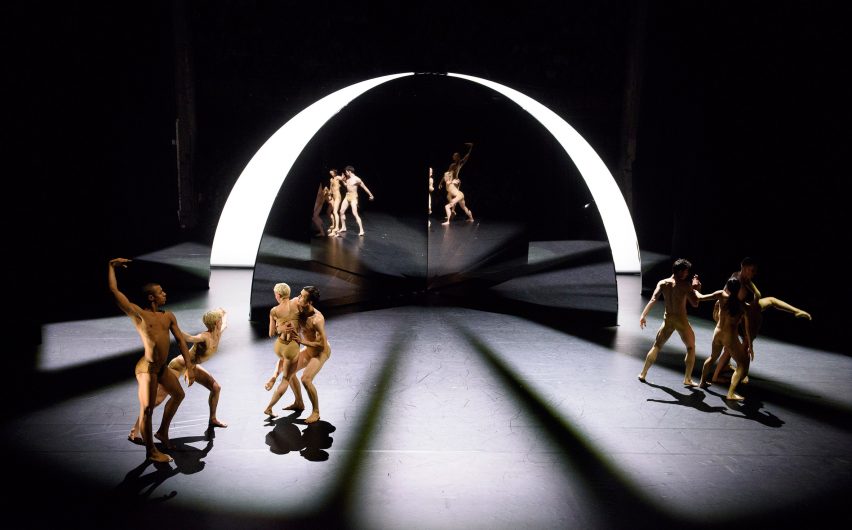
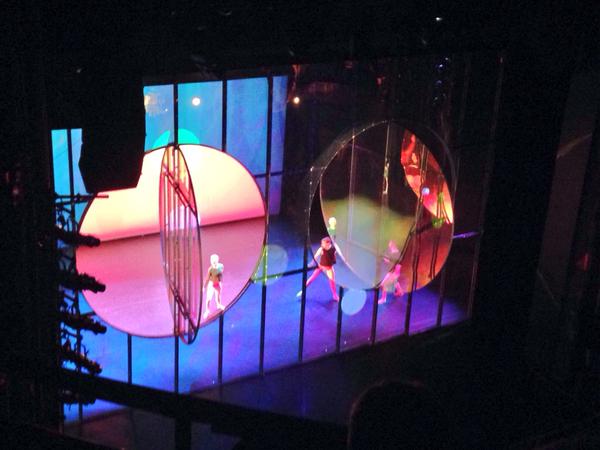
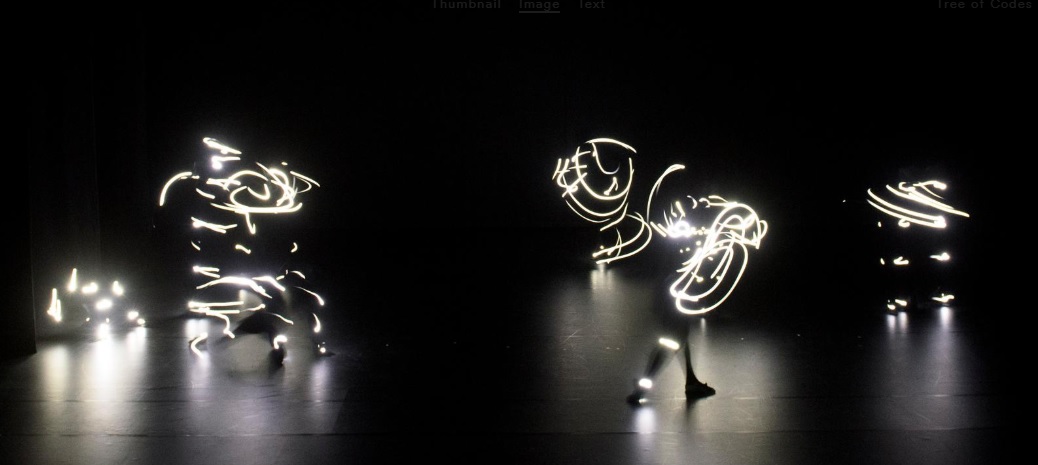
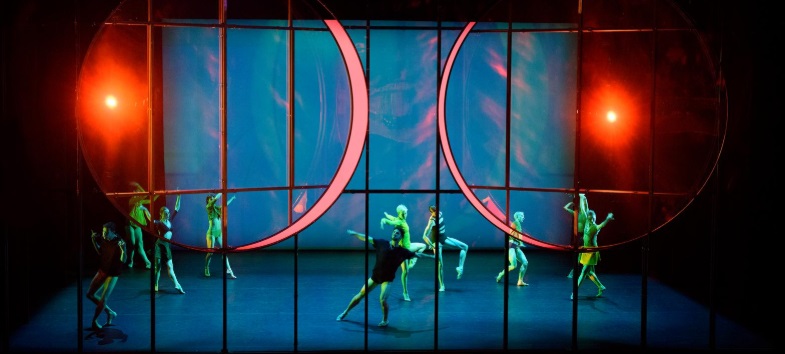
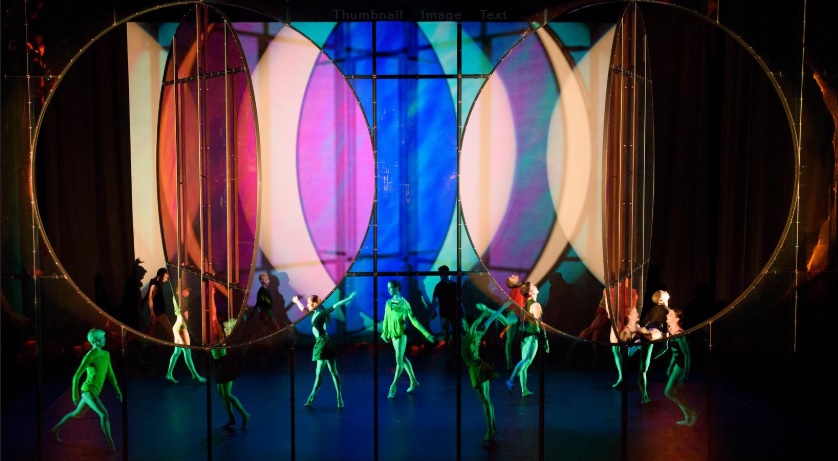
Olafur Eliasson developed the visual concept for the contemporary ballet Tree of Codes, choreographed by Wayne McGregor and with music composed by Jamie xx.
2015
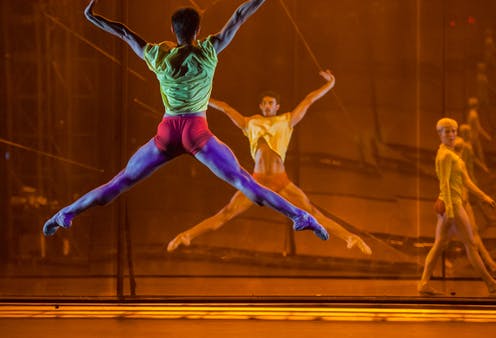
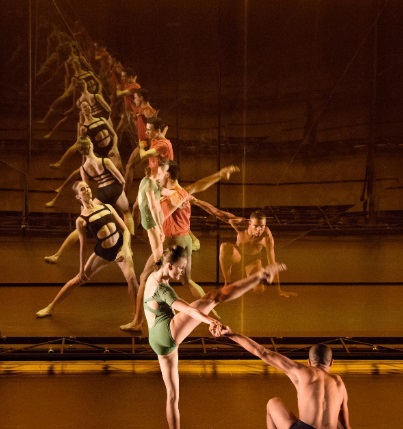
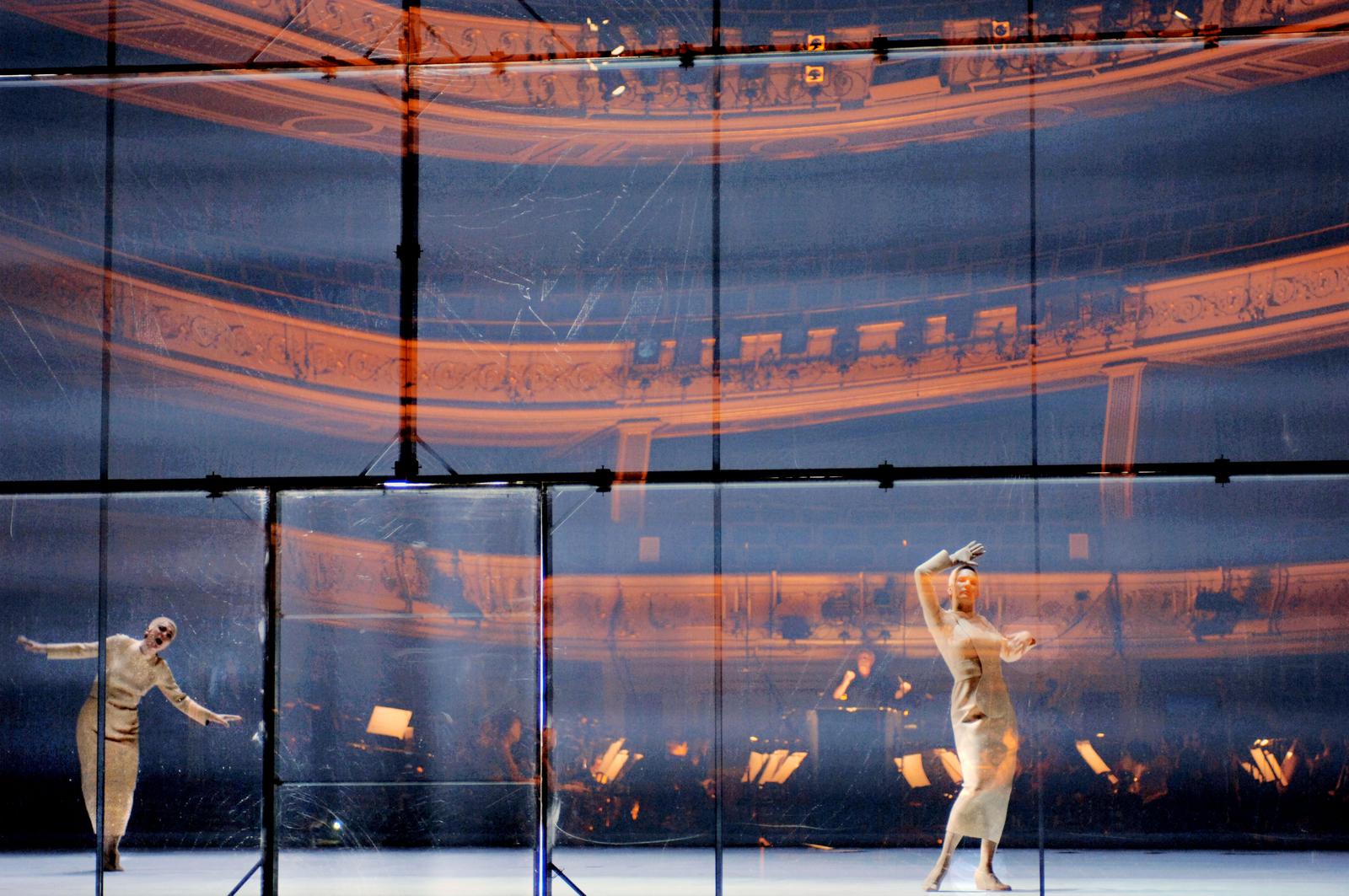
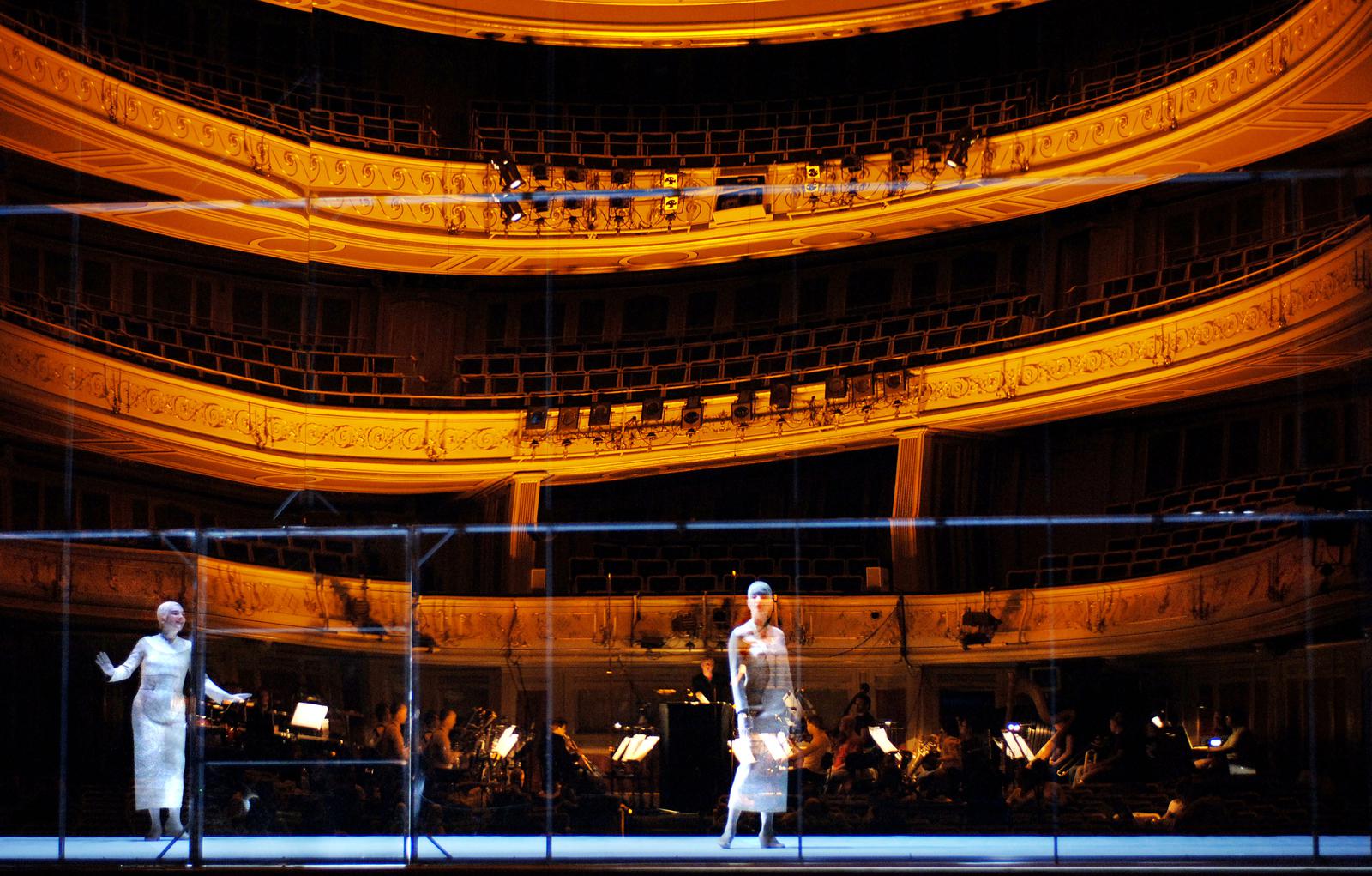
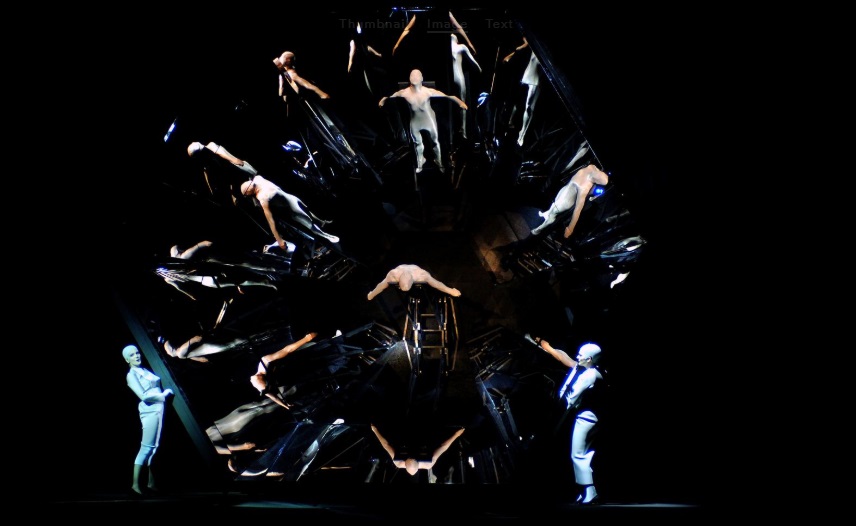
The stage design uses intricate sets of reflective, transparent, and refractive surfaces and coloured light to create a dynamic, ever-evolving, and complexly layered space in which the dancers are multiplied and overlap.
Lights panning over the audience cause its spectral image to appear on the stage’s reflective, coloured scrims, integrating the viewers with the activity on the stage.
Triggered by Jonathan Safran Foer’s Tree of Codes (an artwork in the form of a book, which was in turn inspired by Street of Crocodiles, by Bruno Schulz), this new, evening-length work features a company of soloists from the Paris Opera Ballet and dancers from Wayne McGregor Random Dance.
2007
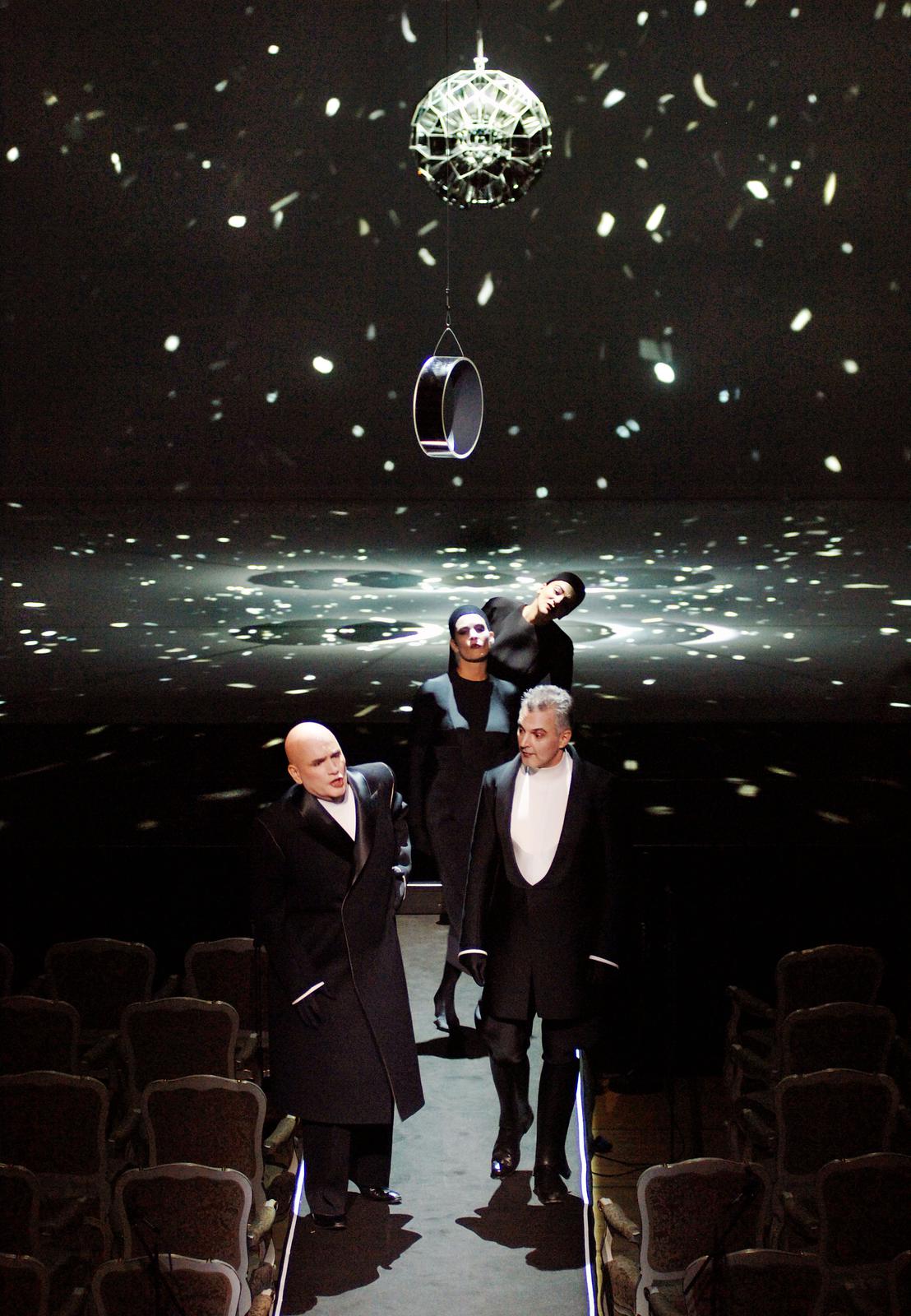
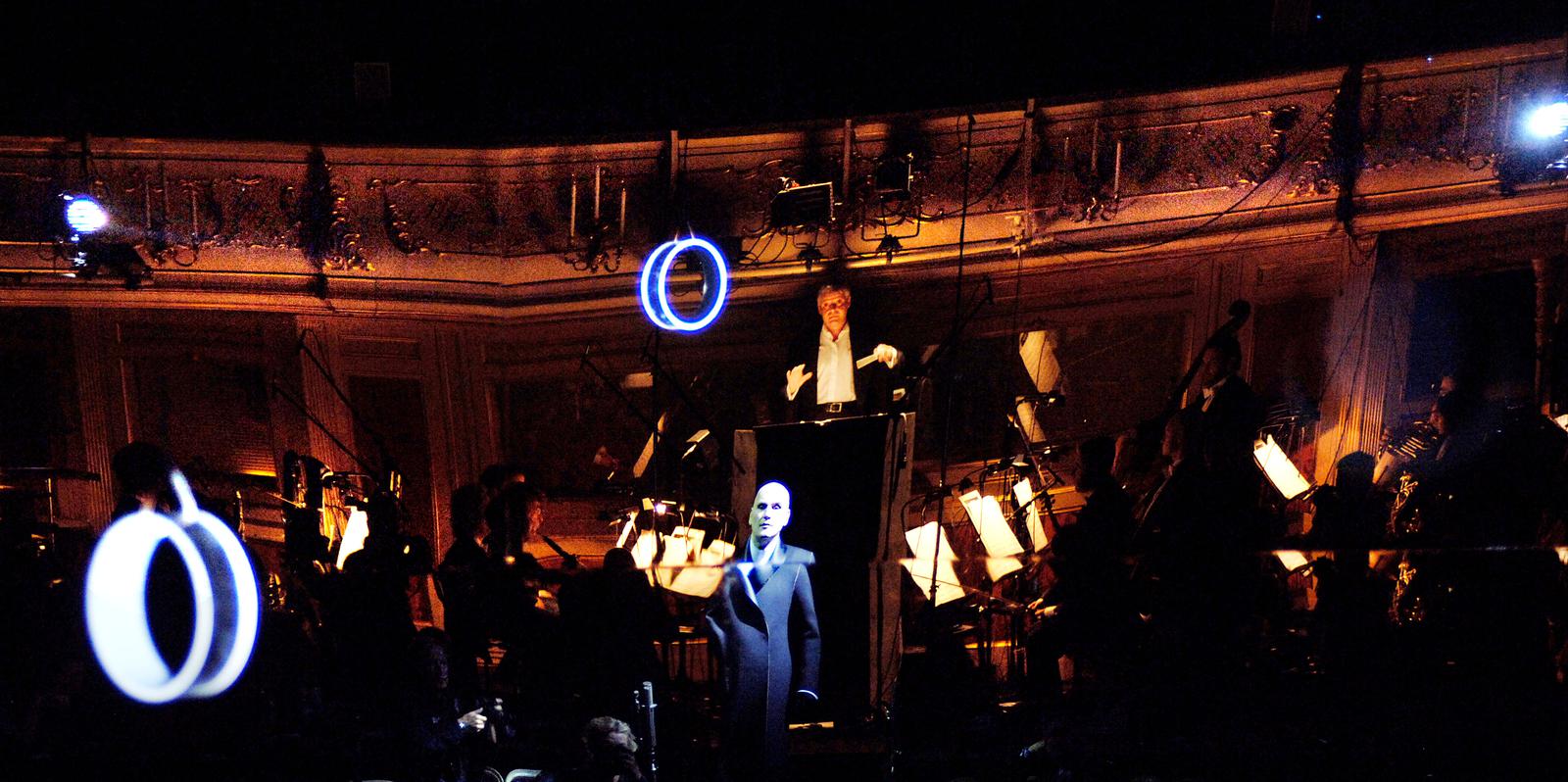
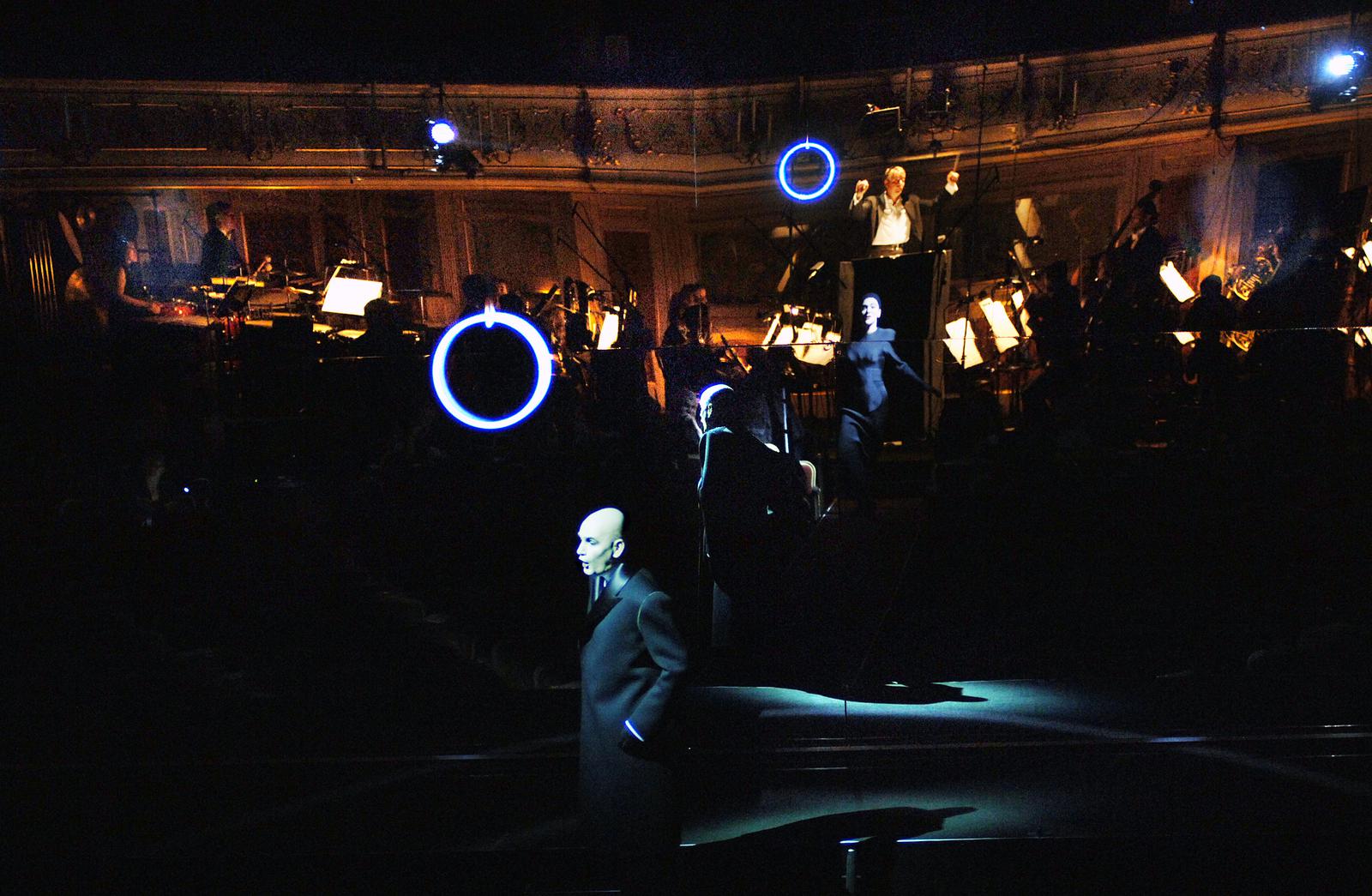
The opera Phaedra by German composer Hans Werner Henze was commissioned by the Staatsoper in Berlin and premiered in September 2007.
Eliasson created the spatial concept.
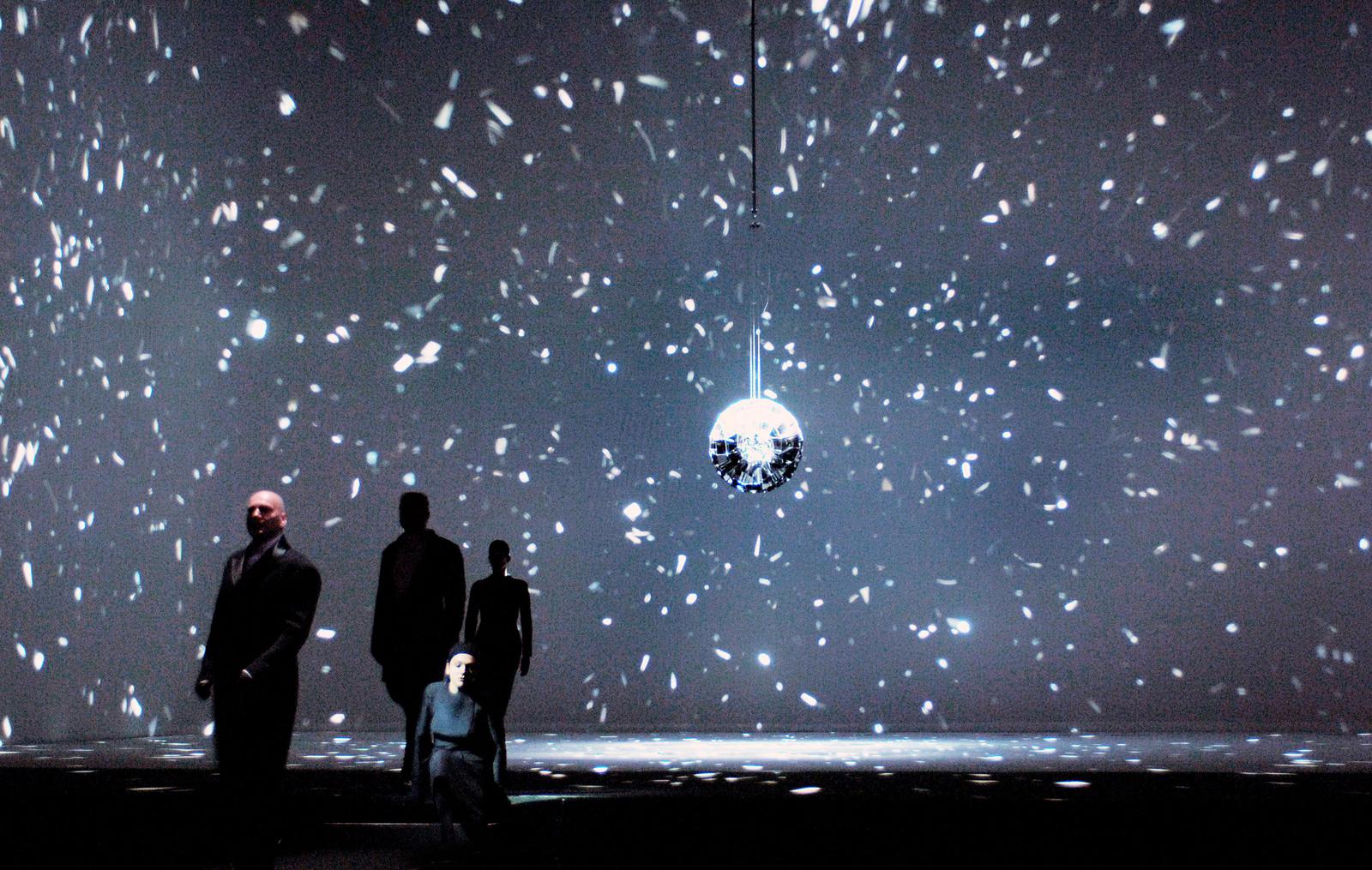
The focus of the individual scenes alternated between the music and the visual elements. These comprised monofrequency lights; a kaleidoscope; the works Your space embracer 2004 and Square sphere 2007; and a vertical mirror that spanned the entire stage and reflected the audience as well as the orchestra, which had been moved to the back of the auditorium.
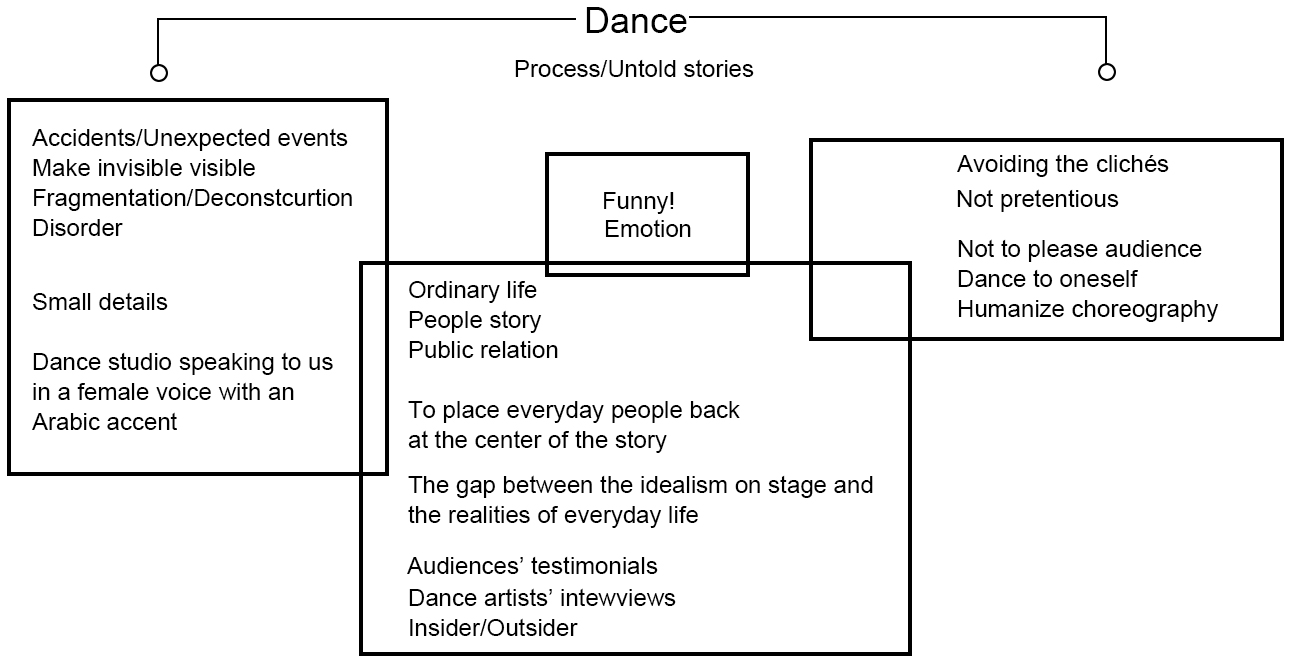
From May 2018, Studio 8 has been preparing for a dance exhibition.
*Studio 8 is a non-profit company based in Amman, Jordan. It is a collective explosion of creativity, aesthetics and experimentation that unites dance and arts, within society in pursuit of change, dialogue, and innovation.
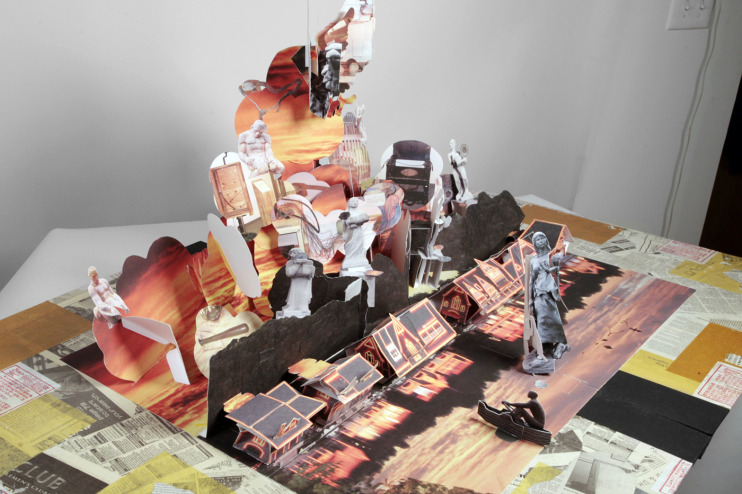
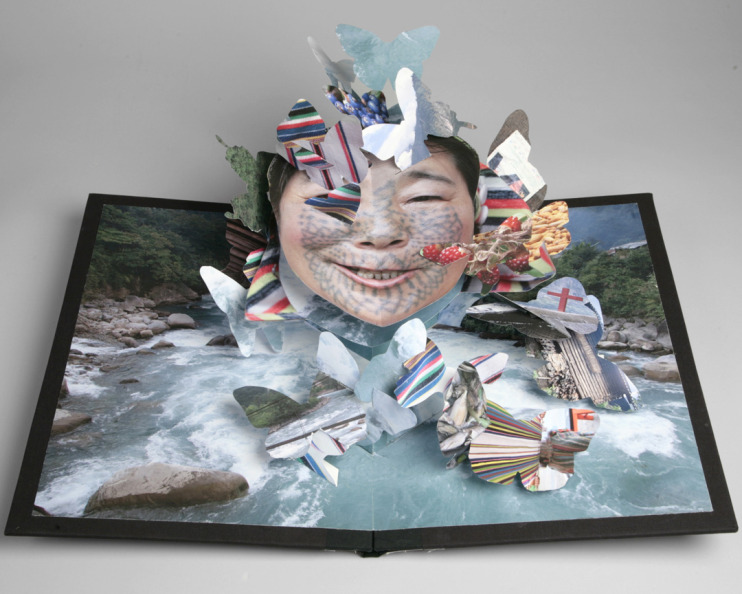
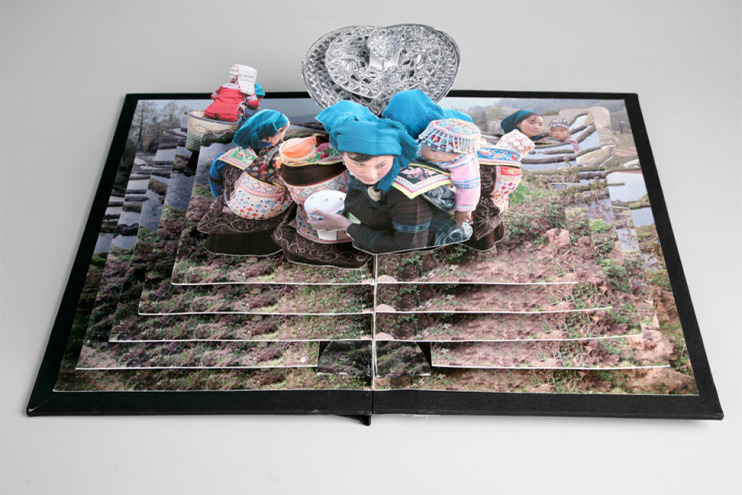
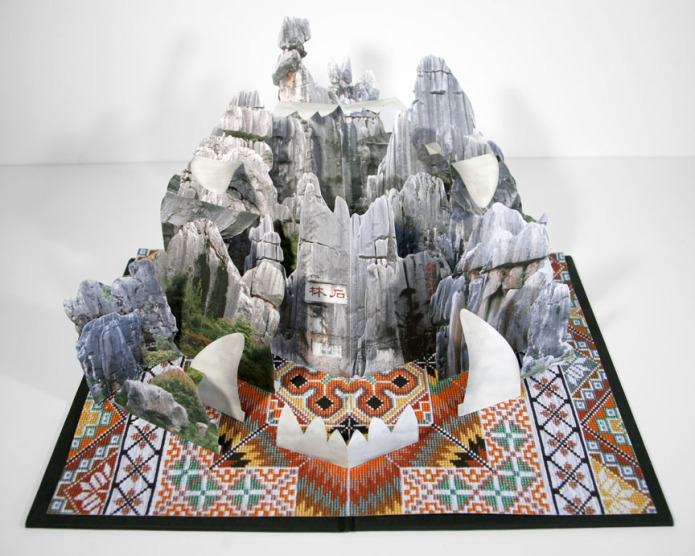
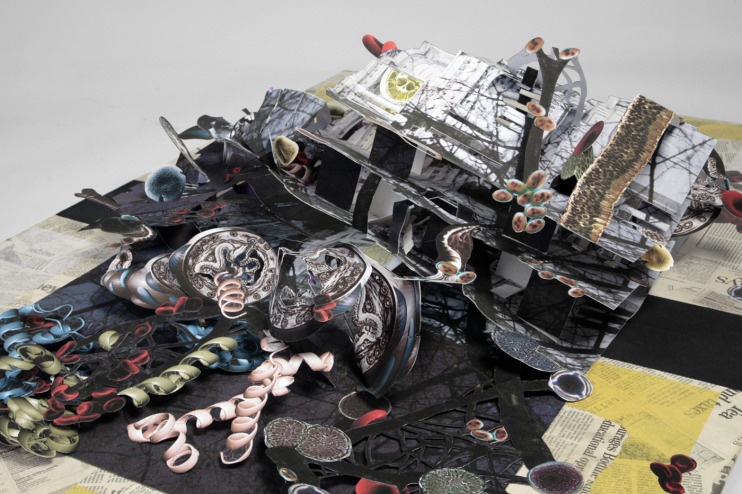
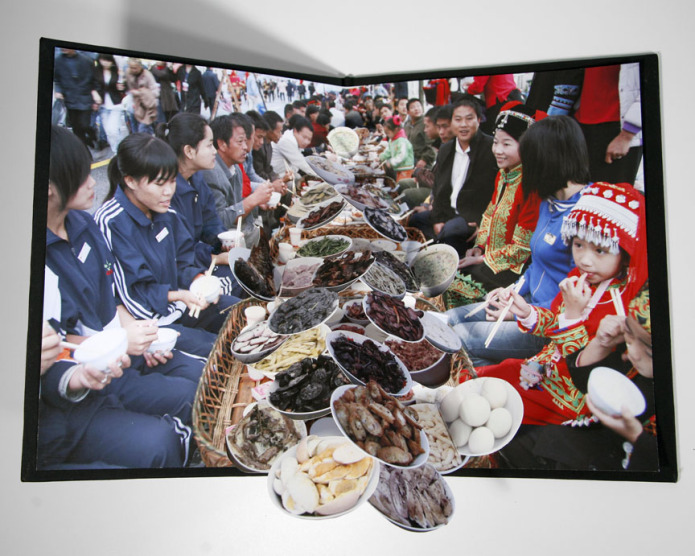
When we were researching for a dance exhibition, we came across Fu’s pop-up books.
“Although Fu’s books are motionless, their exuberant shapes, intense colors, and closely interwoven pop-up pages give the impression of being alive. Her themes are largely inspired by her personal experiences, but her art also embodies—and inspires—feelings of joy, sorrow, and curiosity experienced by all of humankind…Each of Fu’s pop-up books tells a story. She is a fearless wanderer who shares her wonders and helps us understand the world around us.”
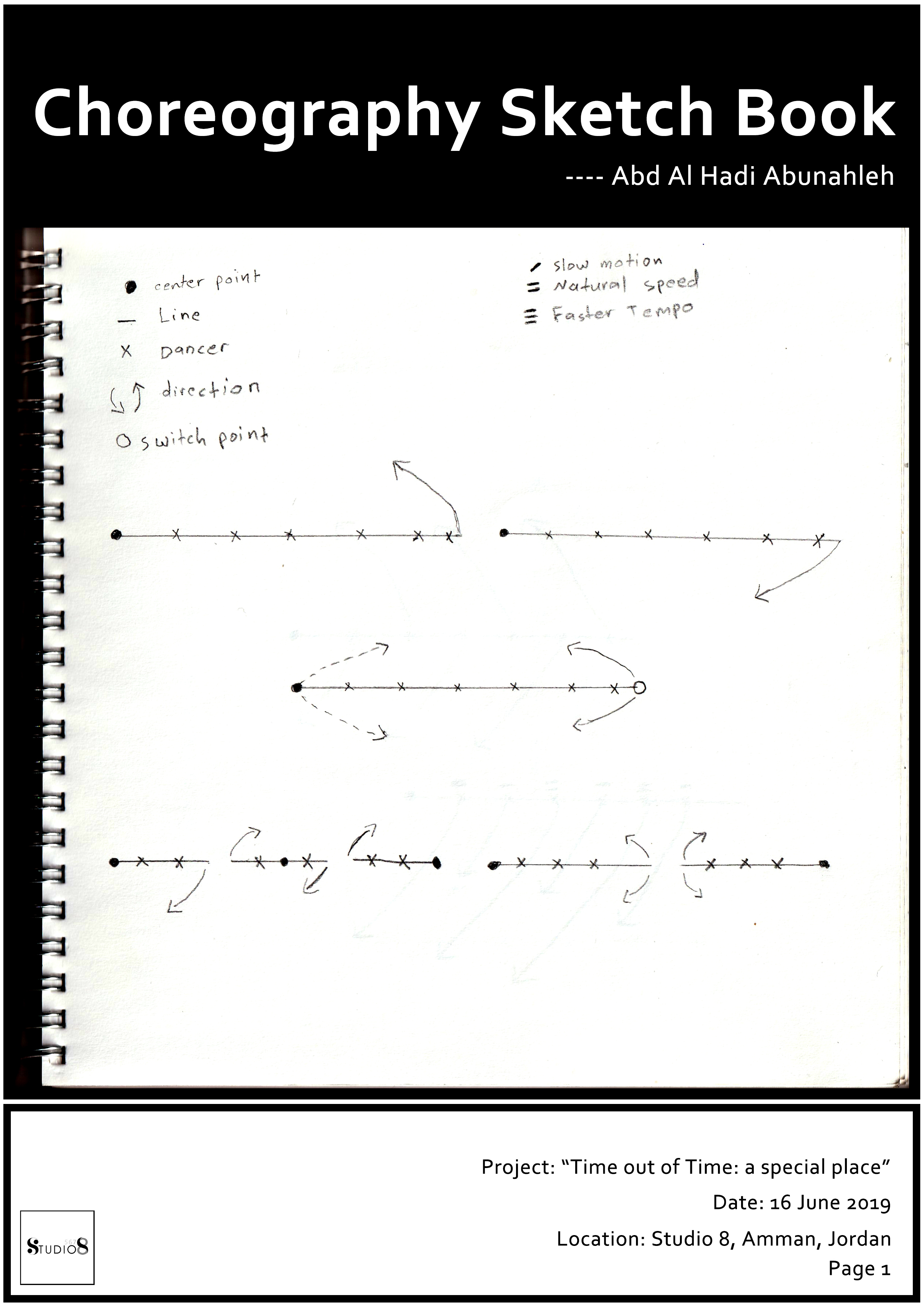
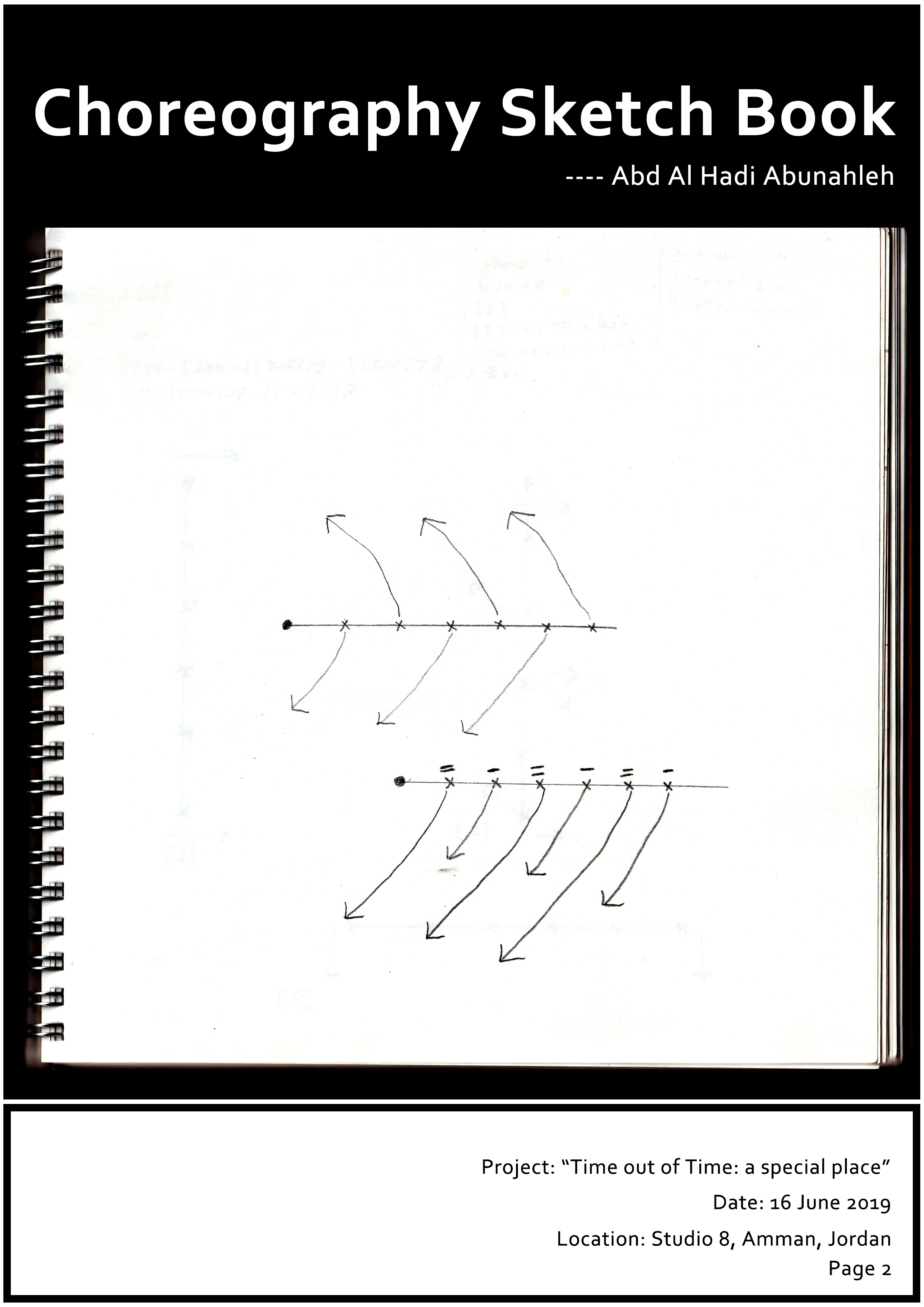
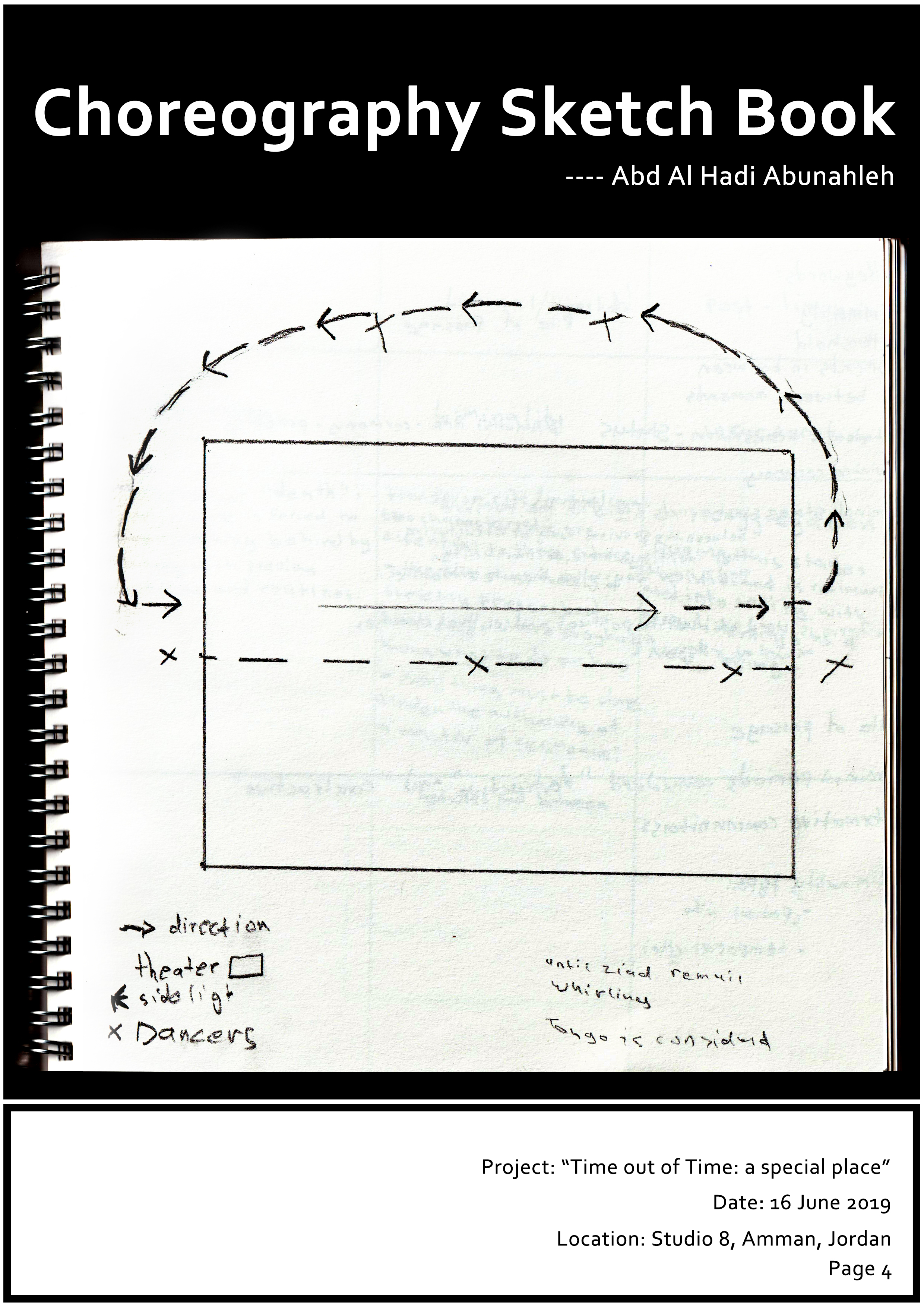
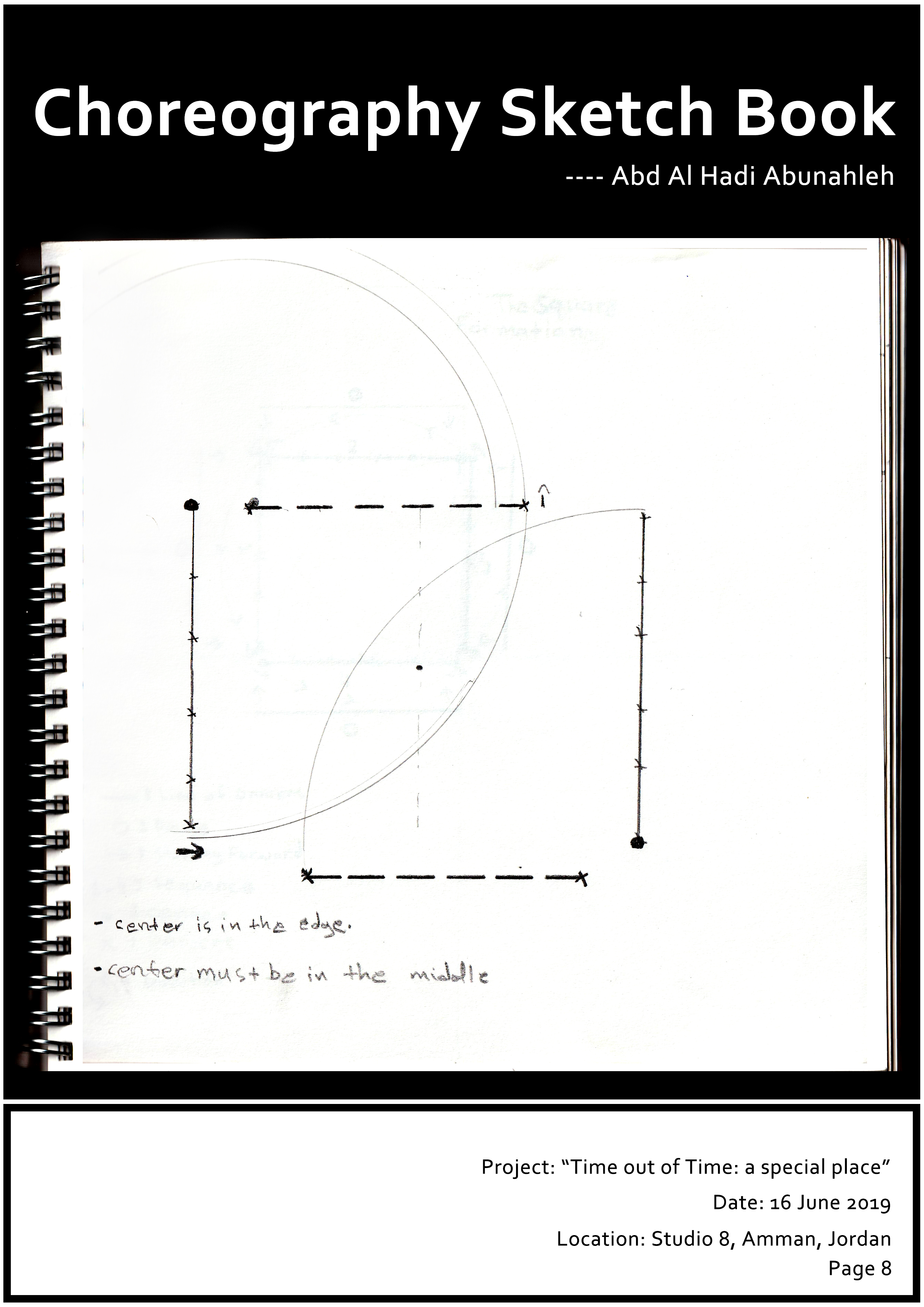
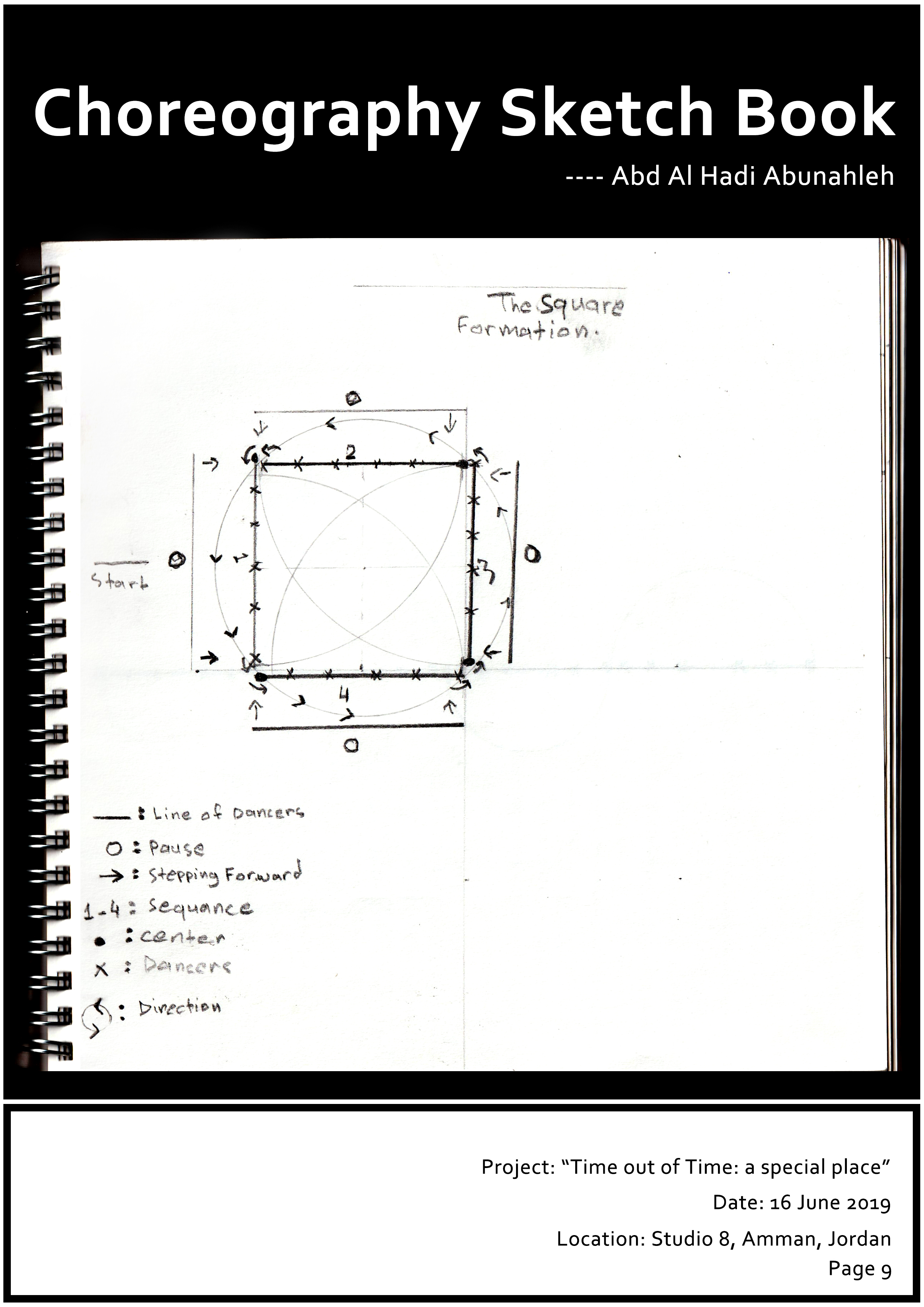
Sketching and doodling are two techniques commonly used by choreographers to design a dance sequence.
These sketches usually represent the trajectory of the dancer in the scene. A set of notations can be used to differentiate the various dance movements. The approach allows a choreographer to story board a dance using graphic symbols and figures, path mapping, numerical systems, and letter and word notations to represent human dance movement and form.
“Time out of Time: a special place” (March 20 – November 30, 2019)
Indicators
1.Dance theatre performance
2019 August 25
2.Dance video full 1
2019 July 20
3.Dance video full 2
2019 August 25
4.Progress report 1. 5 high resolution photos of the Installation models, 5 high resolution photos of the rehearsals, Performers list.
2019 July 26
5.Progress report 2. The narrative Report, The financial Report, 10 copies of the recorded performance, 5 High Resolution photos from the presentation, Hard copies of the printed publicity materials (if available), Any promotional material
2019 Otc. 7
6.Five to six Performers pre-project assessment. 1. CV 2. assessment checkbox 3. orientation (Career preference, personal goal, etc)
2019 July 10
7. Five to six Performer post-project assessment. 1. CV 2. assessment checkbox 3. attendance sheet 4. self-assessment sheet
2020 Oct. 1
8. .Teaching Curriculum. 1. dance techniques 2. career development
In recent years there has been much discussion of societal and social kinds of influence on the course of scientific ideas.
Geology is a science in which fieldwork is a central element of practice, not least because so many important geological features are not mobile.
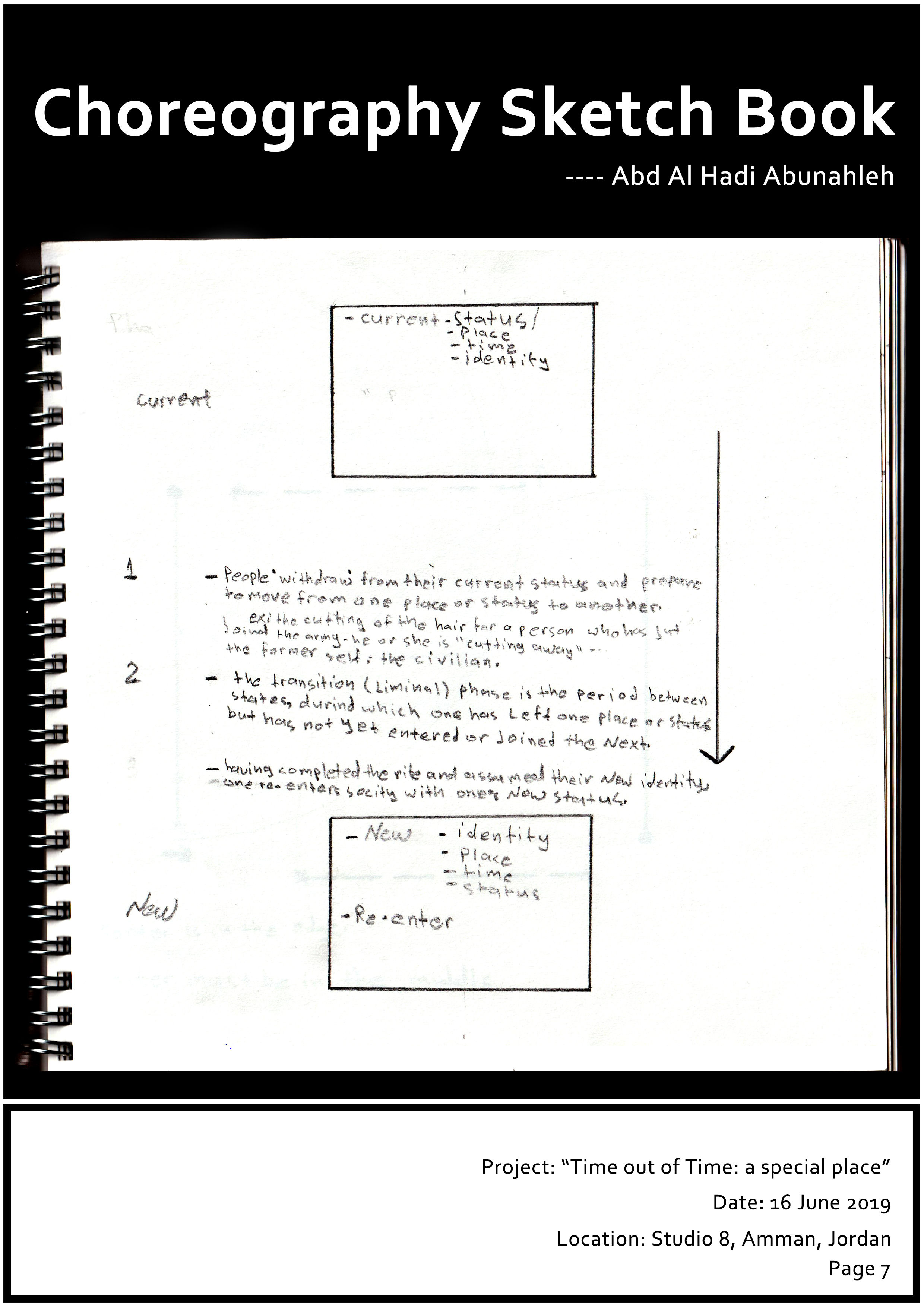
At least in the past, geological expeditions involved a double movement from the familiar to the unfamiliar and back again – not only in terms of features seen and studied, but also in terms of separation from and reintegration into the ‘home’ scientific community.
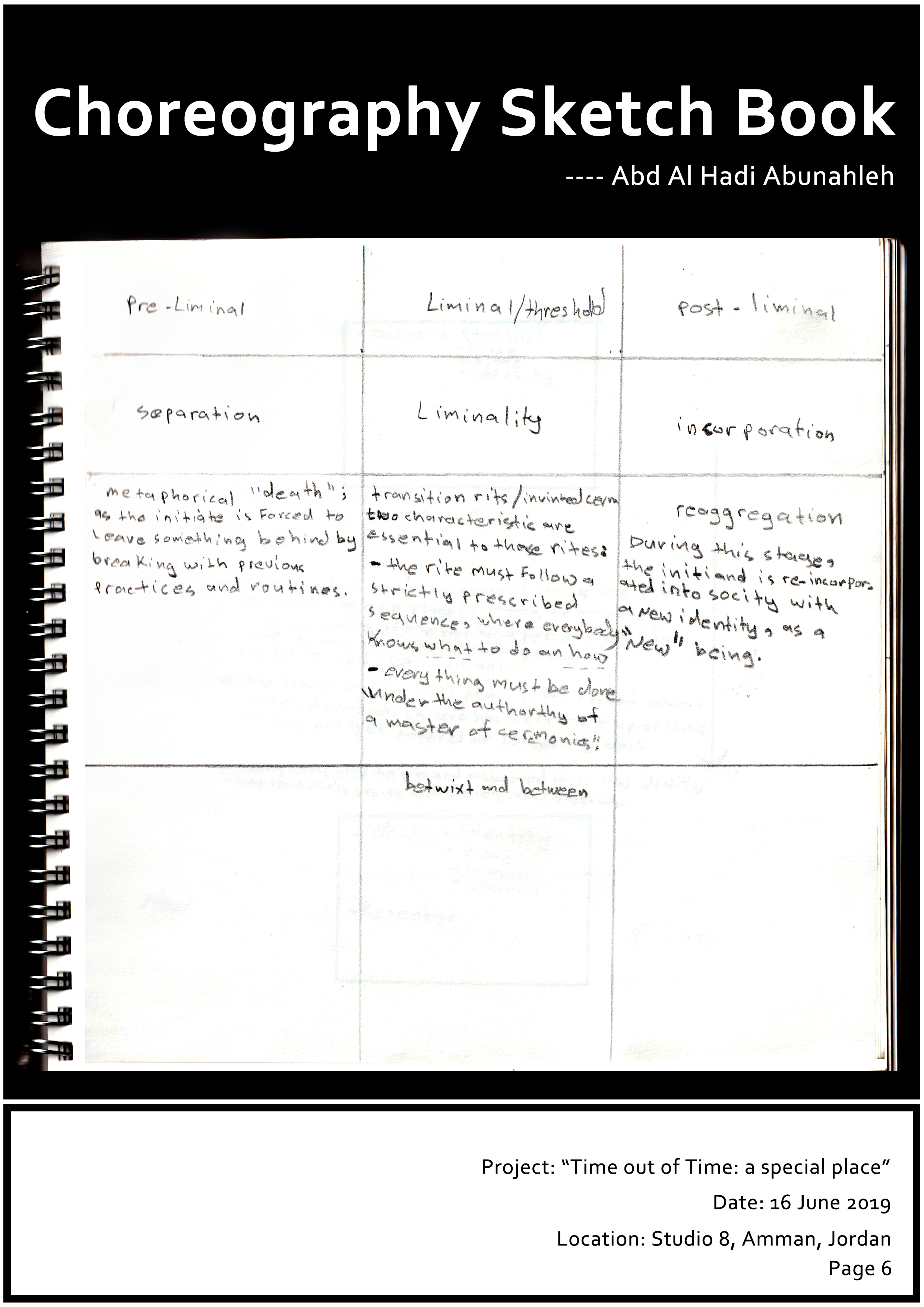
The dynamics of this process are here compared with van Gennep’s classic concept of ‘liminality’ and with Victor Turner’s application of that concept to the process of pilgrimage.
Theoretical innovation in a field science such as geology may require, or at least be facilitated by, a pilgrimage-like process in which scientists are exposed to unfamiliar perceptual and personal inputs while temporarily insulated from their familiar scientific environment.
Geological Travel and Theoretical Innovation: The Role of ‘Liminal’ Experience | Author(s): Martin Rudwick | Published by: Social Studies of Science | Feb., 1996
The passage from one social status to another is often accompanied by a parallel passage in space, a geographical movement from one place to an- other.
Key concepts here are work, play, and leisure.
“Leisure,” then, presupposes “work”: it is a non-work, even an anti-work phase in the life of a person who also works.
The term limen itself, the Latin for “threshold”, appears to be negative in connotation, since it is no longer the positive past condition nor yet the positive articulated future condition.
Liminality, marginality, and structural inferiority are conditions in which are frequently generated myths, symbols, rituals, philosophical systems, and works of art.
LIMINAL TO LIMINOID, IN PLAY, FLOW, AND RITUAL: AN ESSAY IN COMPARATIVE SYMBOLOGY | by Victor Turner
The intelligent body ceases to be: intelligence and bodilyness are sundered, unable to ground or defend each other or themselves.
Antistructure is constituted by liminality and communitas.
Seeing structural invisibility as an important aspect of liminality makes clear why victims of ethnocentric racism are never seen as liminal subjects.
Structure/Antistructure and Agency Under Oppression | Author(s): Maria C. Lugones | Published by: The Journal of Philosophy | Oct., 1990
Liminality is both more creative and more destructive than the structural norm.
As well as the betwixt-and-between state of liminality there is the state of outsiderhood, referring to the condition of being either permanently and by ascription set outside the structural arrangements of any given system, or being situationally or temporally set apart, or voluntarily setting oneself apart from the behavior of status-occupying, role-playing members of that system.
Such outsiders would include, in various cultures, shamans, diviners, medi ums, priests, those in monastic seclusion, hippies, hoboes, and gypsies. They should be distinguished from “marginals,” who are simultaneously (by ascription, optation, self-definition, or achievement) of two or more groups whose social definitions and cultural norms are distinct from, and often even opposed to, one another.
These would include migrant foreigners, second generation Americans, persons of mixed ethnic origin, parvenus (upwardly mobile marginals), migrants from country to city, and women in a changed, nontraditional role.
What is interesting about such marginals is that they often look to their group of origin, the so-called inferior group, for communitas, and to the more prestigious group in which they mainly live and in which they aspire to higher status as their structural reference group.
Sometimes they become the radical critics of structure from the perspective of communitas, sometimes they tend to deny the affectionally warmer and more egalitarian bond of communitas…. Marginals like liminars are also betwixt and between, but unlike ritual liminars they have no cultural assurance of a final stable resolution of their ambiguity.
From Limen to Border: A Meditation on the Legacy of Victor Turner for American Cultural Studies | Author(s): Donald Weber | Published by: American Quarterly | Sep., 1995
From the child’s point of view, games are not simply part of life; rather, all life is a game.
The perception of the world of a child at play is double… He inhabits a world in which “reality” and “unreality” coexist. …. a child’s world is closely connected with [the concepts of] “passion,” “imagination,” “dreams.” Its links with the unconscious are many, and it should perhaps be interpreted in the same way as mythology and archaic mentality.
Folk Culture and the Liminality of Children | Author(s): Yoshiharu Iijima | Published by: The University of Chicago Press on behalf of Wenner-Gren Foundation for Anthropological Research | Aug. – Oct., 1987
I have not attempted a historical reconstruction of the order of events in David’s return from his Trans-Jordanian exile; I am, for the purposes of this study, uninterested in what David actually did.
David’s crossing of the river in forms the transitional stage of this smaller, nested rite of passage, after which his various inter actions with his subjects-Mephibosheth, Shimei, the Judahites and Israelites-serve to reincorporate the king into the community.
… any person who considers that he has been wronged by the chief elect in the past is entitled to revile him and most fully express his resent ment, going into as much detail as he desires. The chief-elect, during all this, has to sit silently with downcast head, “the pattern of all patience” and humility … The chief may not resent any of this or hold it against the perpetrators in times to come.
The Left Bank of the Jordan and the Rites of Passage: An Anthropological Interpretation of 2 Samuel XIX | Author(s): Jeremy M. Hutton | Published by: Brill | Accessed: Oct., 2006









 Time out of Time: