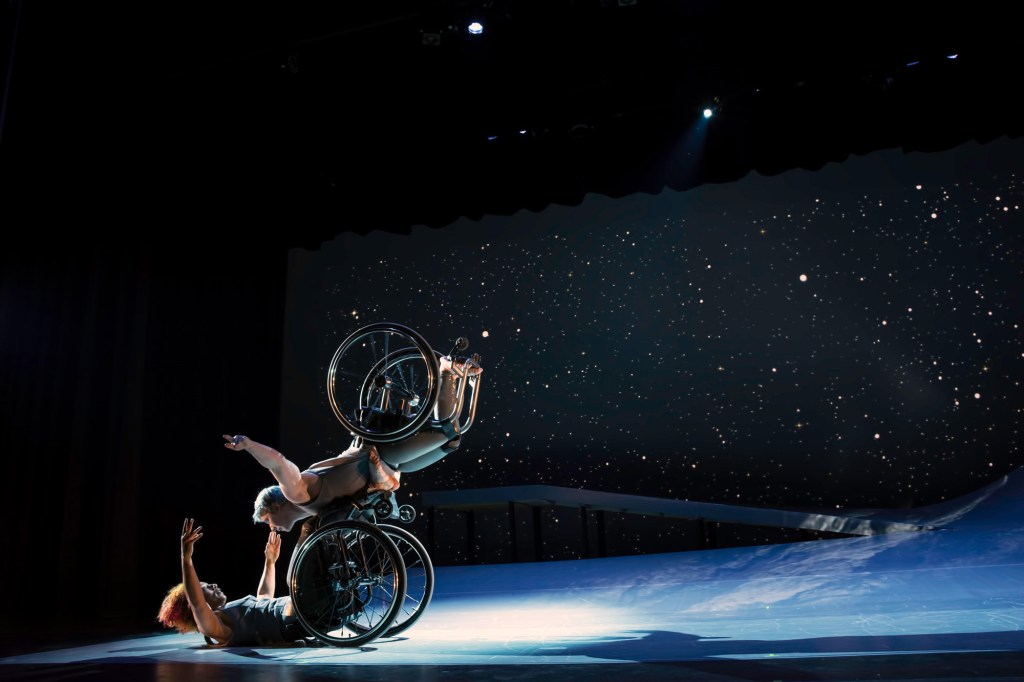
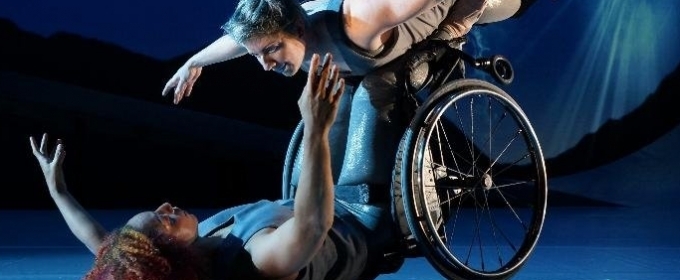
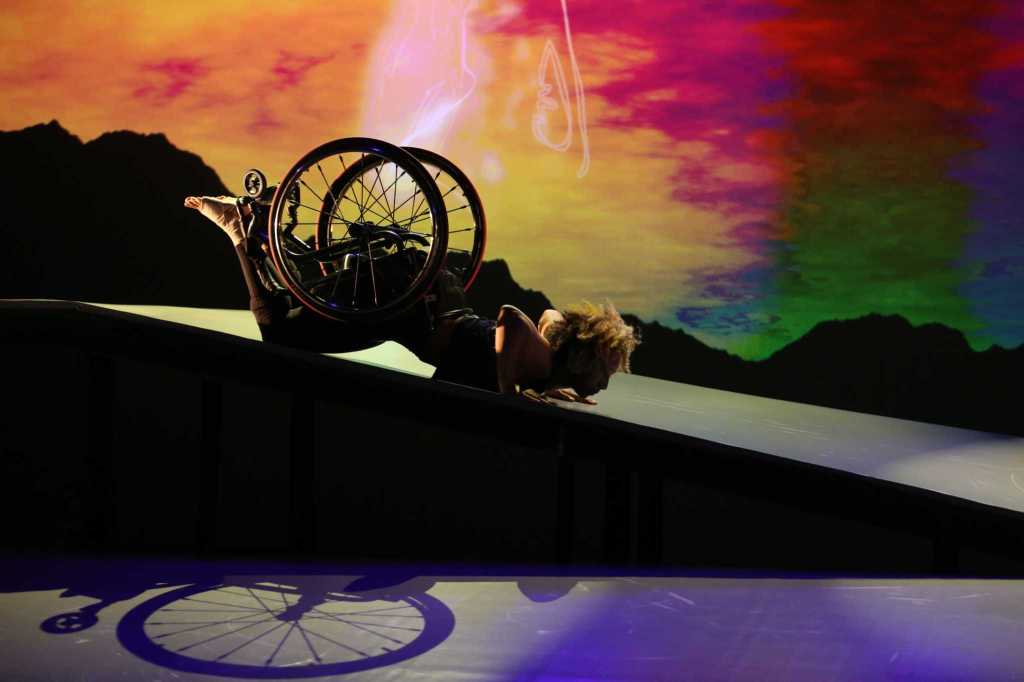
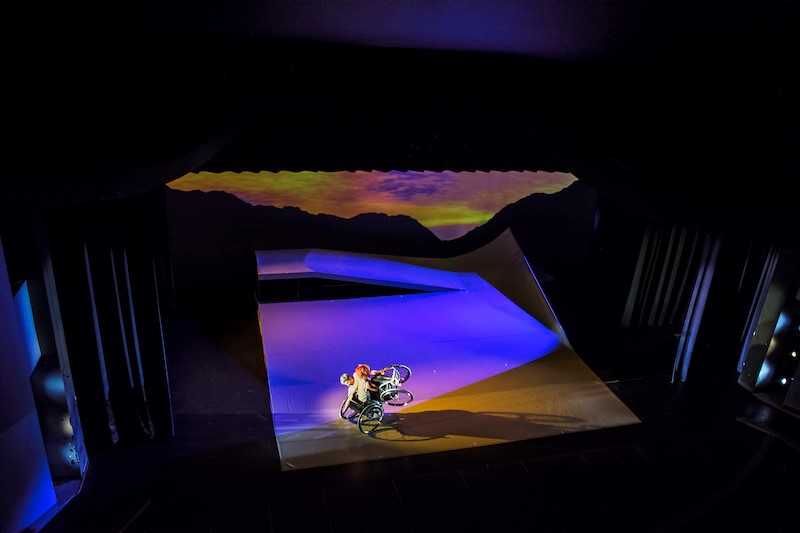
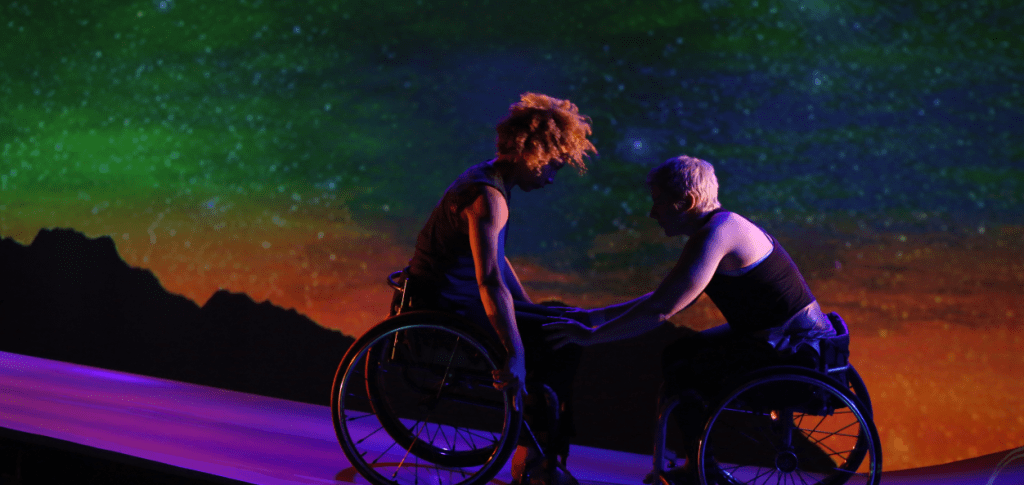
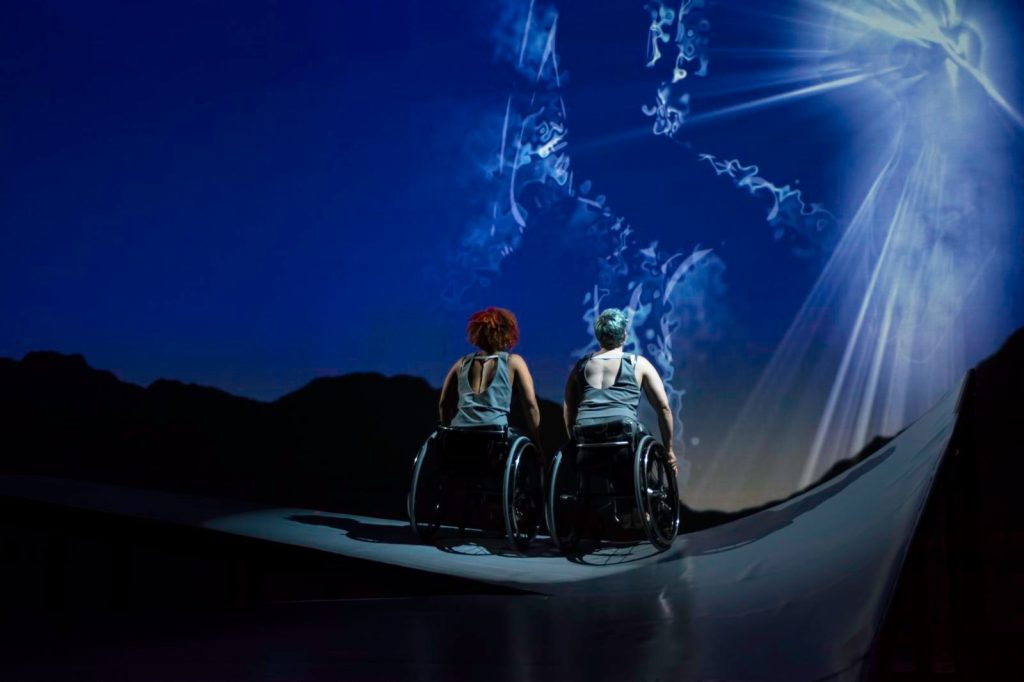
DESCENT reimagines the story of Greek mythical figures Venus and Andromeda as an interracial love story with choreography that conjures the aesthetics of August Rodin’s sculpture Toilet of Venus and Andromeda. Performing in wheelchairs, dancers Alice Sheppard and Laurel Lawson traverse a stage built with hills and curves. The duo climb to the summit of a ramp where they precariously balance on its edge and let gravity take over as they barrel back down, moving together and apart. Through emotional peaks and valleys, DESCENT explores themes of disability, race, and beauty to reveal how mobility is fundamental to participation in civic life.
Kinetic Light is a collective made up of professional disabled artists Alice Sheppard, Laurel Lawson, and Michael Maag. Sheppard is the artistic director and choreographer for Kinetic Light who performs the role of Andromeda in DESCENT. Lawson, performing the role of Venus, is a collaborator in choreography, costume and makeup design, as well as the software developer for DESCENT. Michael Maag is DESCENT’s lighting and video designer.
Alice Sheppard: Alice Sheppard is a disabled choreographer and dancer from Britain.Sheppard started her career first as a professor, but later became interested in dance. She became a member of the AXIS Dance Company and toured with them. She had also found Kinetic Light and leads it, an artistic coalition created in collaboration with dancer, Laurel Lawson, and lighting and video artist, Michael Maag.
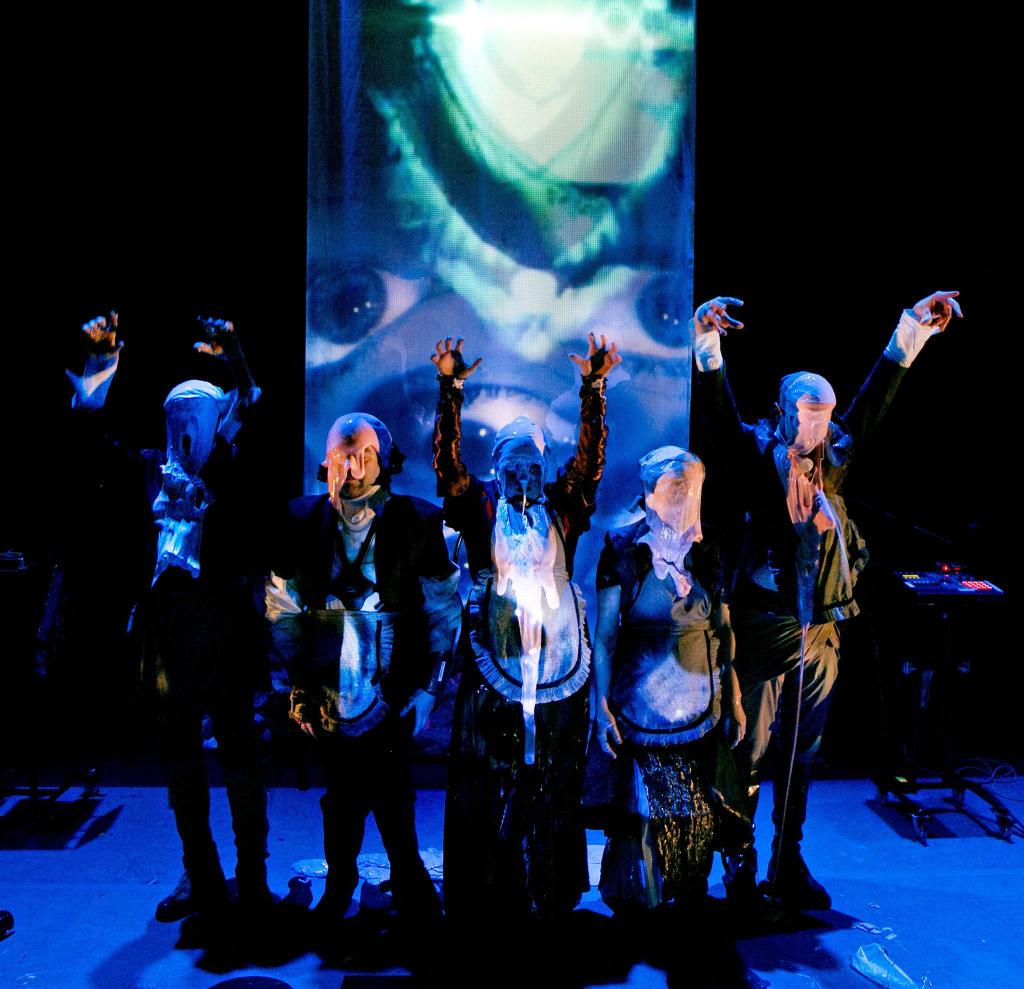
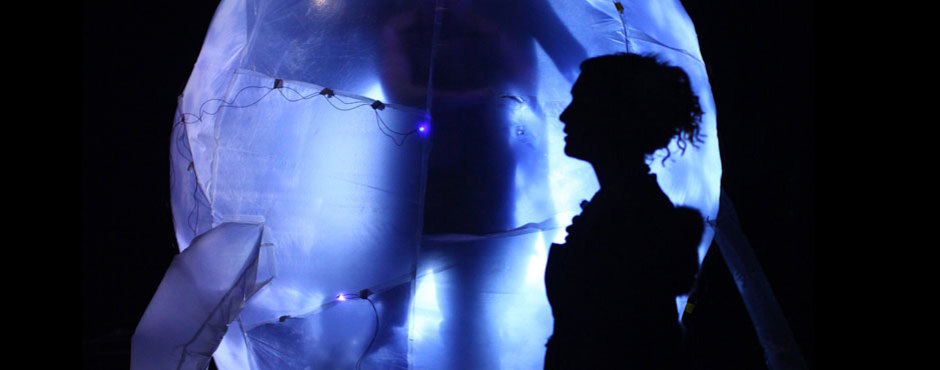
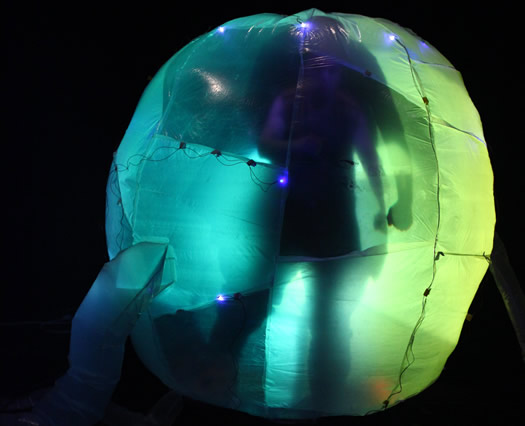
Influenced by James Whale’s Frankenstein films, Radiohole explodes the tumultuous and tragic life of Mary Shelley. Blood chilling and completely strange, Inflatable Frankenstein is brimming with whims, technological absurdity, and bodily fluids. A larger-than-life, Radiohole gothic teen sex dream. With Maggie Hoffman, Eric Dyer, Erin Douglass, Joseph Silovsky, and Mark Jaynes. Also introducing The Creature Without Organs.
Radiohole was birthed in a Brooklyn basement in 1998 by Erin Douglass, Eric Dyer, Maggie Hoffman and Scott Halverson Gillette. The company has produced ten original shows that have been presented at venues around New York City including PS122, the Kitchen and the Collapsable Hole (sic) and have toured nationally and internationally. Radiohole’s most recent show, “Whatever, Heaven Allows” was commissioned by PS122, The Walker Art Center and the Andy Warhol Museum through the Spaulding Gray Award. “Whatever, heaven Allows” had it’s European premiere in April 2012 at Katapult Teater at Godsbanen in Århus, Denmark. Over the years, Radiohole has earned a reputation as one of New York’s most tenacious and uncompromising ensembles.
The Curtis R. Priem Experimental Media and Performing Arts Center (EMPAC) is a multi-venue arts center at Rensselaer Polytechnic Institute in Troy, New York, which opened on October 3, 2008.
The founding director of EMPAC is Johannes Goebel. He was previously the director and founder of the Institute for Music and Acoustics at the Center for Art and Media Technology (ZKM) in Karlsruhe, Germany.
Curatorial Program
EMPAC’s curatorial program is dedicated to the commissioning, production, and presentation of ambitious performances and time-based artworks that foster meaningful engagement among artists, artworks, and our audiences. Over the past 10 years, EMPAC’s curatorial program has brought hundreds of artists to Rensselaer to create and perform new works across three areas of expertise: music, theater and dance, and time-based visual art.
EMPAC is committed to the in-depth support of artists over extended periods of time to realize complex projects that require not only EMPAC’s acoustic, spatial, and visual technological infrastructure, but also the interdisciplinary expertise of its curatorial, production, and administrative staff.
EMPAC’s artists-in-residence generate the diverse range of events which open the studio doors for campus and the general public. The curated program provides visitors with a breadth of experiences from theatrical productions, concerts, audio and video installations to a rigorous interdisciplinary program of films, talks, and workshops.
Many artworks produced at the center are made in collaboration with peer institutions, presenters, and museums, expanding the audience for an artist or artwork beyond Rensselaer and the Capital Region, centering Rensselaer within the international discourse around time-based arts and technology.
Residencies
Curated Residencies
Artist residencies are the heart of the curatorial program at EMPAC. Much of the work that we present is first developed in residency. In some cases, residencies serve as preliminary work for co-commissioned performances that find their premiere elsewhere. In both cases, curated EMPAC residencies figure into the overarching programming vision of the attending curator and often provide space, resources, and expertise unavailable elsewhere.
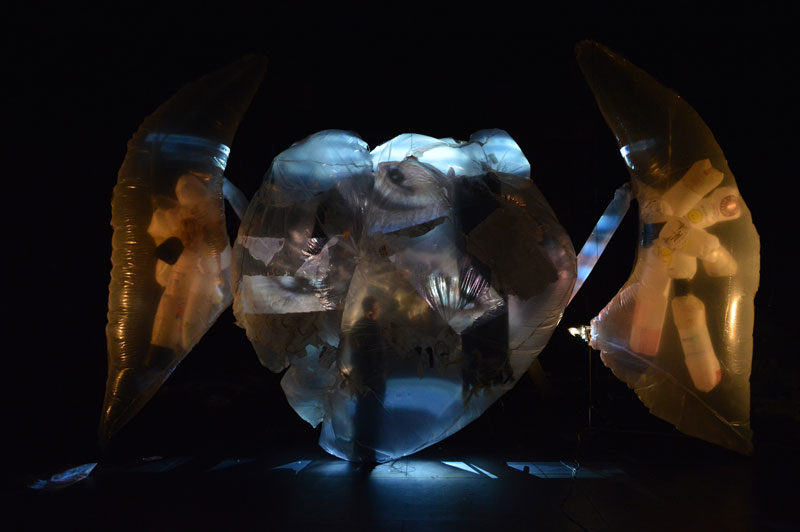
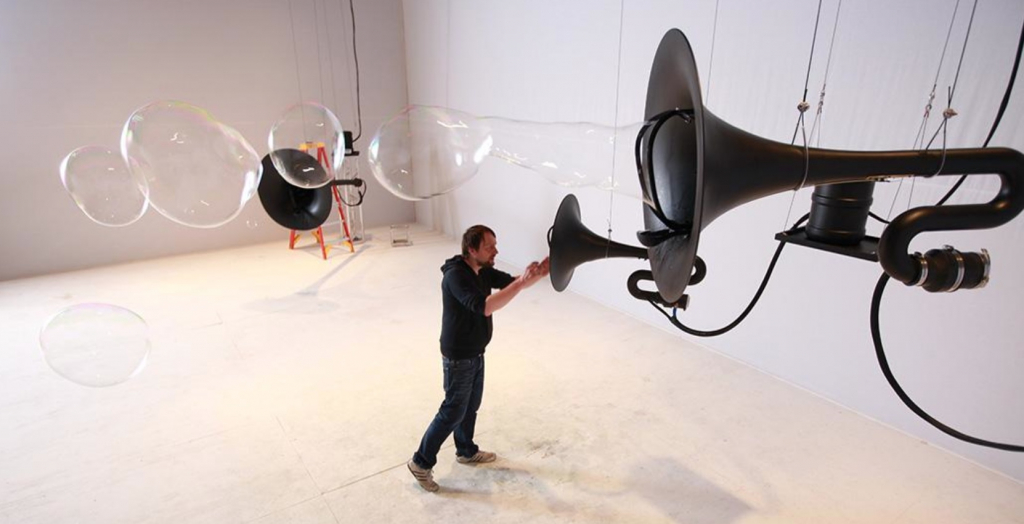
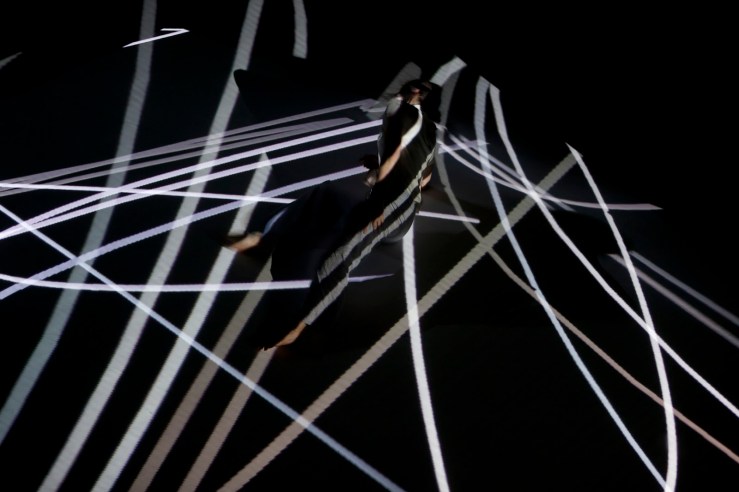
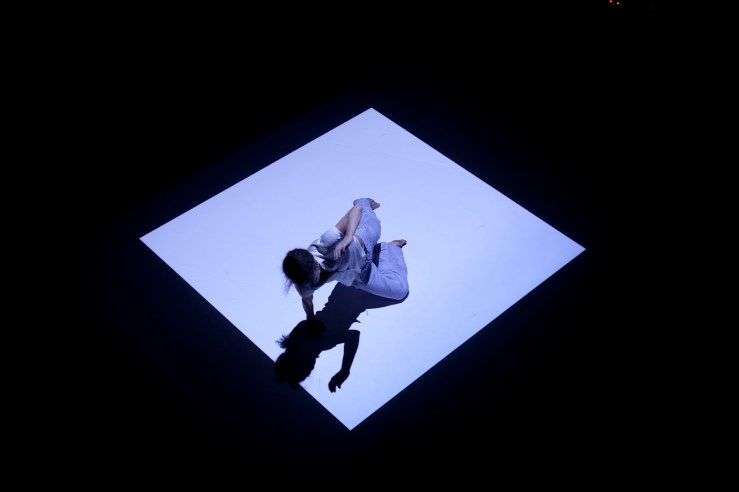
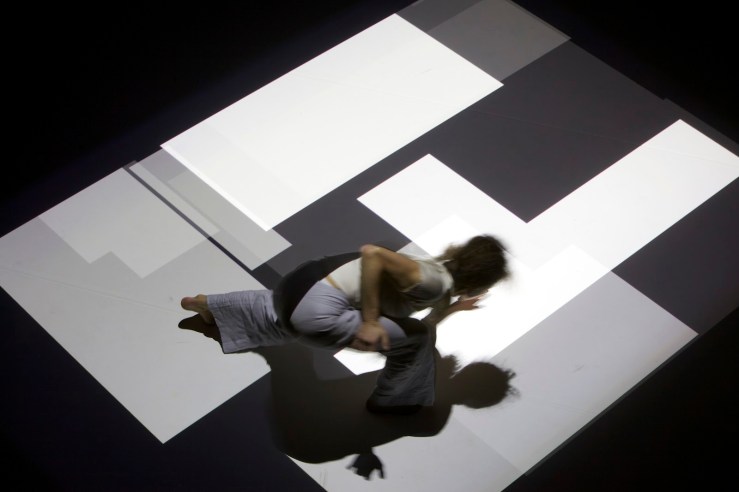
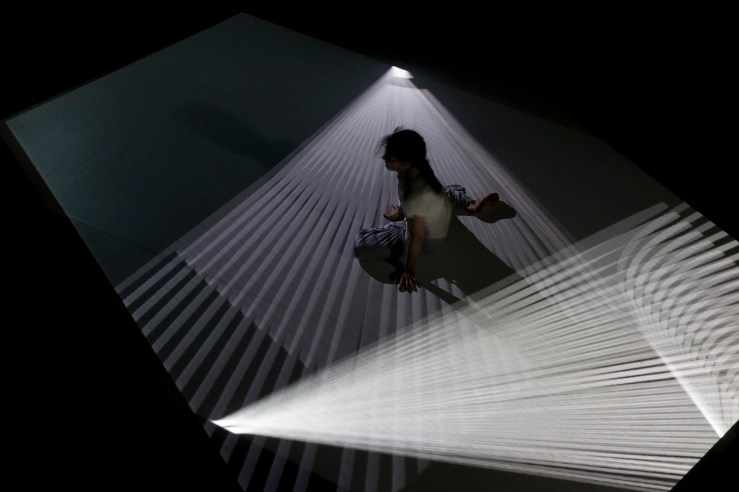
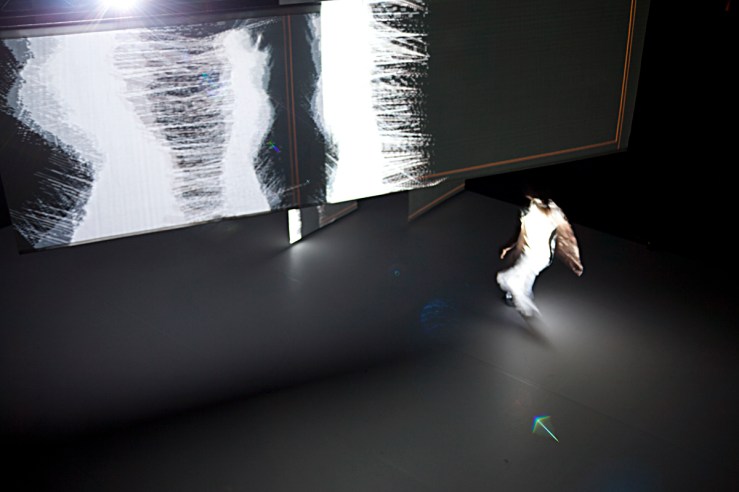
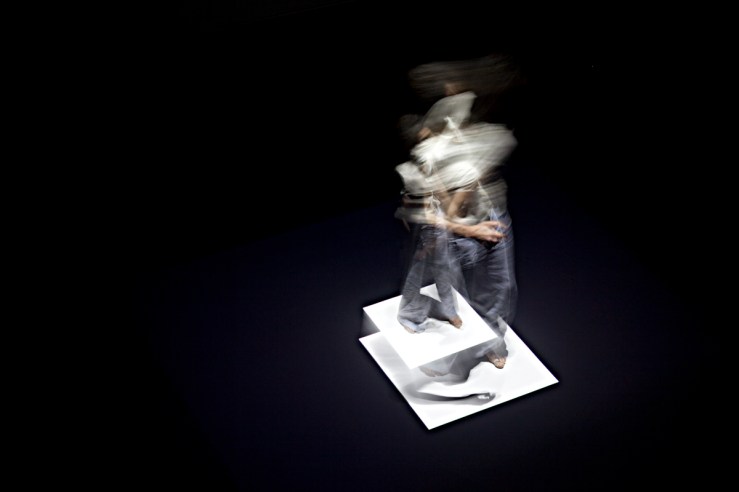
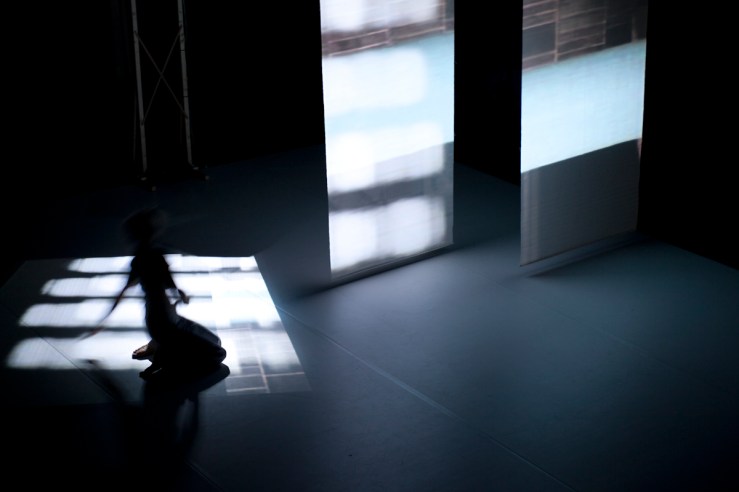
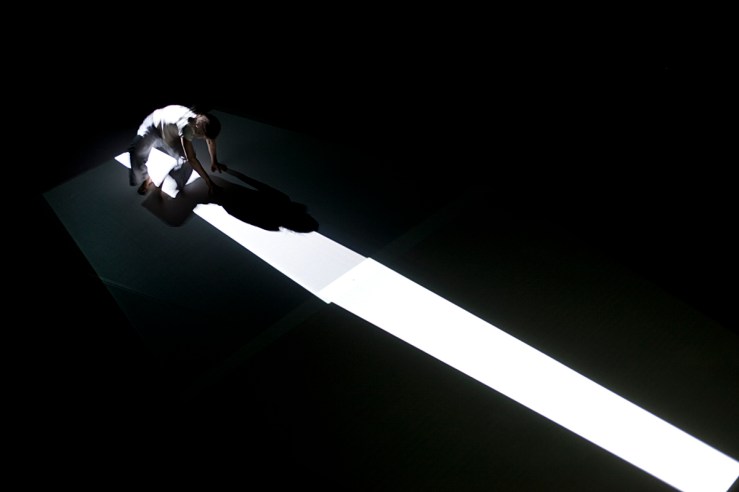
Example: Commissioned and partially developed through the EMPAC artist-in-residency program, Extra Shapes is a performance for lunging figures, a musical concert for loudspeakers, and a light show.
EMPAC—The Curtis R. Priem Experimental Media and Performing Arts Center at Rensselaer Polytechnic Institute is where the arts, sciences, and technology meet under one roof and breathe the same air. Four exceptional venues enable audiences, artists, and researchers to inquire, experiment, develop, and experience the ever-changing relationship between our senses, technology, and the worlds we create around us.
he 220,000-square foot building includes many firsts in the fields of acoustics, performing arts infrastructure, and architectural engineering. The integration of these features with audio, video, lighting, computer, and stage rigging networks makes EMPAC an ideal environment for human interaction with digital media.
Both a performing arts center and research and production facility, EMPAC provides an environment that supports the realization of complex artworks and research projects at any stage, from inception to completion.
The center has three curators focused on the areas of time-based visual art, theater, dance, and music. Within an interdisciplinary framework, each EMPAC curator is responsible for supporting the development and production of new works that stretch the boundaries of their field, interface with a diverse roster of international artists, and program challenging, adventurous performances for the Rensselaer campus and Capital Region communities. The team is led by founding director Johannes Goebel, who continues to be involved worldwide in the intellectual exchange on art, science, and technology, pursuing the questions of political, cultural, educational, and aesthetic relevance of the field.
Angela Stoecklin grew up in Iran and Nepal, and has been living in Switzerland since 1979. Practices in music and visual arts led her to dance. She was at Arts school Basel, got her dance education at ch- tanztheater Zurich, and holds a Master of Arts BFH in Contemporary Arts Practise. Angela worked and still works as dancer with numerous contemporary companies and productions in Switzerland, Germany and Belgium.
Creating her own projects, that lie more and more also in the interdisciplinary field, she closes the cycle of her artistic background. Fixed choreography which dismantels a specific form as necessity in the due of a process, as well as the momentary re/acting Instant Composition as direct interaction and absolute presence in the now are parts of her interests and means of working. She explores the multilayered facettes of communication and perception and explores process-oriented approaches. She has created choreography, performative and installation pieces, short to evening long productions, solo and interdisciplinary projects, and does intercultural work.
In 2019 she launched the first Festival Instant Composition for dance, artistics and music in Zurich. She is dance and movement pedagogue, acupressure therapist and Taijiquan and Qi Gong instructor.
“ghosts”, (Spazio Ludens2)
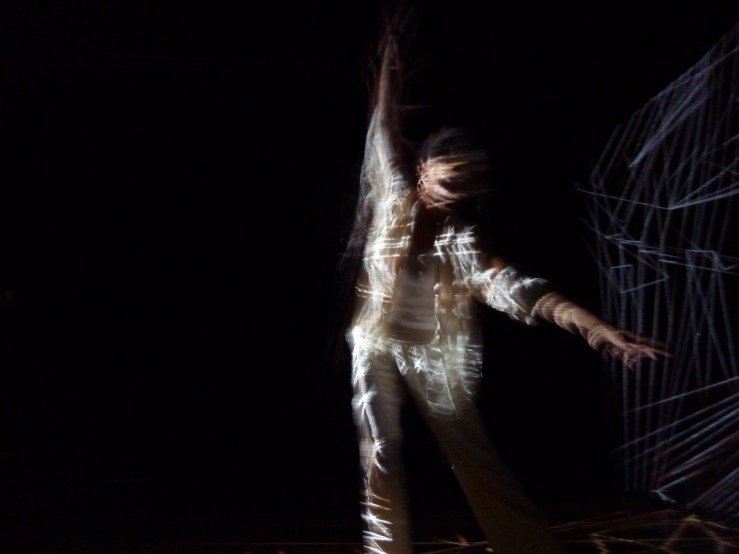
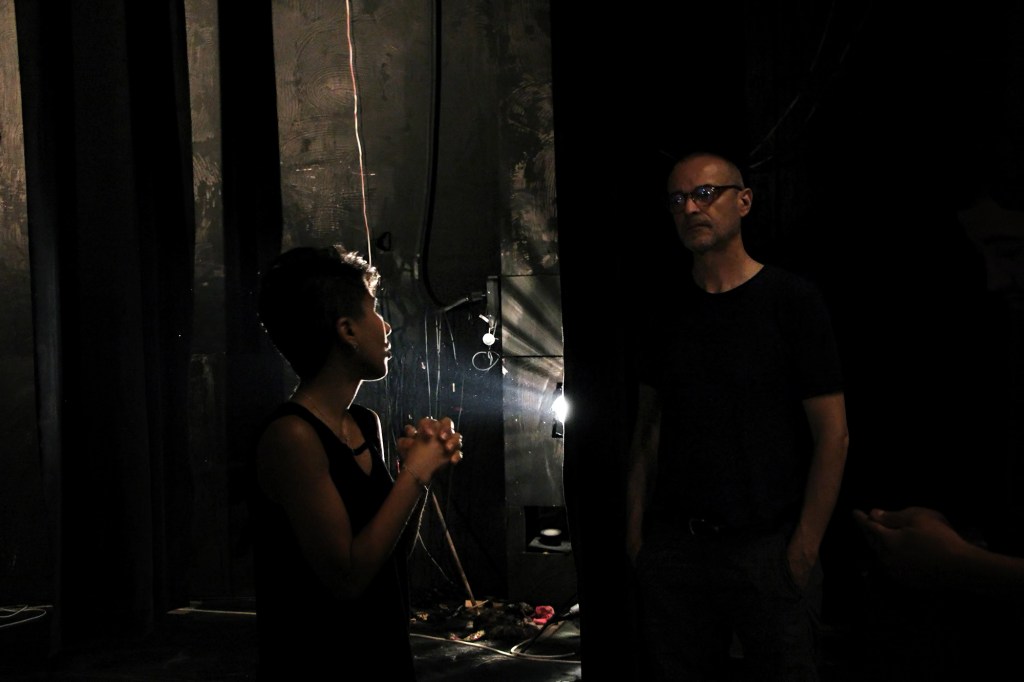
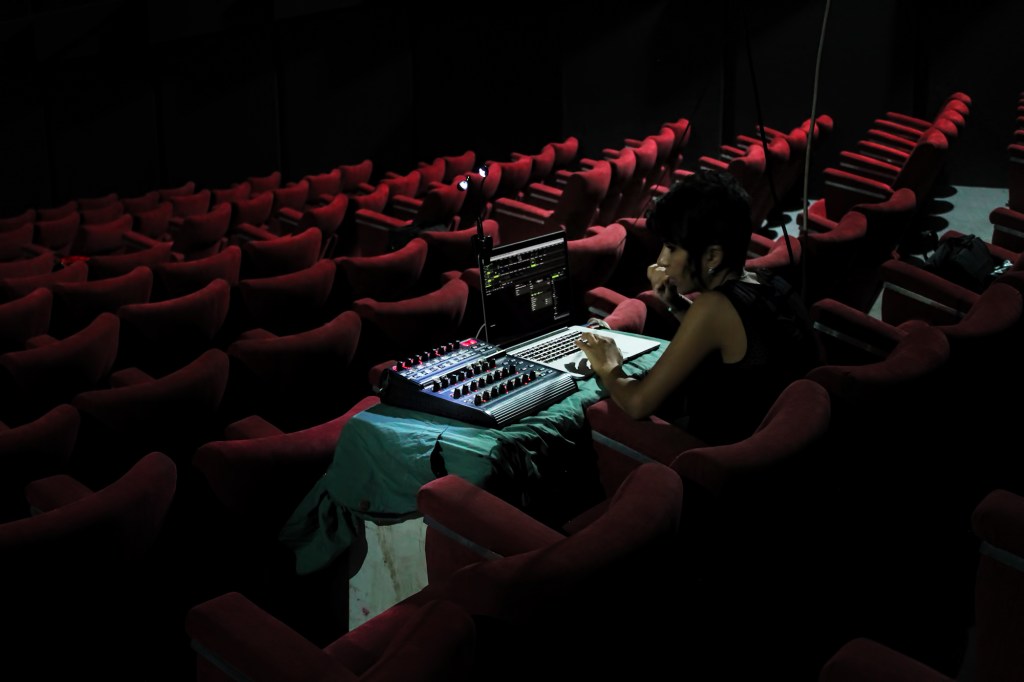
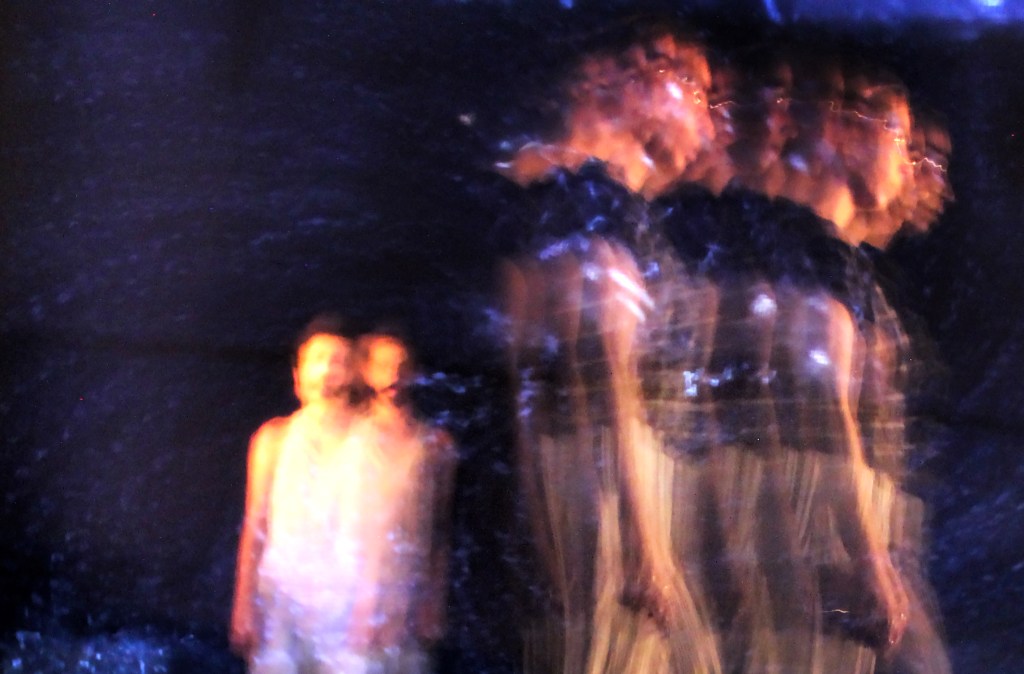
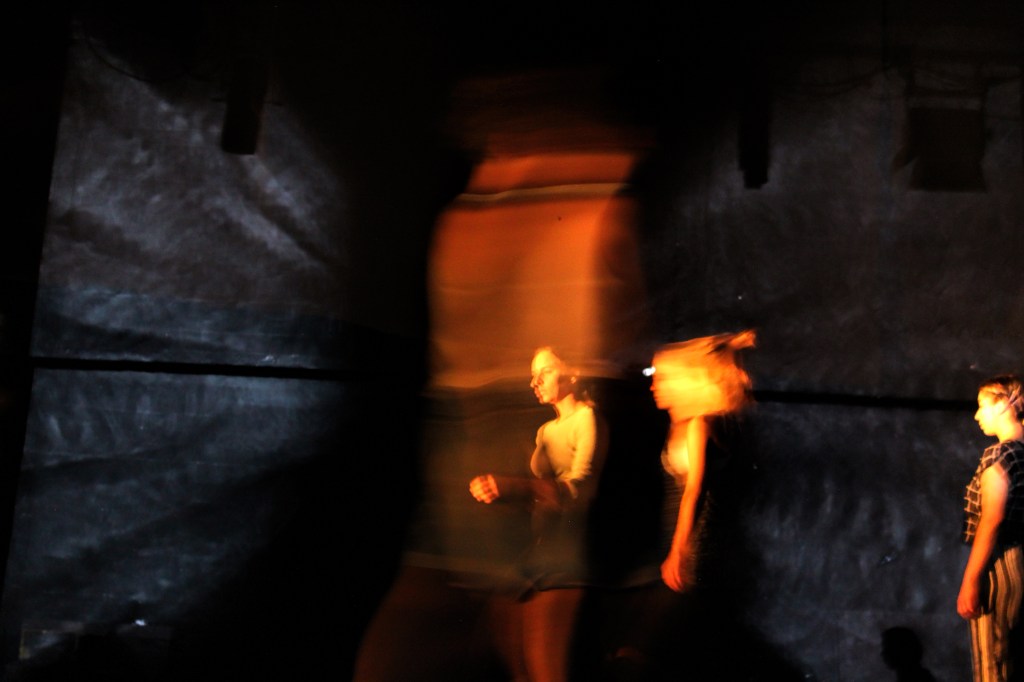
In „ghosts“, (Spazio Ludens2) a dacer, a musician, a visual spacial artist and a light designer interact in different spaces. Inspired by each specific situation they playfully transform them in installative performances. You find yourself in the midst of dream and nightmare, dense athmospheric imagry and silent shadows rushing by. Well tuned compositions meet the chaotic, childlike scenes with eerie ones.
Angela Stöcklin (concept, movement)
Matthias Rüegg (spacial design)
Anselm Caminada (Sound)
Antje Brückner (lighting design)
trans-form
on a white open field and a space continuously being structured by screens movement (Angela Stoecklin, music (Marie-Cécile Reber) and light and images (Jan Schacher) play and become entwined. They interact in multiple layers of tension between freedom and dependance, structure and limitation, and try themselves with the imposibility of communication. Reciprocal restrictions lead to breaking out and flight, mutual impulses to an approach, which allows flickering moments of synchronicity. Engagement densifies and transforms, and unnoticably perception shifts. The interdisciplinary performance „trans-form“ deals with in/dependency and control in relationships and encounters.
installative performance: In a circle, surrounded by more or less reflecting panels a game of view-point, eye-catching and relating increases towards a tumultuous chase between performer, light and sound.
SPACEnr1 floating
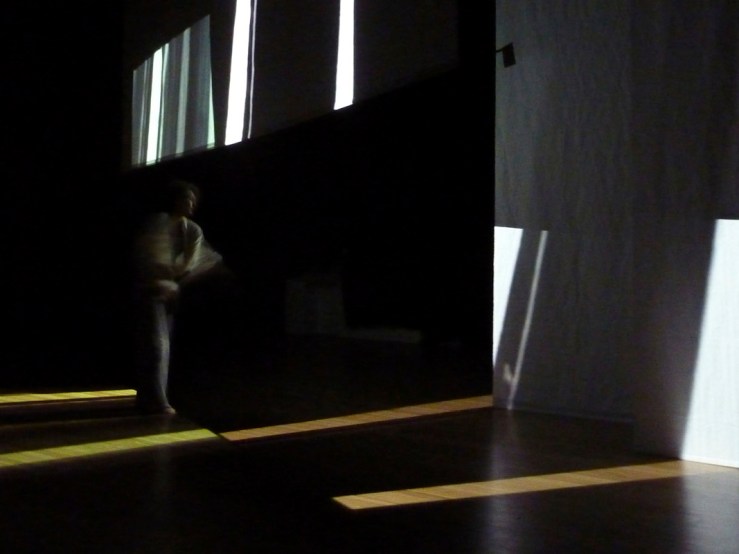
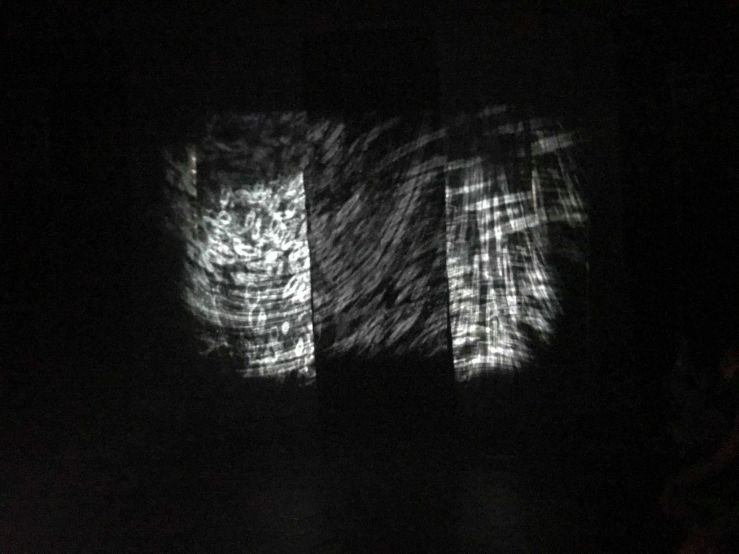
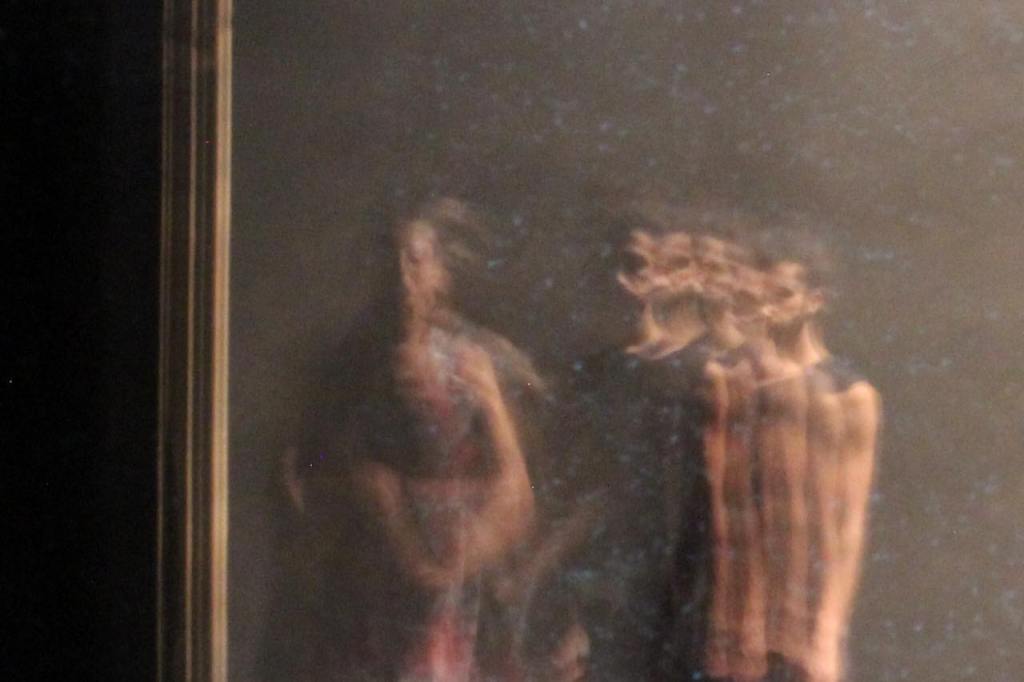
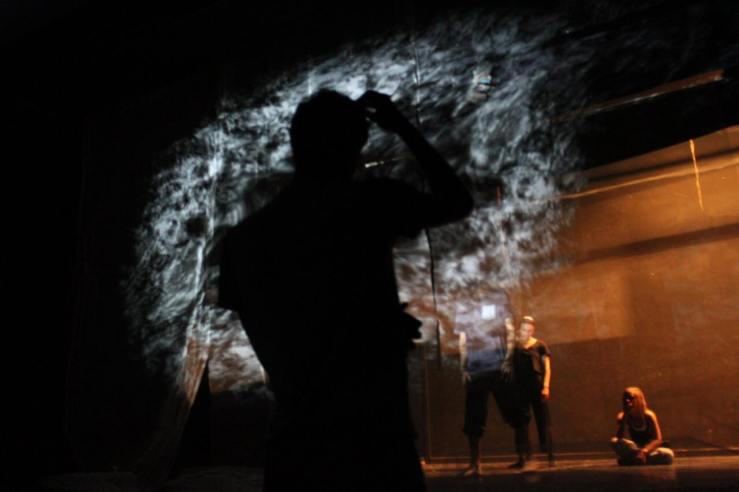
Light-apparitions dancing restlessly over walls and ceiling, plunging the space into darkness and light. A figure as secret tamer directs this play. Drawn out sounds put densifying atmospheres. Reflections, overlapping shadows, suddenly the face recognised in a mirror. Movement triples, eye is irritated as orientation gets disrupted and shifts. There is no story told, but many insinuated.
○ Lights : same as previous + a side spot a the opposite of the dancers entrance facing them, low intensity.
Second round of ritual : 1’20
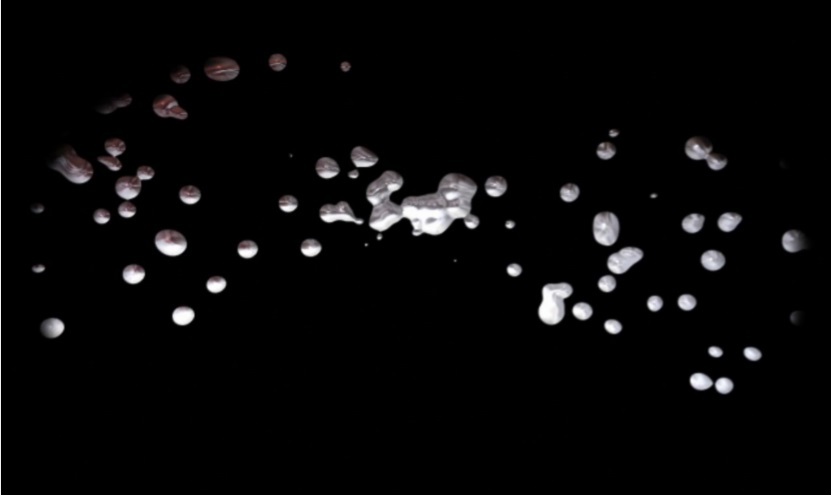
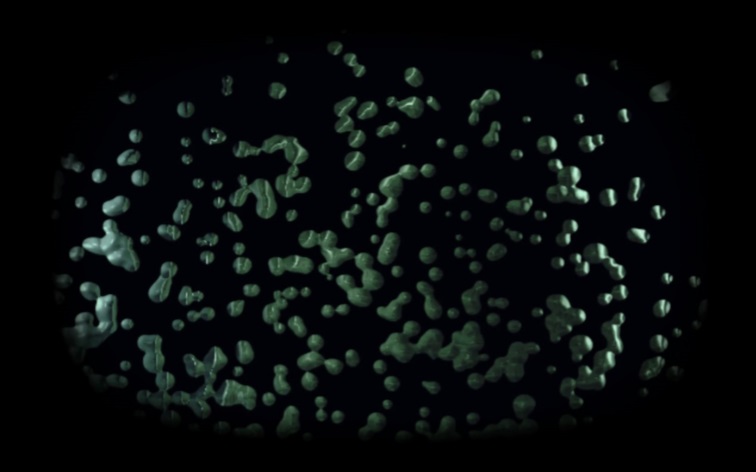
○ Image : small particles and drops shining , apearing and disapearing at different places of the screen
○ Sound : development of the previous low drone with medium and high resonnant parts of the spectrum.
○ Lights : same as previous
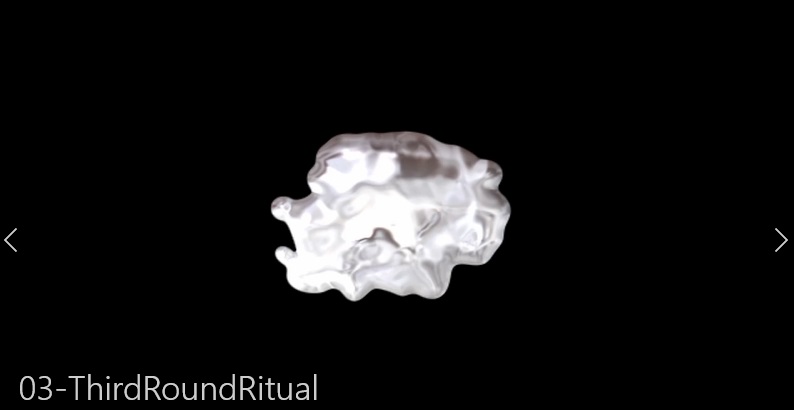
Third round of ritual and forming the line : 1’25
Until Kate joins Anas, everything remains the same but starting from this point :
○ Image : liquid matters joining together and build a single floating mass above the head of the dancers
○ Sound : a new layer of sound is added with inner cyclic movements
○ Lights : same as very beginning
Second round of ritual : 1’20
○ Image : small particles and drops shining , apearing and disapearing at different places of the screen
○ Sound : development of the previous low drone with medium and high resonnant parts of the spectrum.
○ Lights : same as previous
Scene 3 : the universe / orbiting – 1′ – Part 1 :
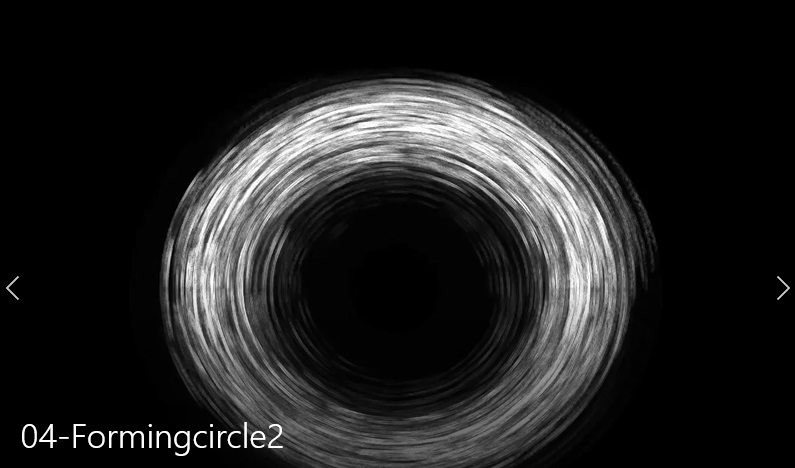
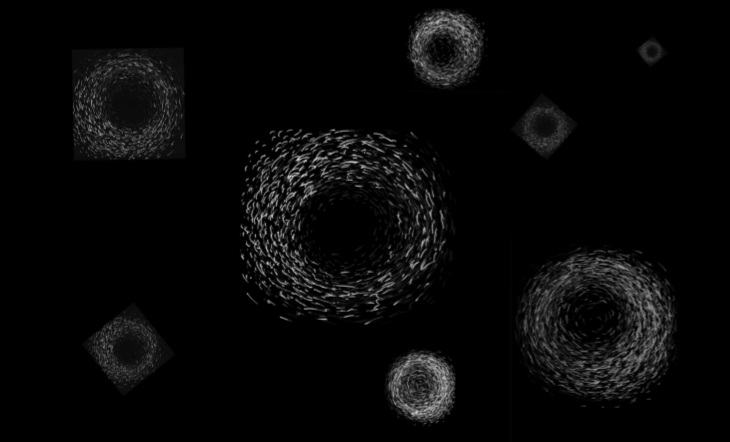
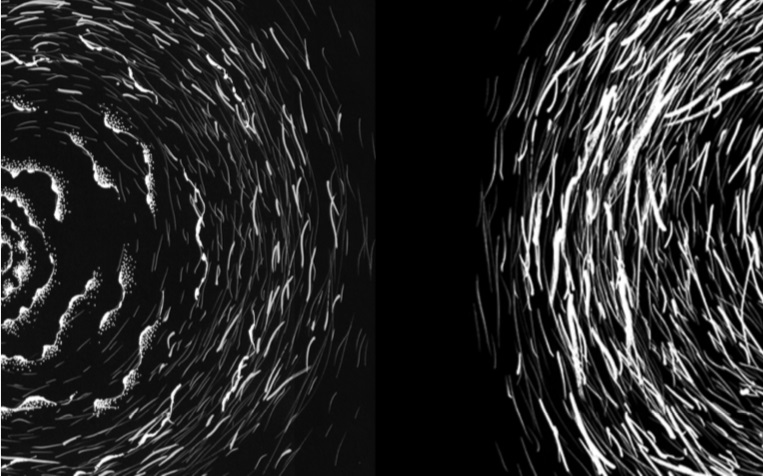
○ Image : the water disapears and the circle multiply itself and we have several circular elements spinning
○ Sound : low motor like sound is divided in several tinny ones with same dynamic shapes at a higher speed.
○ Lights : side spots on the floor
Part 2 :
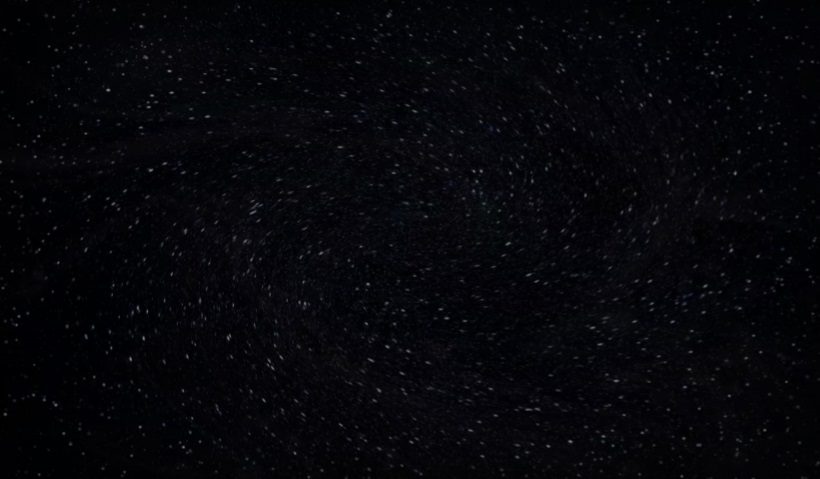
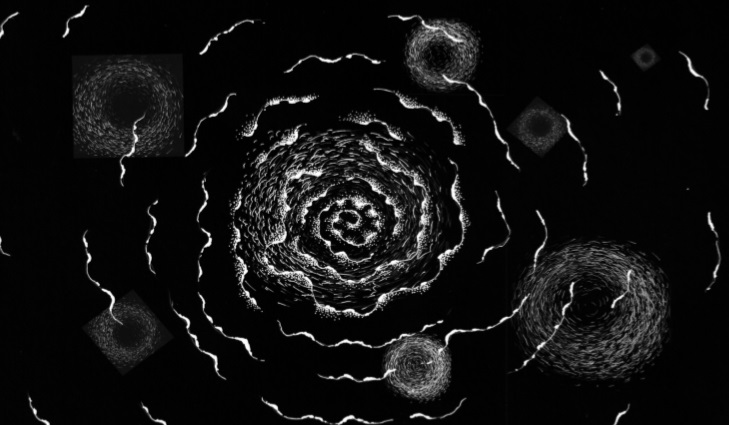
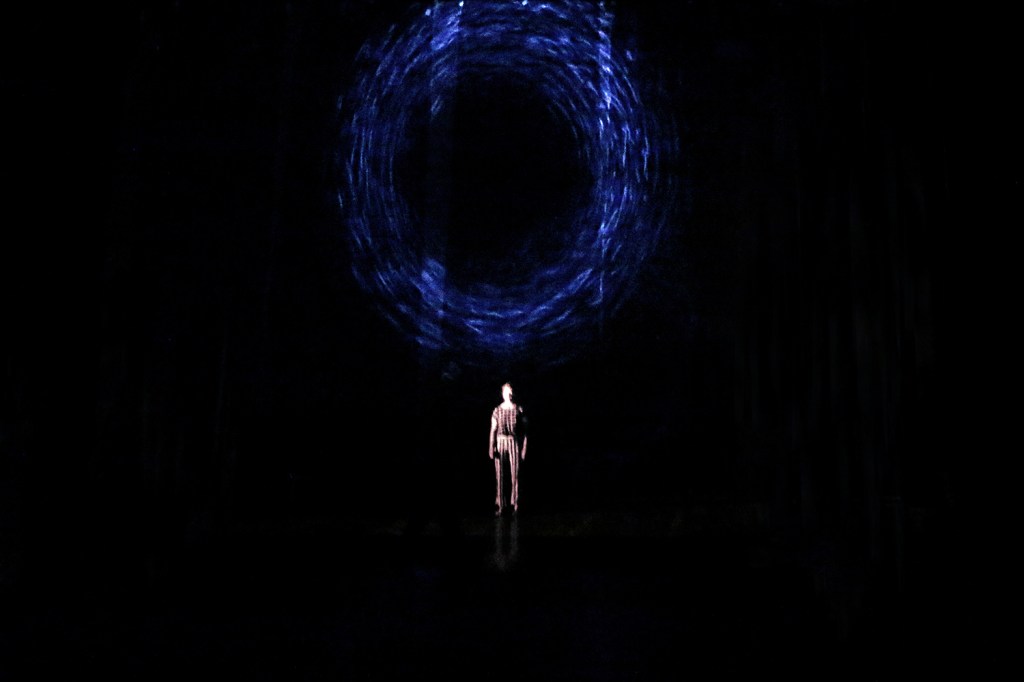
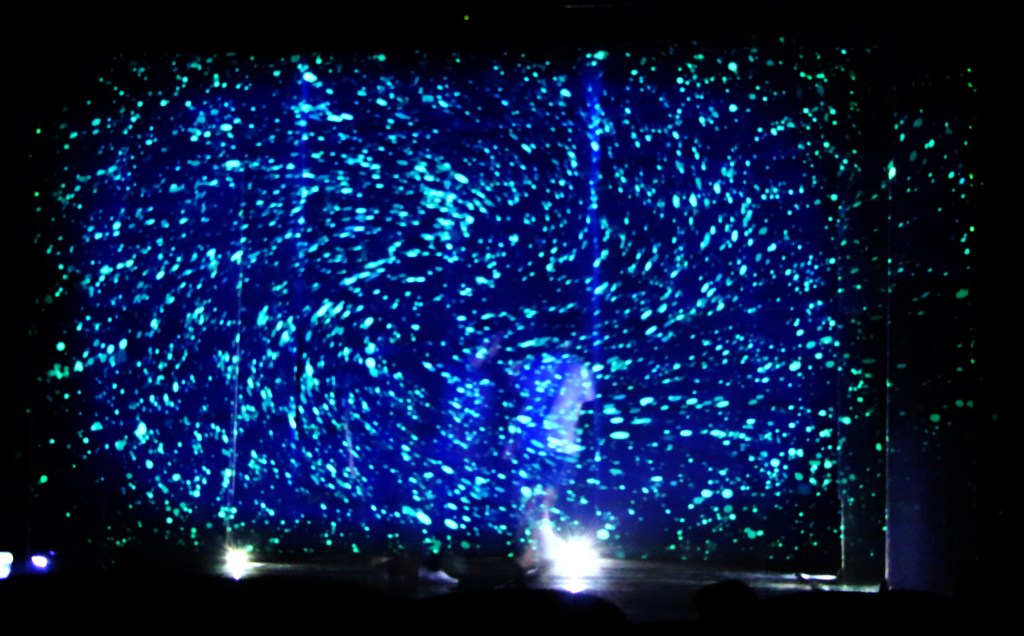
○ Image : a giant vortex appears progressively and “eats” the whole image. ○ Sound : acceleration of the sounds going to merge in a single strong low frequency.
○ Lights : is disapearing progressively HERE we propose to move the part «Zig-Zag» after «Equalizer» and have like 2’ of images and sound only.
Scene 4 : Compass – 1′
○ Image : No
○ Sound : percussive sequence upon notions of rebounds and offset which tends to structure a rythmic pattern
○ Lights : side spots on the floor
Scene 5 : Equalizer – 2′
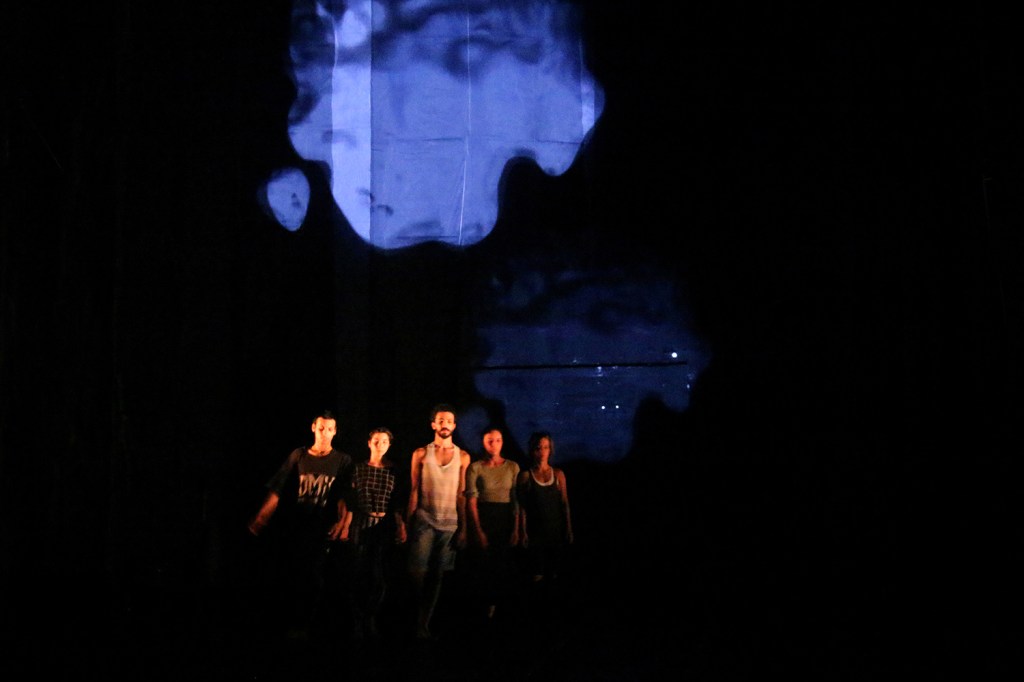
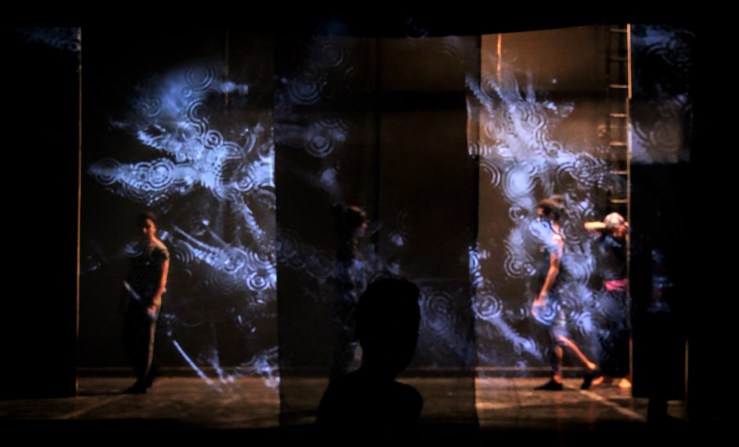
○ Image : a mass of spaced drops apears on the whole screen. It allows to see the dancers and at the same time immerges them in a kind of aquatic matter
○ Sound : development of a rythmic pattern
○ Lights : side spots on the floor
Scene 6 : Zig-Zag – 1′
○ Image : 2 strips with straight lines moving in opposite directions at different speeds
○ Sound : de-construction of the rythmic pattern by use of shuffling and stretching of the sound matters/
○ Lights : side spots on the floor
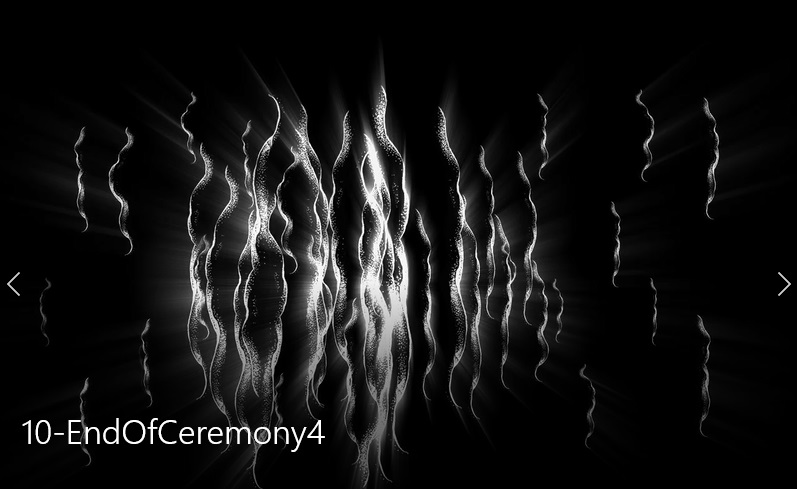
Scene 7 : End of the ceremony – 1′
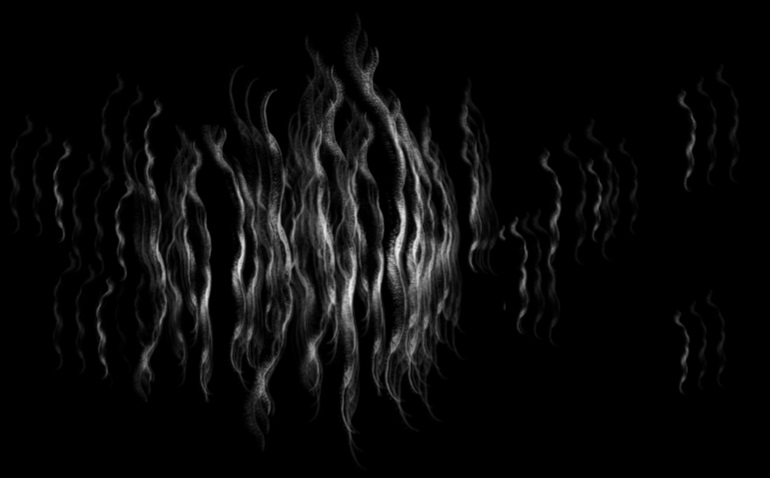
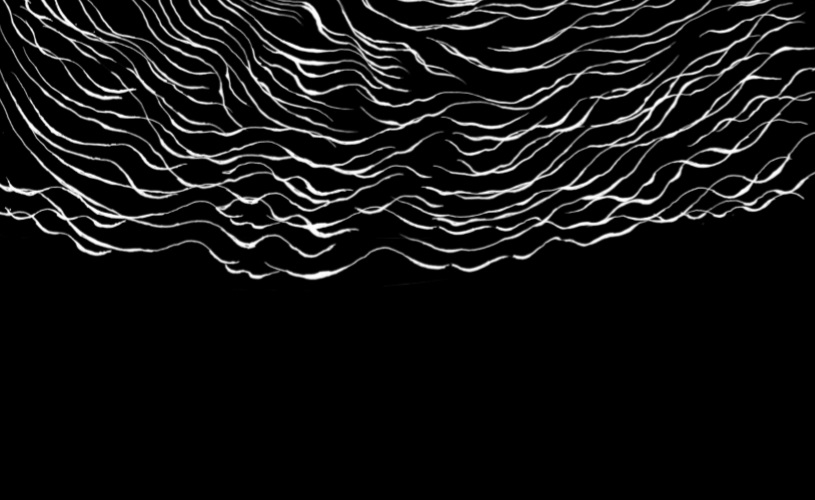
○ Image : vertical lines apearing very progressively and concentrated in the middle to create a surface almost round (gathering and crystallization of the liminal matter)… then the image disapears with the first snap of the dancers.
○ Sound : Breathe morphologies thinner and thinner but at the very end, a big and quick crescendo of noise with a clean cut just before the snap.
○ Lights : side spots on the floor at low intensity first then same screscendo as sound.
Scene 8 : Break the trance – 1′
○ Image : No
○ Sound : The first snap to the dancers trigs a very stable soft low sound during the Daniel’s solo. As the group is stepping backwards, a pulse is started and lasts until the end of the scene.
○ Lights : side spots on the floor medium intensity
Scene 9 : 2 groups – 3′
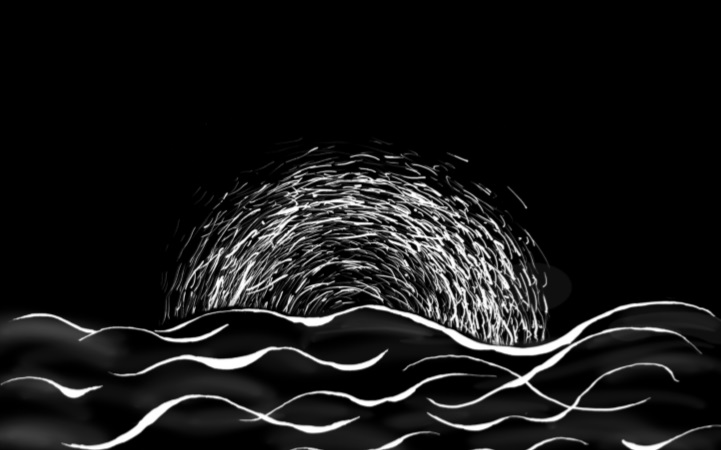
○ Image : Two big semi-circles on the side of the screen are spinning and inside them several little semi-circles or small vortex that group them together
○ Sound : variation around a pattern of 3 elements derived from the count of the dancers mixed with a breath-like sound following a slow panning from left to right and back
○ Lights : side spots on the floor low intensity
Final scene : the layers of liminality
A proposal for a scene without choreography – 1’30
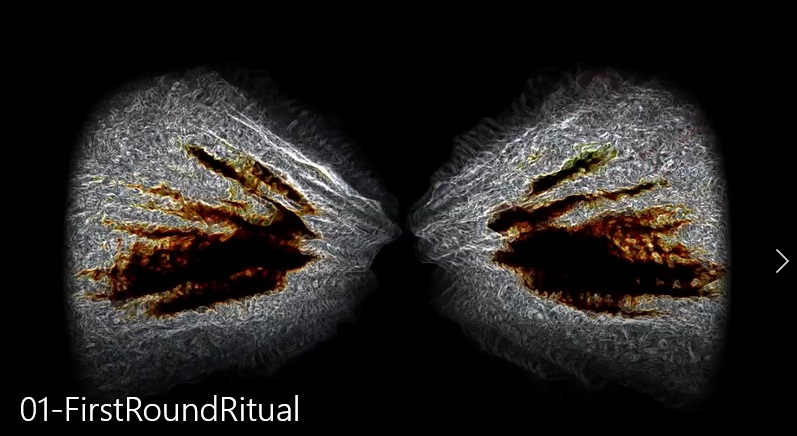
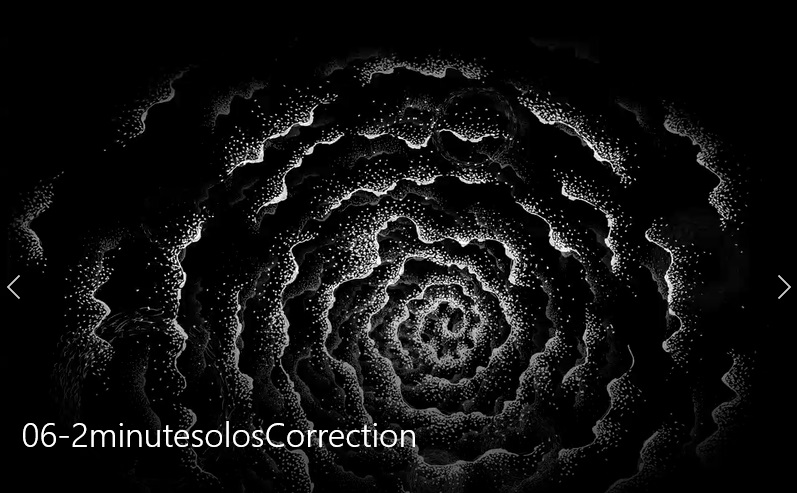
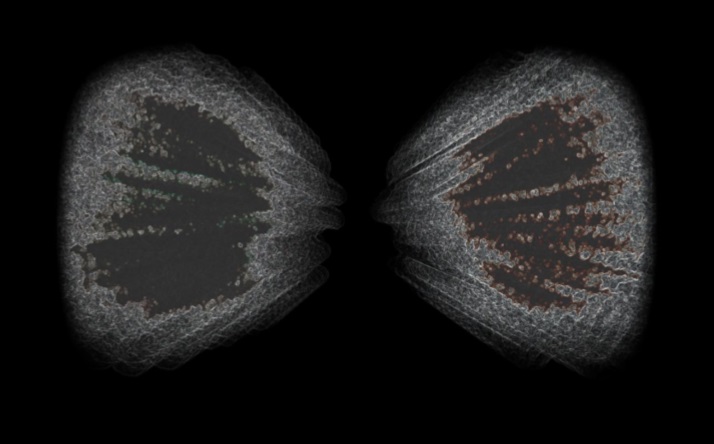
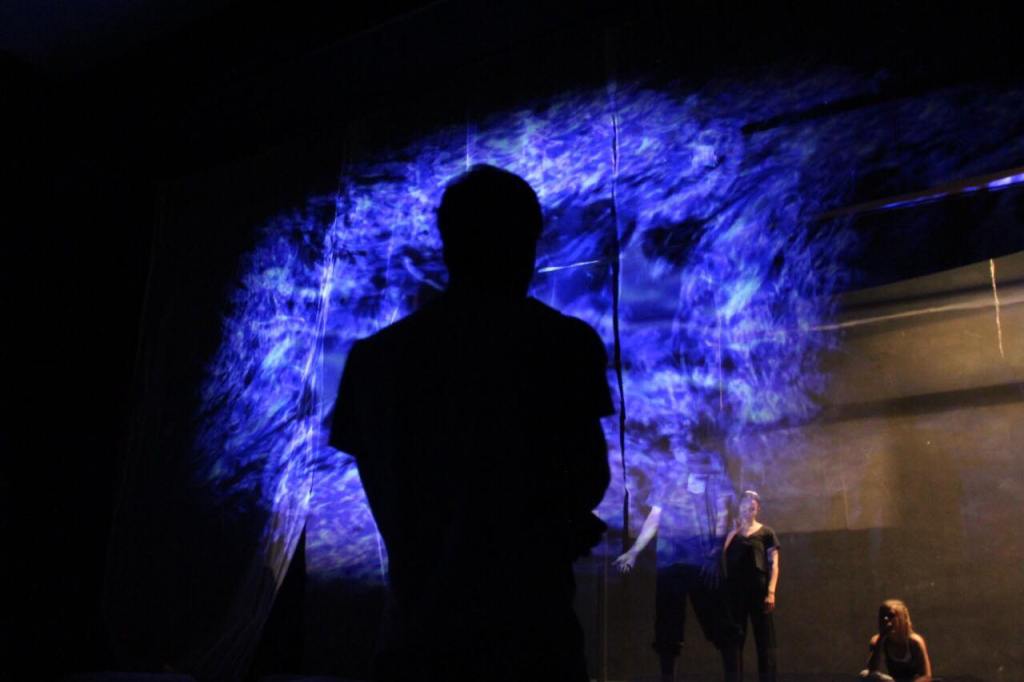
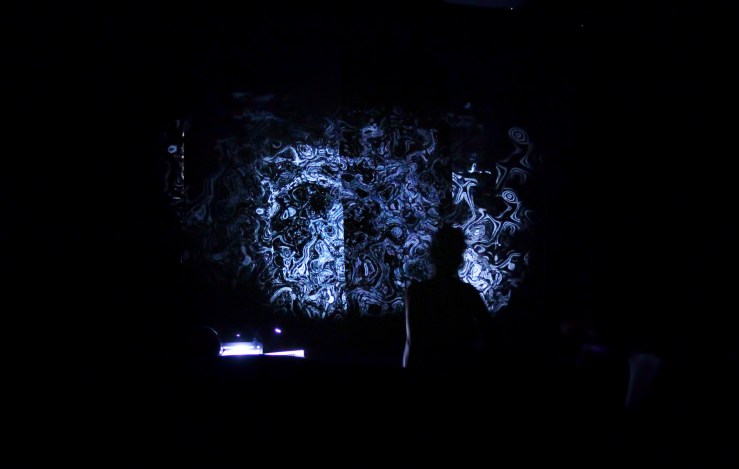
A very dense and immersive matter made with a multitude of shapes but it becomes slowly a single big one that invades all screen space. A big wave of intense drops. Then this is covered by a layer of folds which comes down from the top on the whole screen.
Artist: Sound Artist François Donato, Visual artist Golnaz Behrouznia, Dance Artist Abd Al Hadi Abunahleh, Dance Artist Anas Nahleh, Visual Artist Ren, Dance Artist Emran Alamareen, Dance Artist Daniel Issa, Dance Artist Nadeen Dabass, Dance Artist Kate Port, Dance Artist Ziad Hajir, Dance Artist Oliveira Jara
Artist: Sound Artist François Donato, Visual artist Golnaz Behrouznia, Dance Artist Abd Al Hadi Abunahleh, Dance Artist Anas Nahleh, Visual Artist Ren, Dance Artist Emran Alamareen, Dance Artist Daniel Issa, Dance Artist Nadeen Dabass, Dance Artist Kate Port, Dance Artist Ziad Hajir
Date: 7/20/2019
Duration: 240 minutes
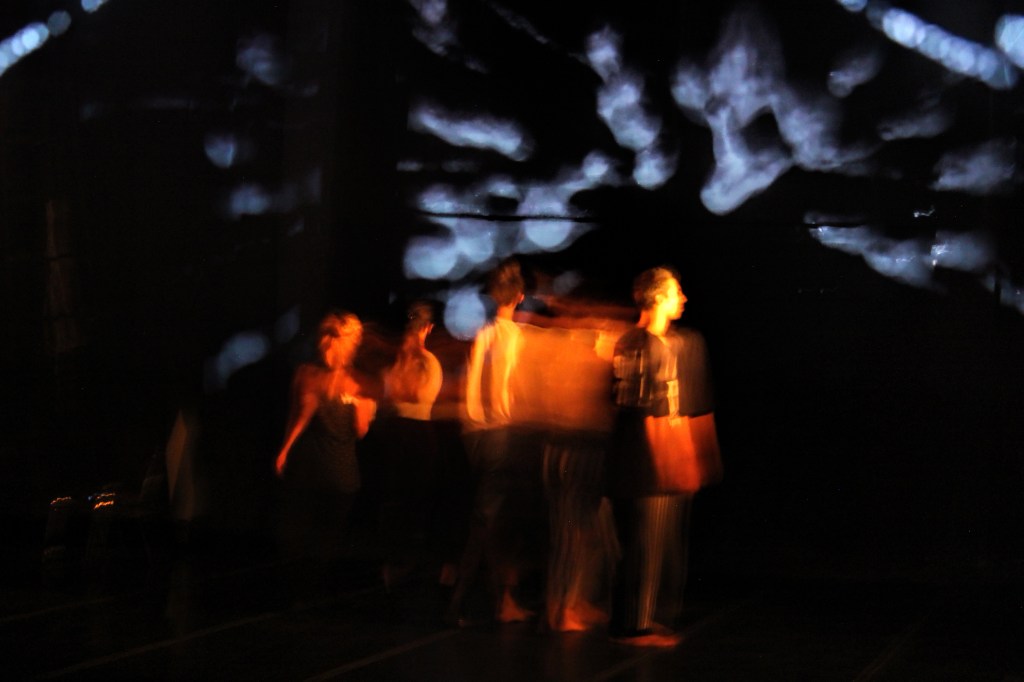
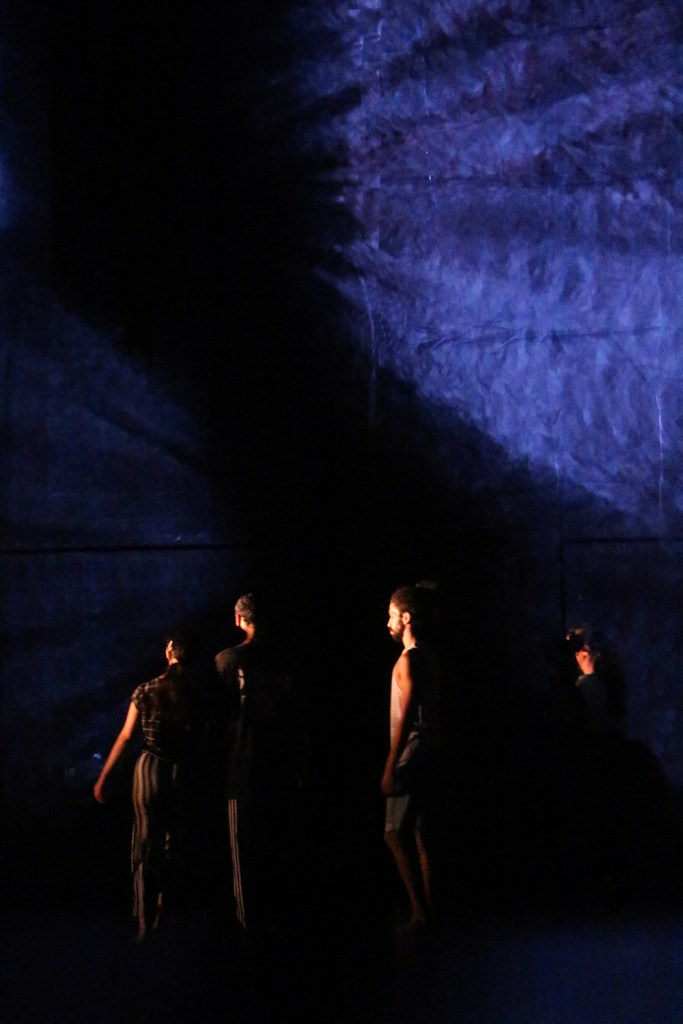
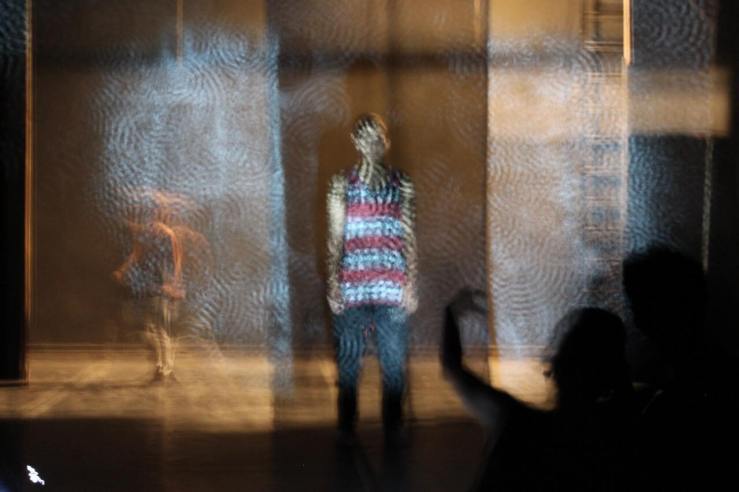
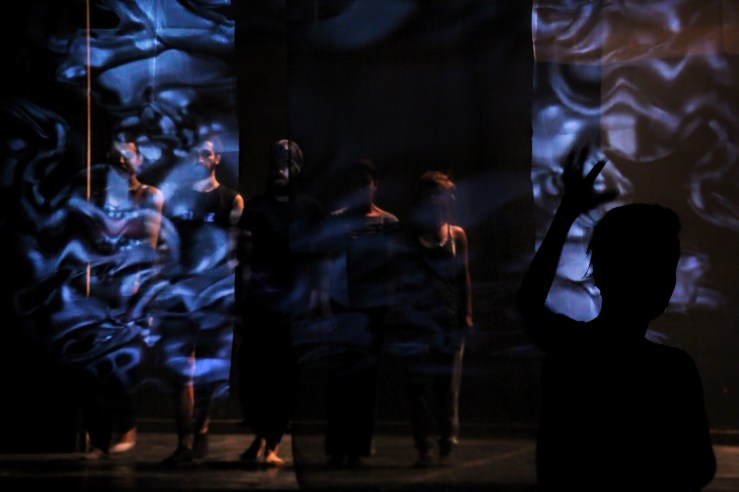
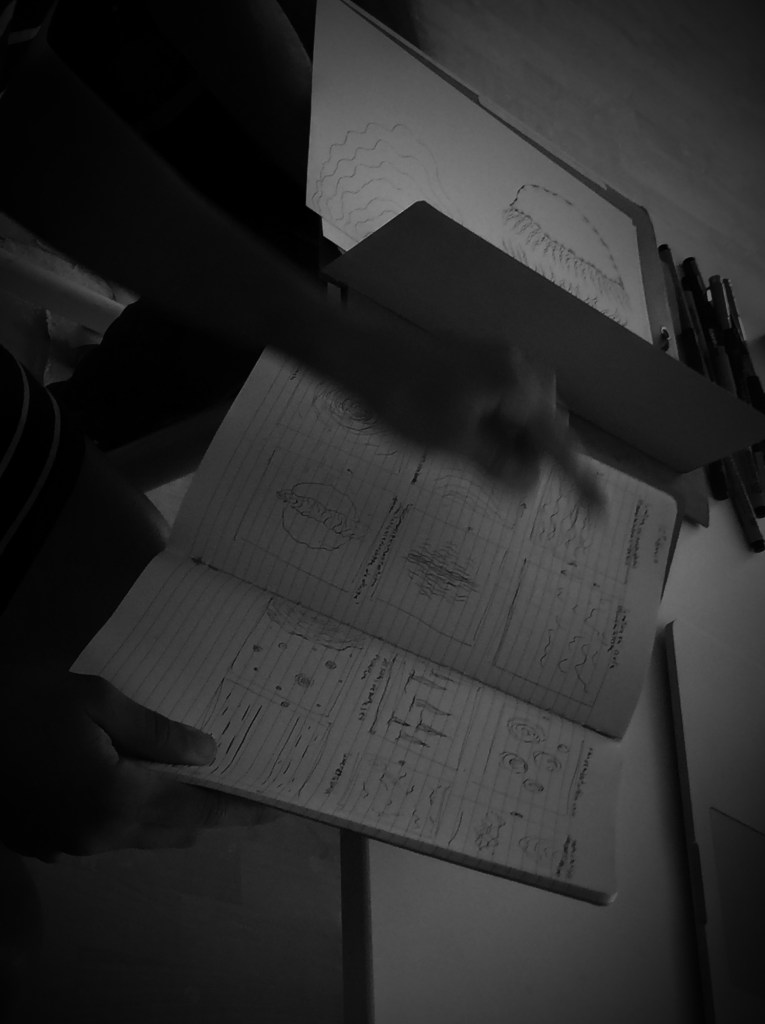
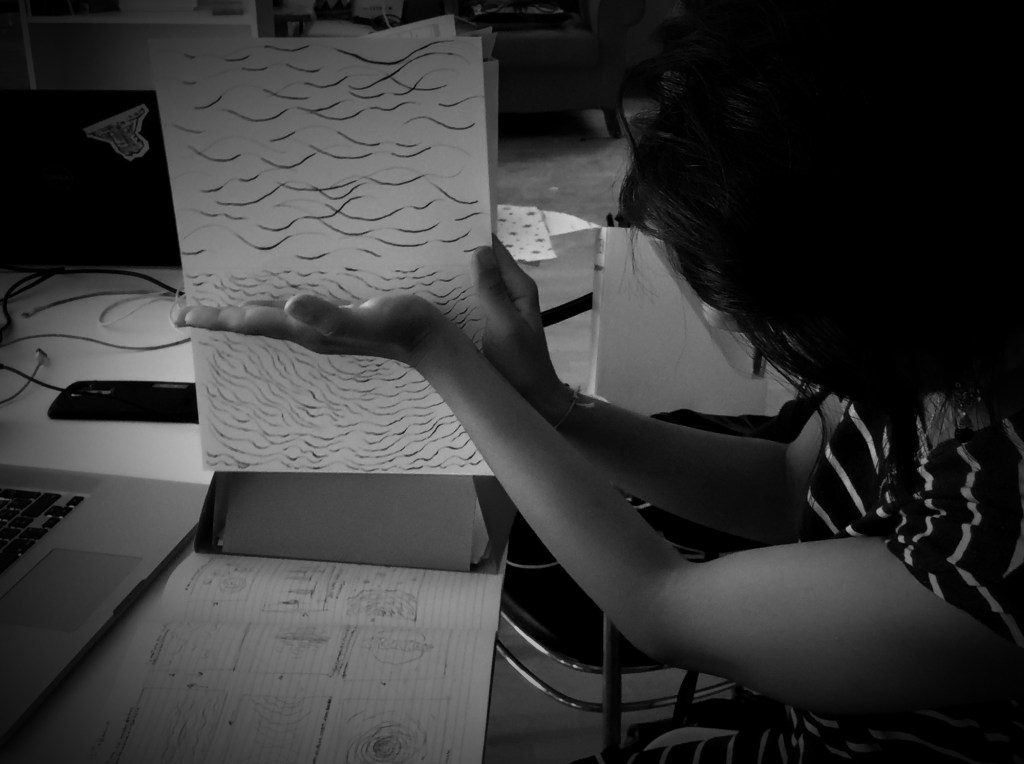
This dance production is inspired by Liminality, “a threshold”. Humanistic psychologists describe “the ‘out-of-this-world’ quality associated to liminality a sort of trance-like feeling. Analytical psychologists have often seen the individuation process of self-realization as taking place within a liminal space.
Individuation can be seen as a “movement through liminal space and time, from disorientation to integration…. What takes place in the dark phase of liminality is a process of breaking down…in the interest of “making whole” one’s meaning, purpose and sense of relatedness once more”.
The final result will be a live performance. It will be presented across gallery, stage, and public space.
Since 2014, Amman based Dance Company Studio 8, has been calling all artists of any discipline (visual, digital, coding, installation, film, photography, painting, art managers, musicians, event managers, students, producers, curators) to work together, to collaborate, to create side by side, loosening boundaries between artistic labels, in favor of a more open and flexible view toward the art experience itself.
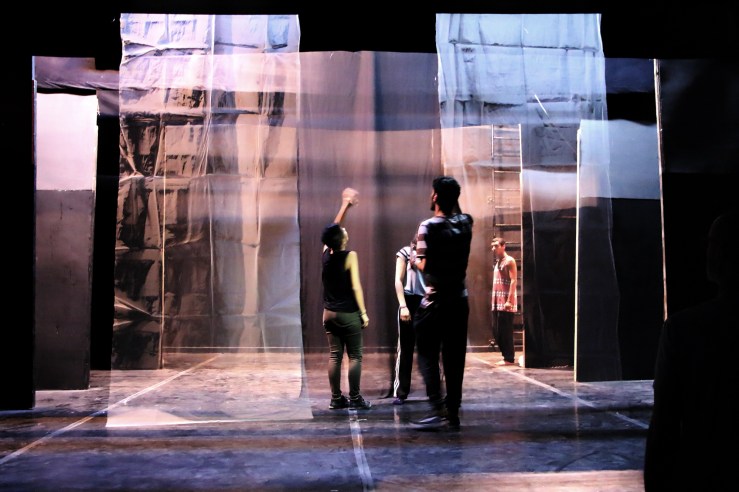
Building on this approach, from 18 to 25 of July 2019, Studio 8, made possible by the support of Al Mawreed Al-Thaqafi, organized a production residency bringing together an artist duet of French sound artist François Donato and French/Iranian visual artist Golnaz Behrouznia. and five performers based in Jordan, with the aim to create a concrete project that is crossing borders of genres and disciplines: dance, performance, visual arts, performative arts, animation, projection, coding, etc.
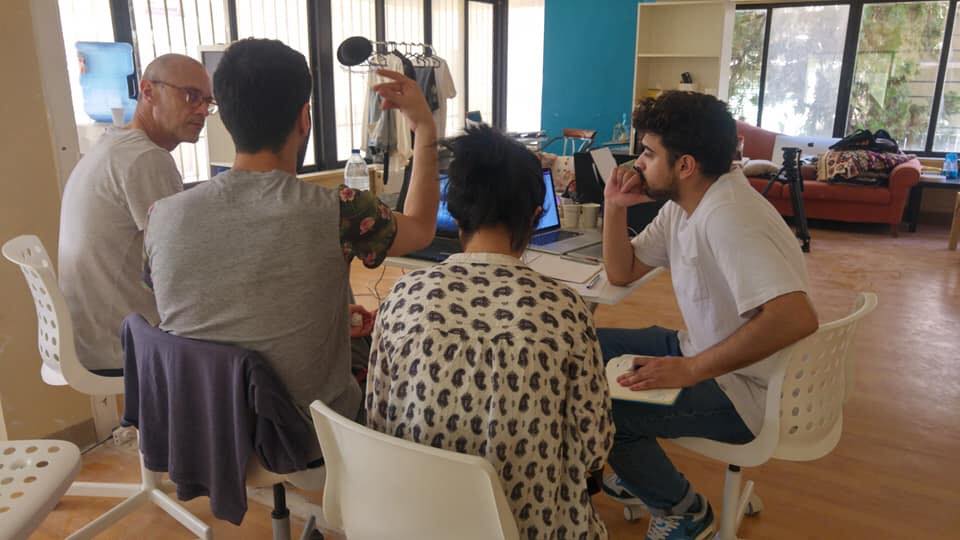
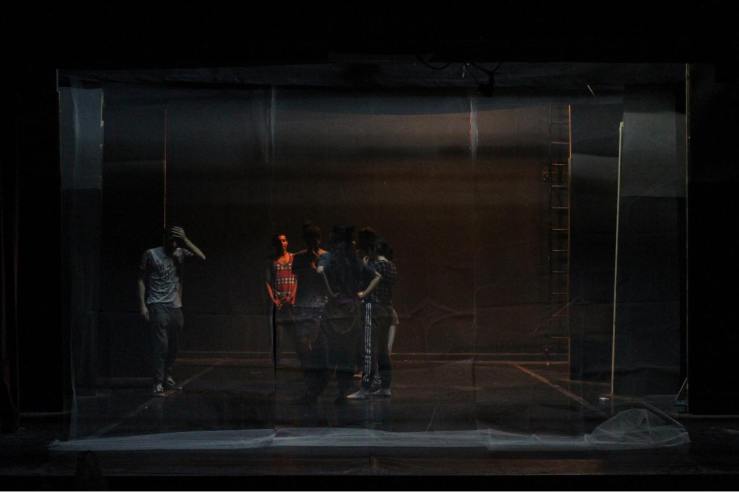
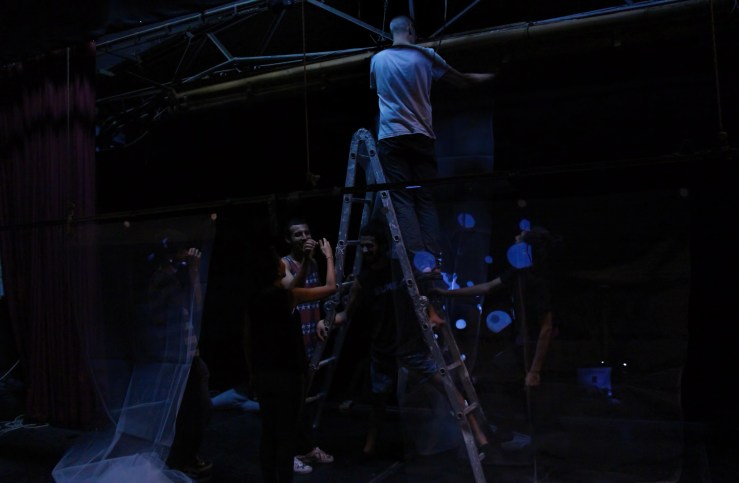
Prior to the residency, six dance artists have developed 15-20 minutes movement sequences. For the first day of the residency, visual artists, sound designer and dance artists shared their thoughts on the movement-design-in-progress, explored the connections between movement and visual arts, performative arts and sound, installations and dance. For the second day, artists met in Osama El Mashini Theater tasked to expand the possibilities of art through the merging of disciplines in an experimental process of collaboration.
Location: Osama El Mashini Theater, Amman, Jordan
Artist: Sound Artist François Donato, Visual artist Golnaz Behrouznia, Dance Artist Abd Al Hadi Abunahleh, Dance Artist Anas Nahleh, Visual Artist Ren, Dance Artist Emran Alamareen, Dance Artist Daniel Issa, Dance Artist Nadeen Dabass, Dance Artist Kate Port, Dance Artist Ziad Hajir
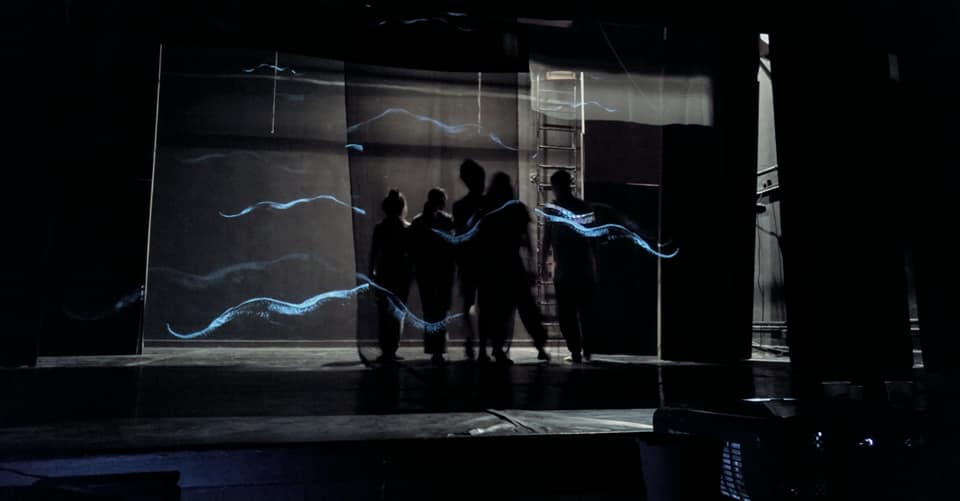
From 18 to 25 of July 2019, an interdisciplinary ensemble of artists who shared a vision to create a dance production that an interplay between a dynamic choreography and an audiovisual immersive environment is presented simultaneously, took a 5-day-residency in Amman, Jordan between dance studio, hotel rooms and theatre. The dance production will be presented to audience in Jordan on August, 2019.
Location: Studio 8, Amman, Jordan
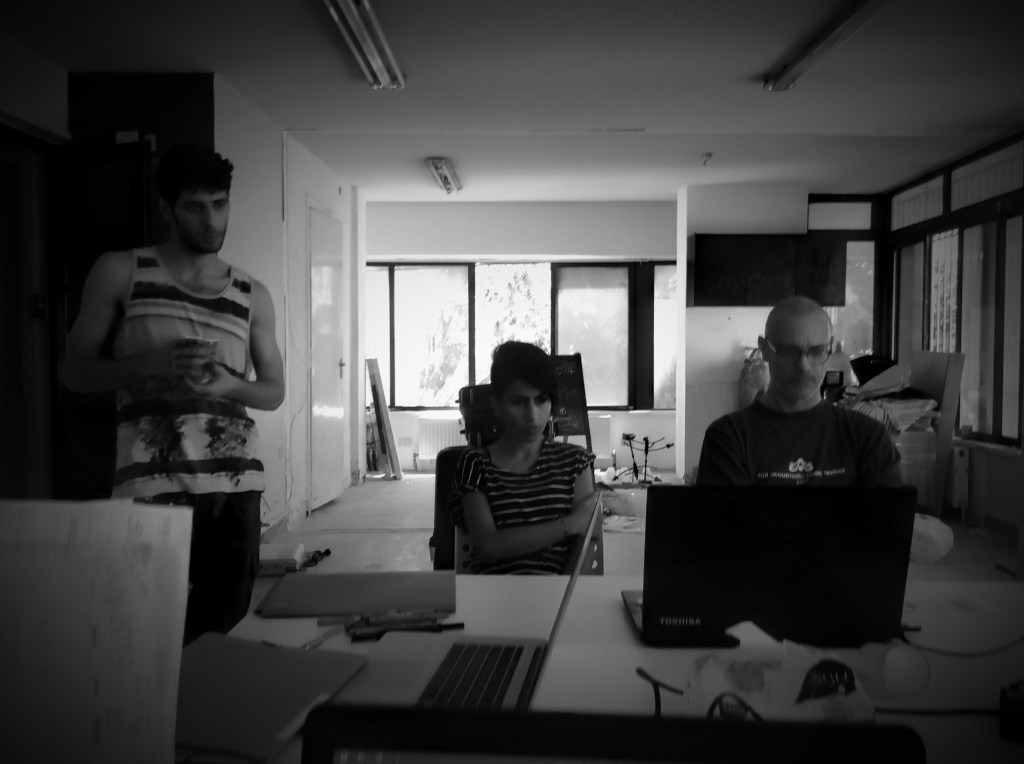
Artist: Sound Artist François Donato, Visual artist Golnaz Behrouznia, Dance Artist Abd Al Hadi Abunahleh, Dance Artist Anas Nahleh, Visual Artist Ren
Date: 7/18/2019
Duration: 120 minutes
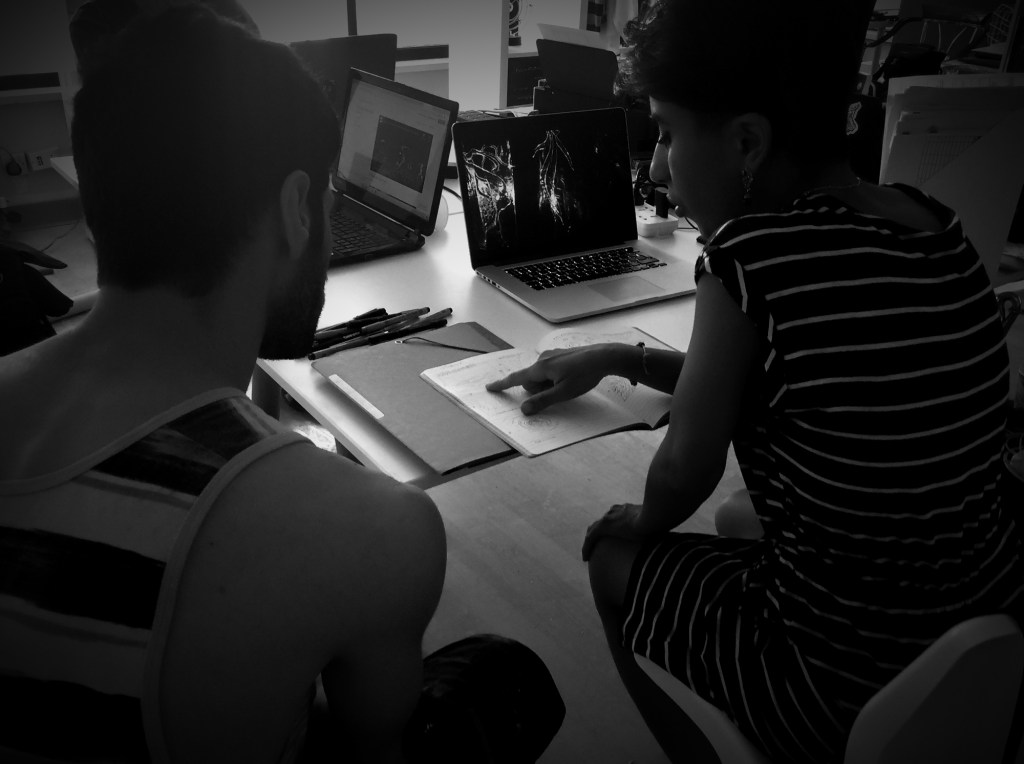
Part 1: Watching rehearsal videos together
I like the choreography. I like its simplicity. I wonder whether we can restructure it.
Golnaz Behrouznia
There are a lot of singularity in the choreography. What we have thought about creating contrast. We could accelerate or intensify. We though about explore the element of time. We could create fraction of time, distortion of time.
François Donato
Part 2: Brainstorming together
I noticed that the background music chosen for the rehearsal is very mechanic. Would it be a good idea to add something organic, something unexpected, something with a completely different energy? Have you thought about a-surprise-sound?
François Donato
The rehearsal you have seen is the 1st layer we have designed so far. More layers will be added through out the time.
Abd Al Hadi Abunahleh
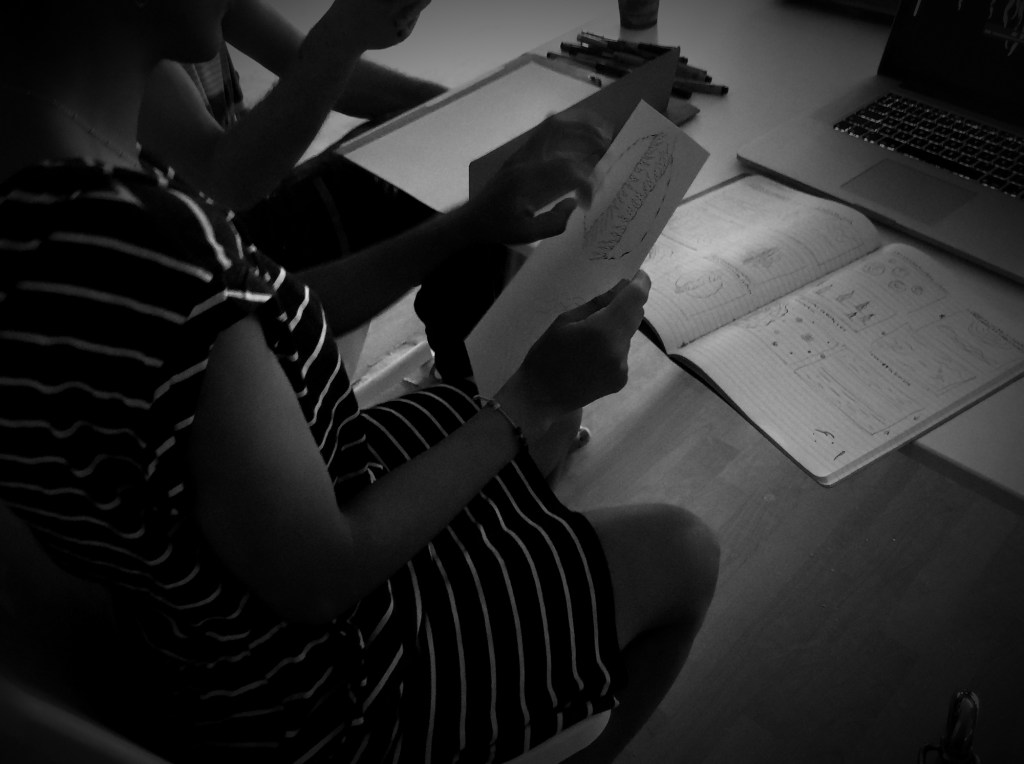
Part 3: Going through performance storyboard together
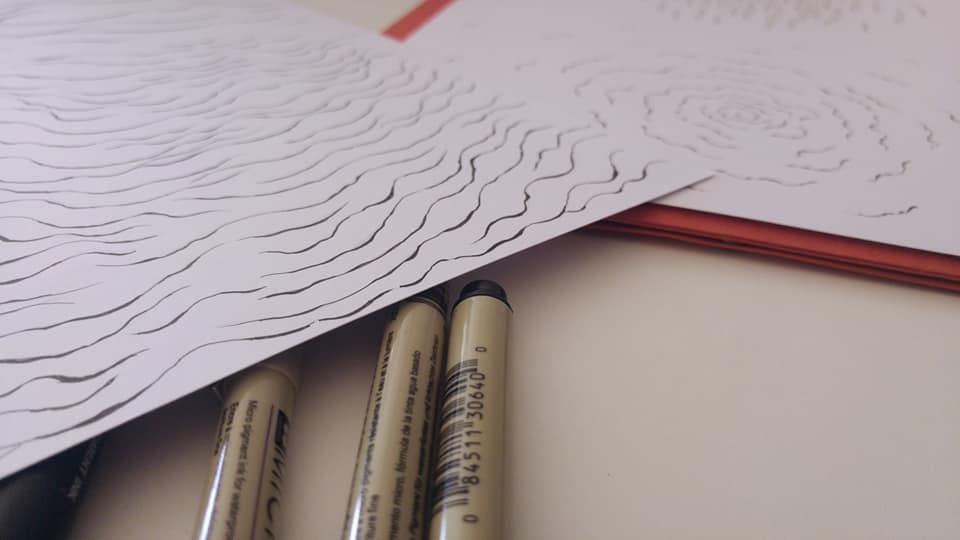
I imagine a black background with abstract white animations.
Golnaz Behrouznia
I imagine a series of animations, each lasts 30 seconds to a minute.
Golnaz Behrouznia
How do you image the light on the stage?
Abd Al Hadi Abunahleh
There will be a projector. There will be a moment of darkness, perhaps silence. There will be a moment of bright light on the performers. There might a moment of stillness, just the sound flowing. There might be a moment of when human presence disappears, only digital arts remain…
Golnaz Behrouznia
Bear in mind that my visual animations only make sense when with sound.
Golnaz Behrouznia
Part 4: What is next?
At the stage, let’s not focus on aligning dance, sound, visual art. Let’s experiment and explore on our own and meet again soon.
François Donato
I can imagine myself being inspired by sound and visual art. I look forward to our next meeting, our experiment of experiencing a sudden sound while dancing in our next rehearsal.
Abd Al Hadi Abunahleh
What do think of the costume?
François Donato
I imagine costume either in black or white.
Abd Al Hadi Abunahleh
We are designing an experience for the performers and the audiences.











 Time out of Time: