Since 2014, Amman based Dance Company Studio 8, has been calling all artists of any discipline (visual, digital, coding, installation, film, photography, painting, art managers, musicians, event managers, students, producers, curators) to work together, to collaborate, to create side by side, loosening boundaries between artistic labels, in favor of a more open and flexible view toward the art experience itself.
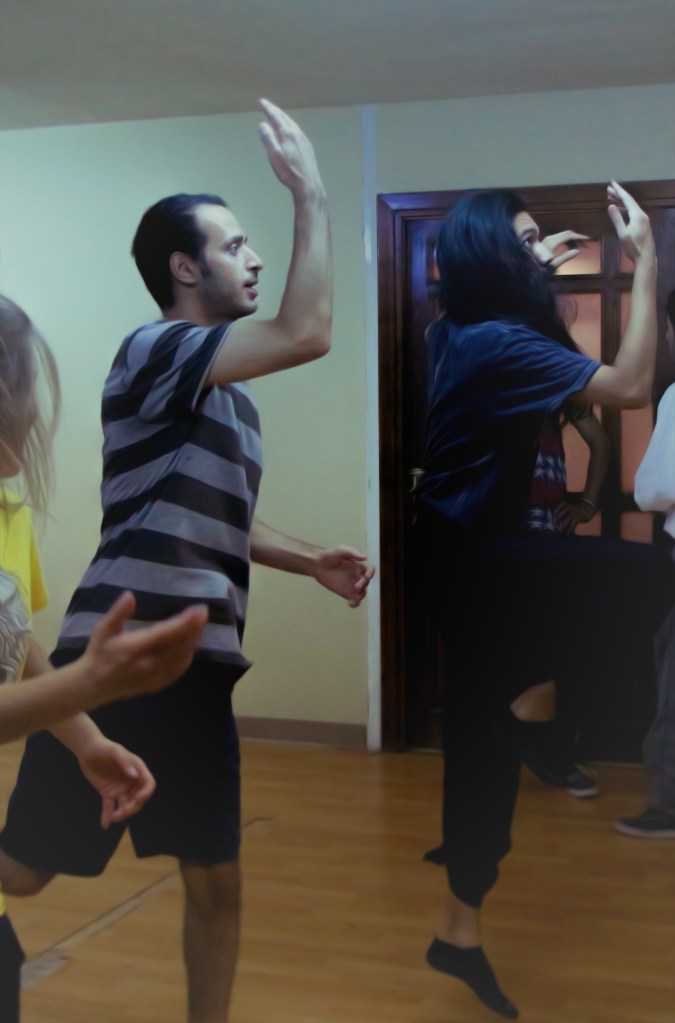
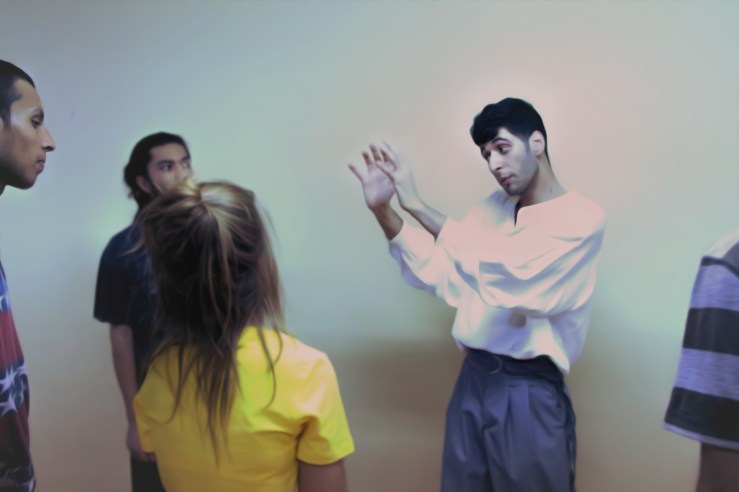
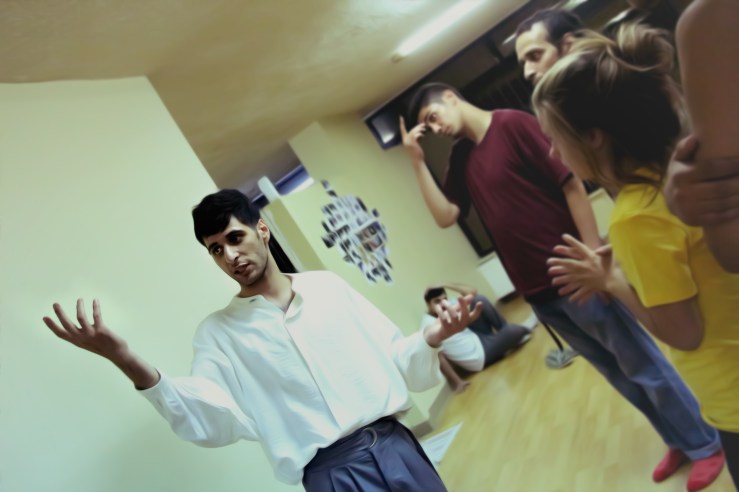
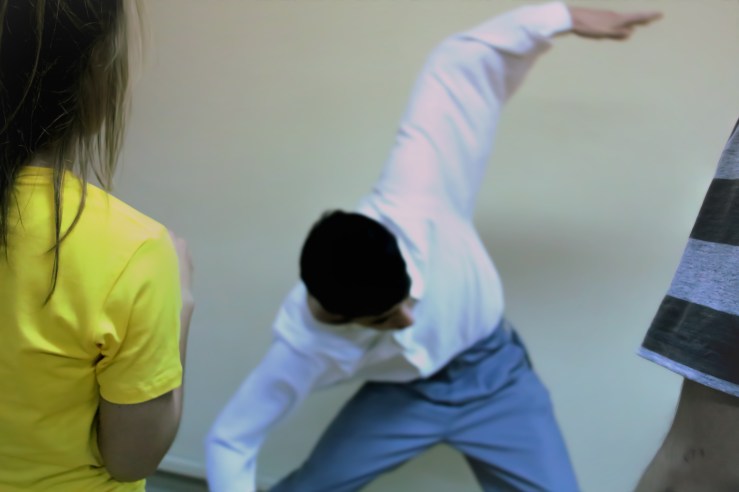
Building on this approach, from 18 to 25 of July 2019, Studio 8, made possible by the support of Al Mawreed Al-Thaqafi, organized a production residency bringing together an artist duet of French sound artist François Donato and French/Iranian visual artist Golnaz Behrouznia. and five performers based in Jordan, with the aim to create a concrete project that is crossing borders of genres and disciplines: dance, performance, visual arts, performative arts, animation, projection, coding, etc.
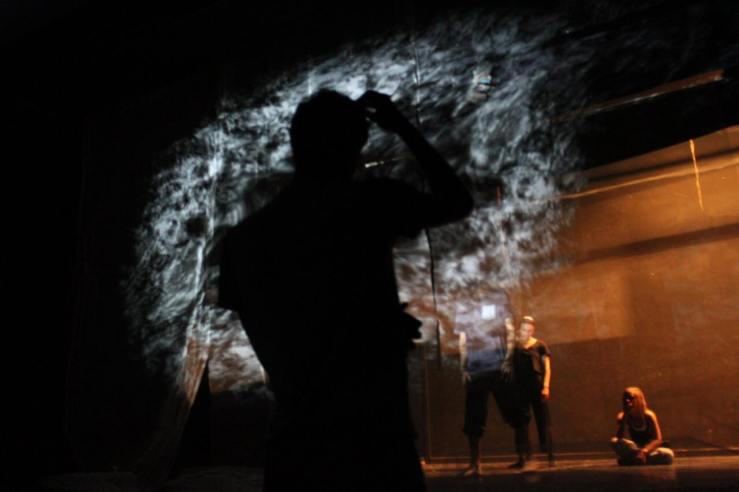
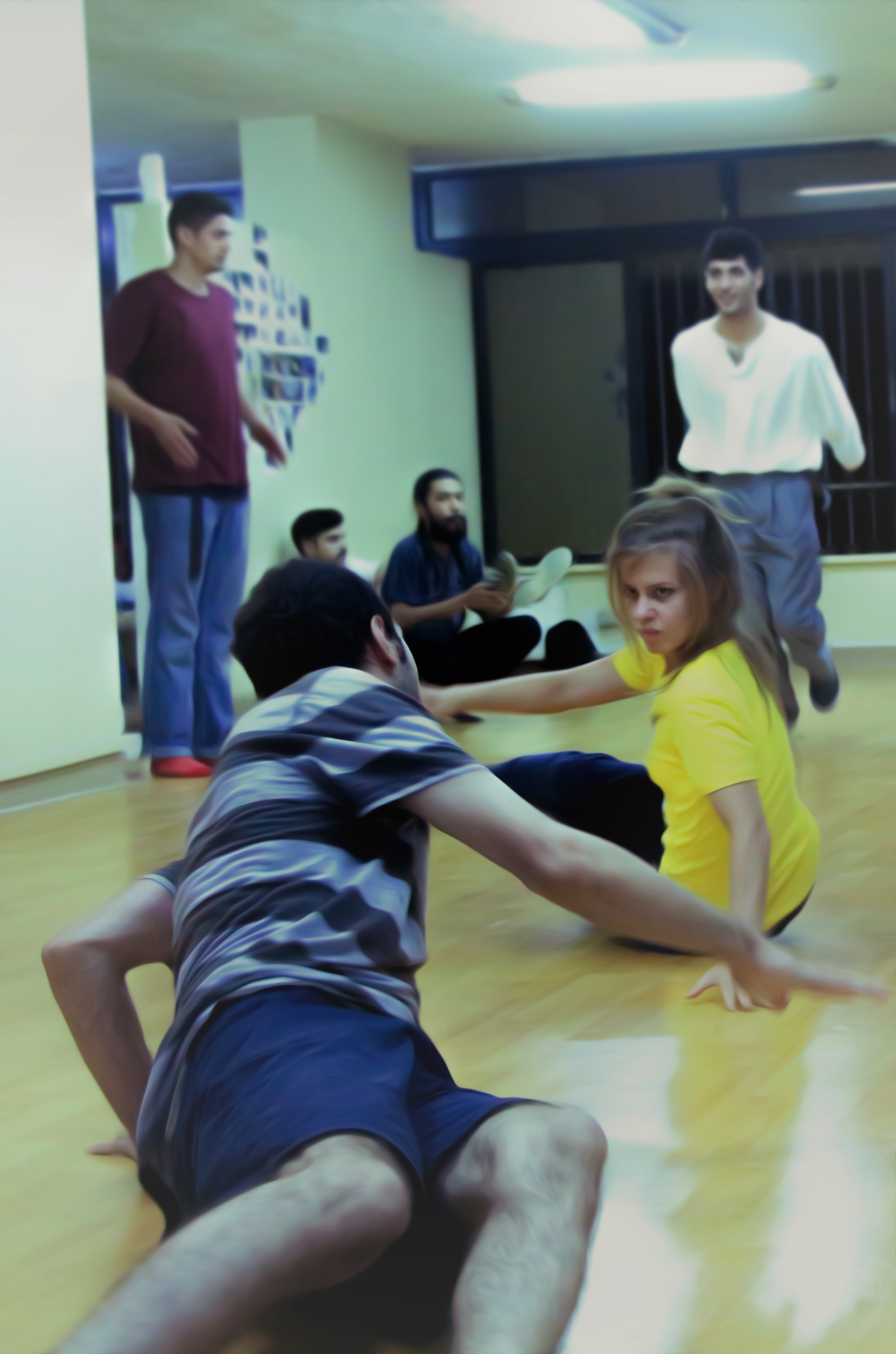
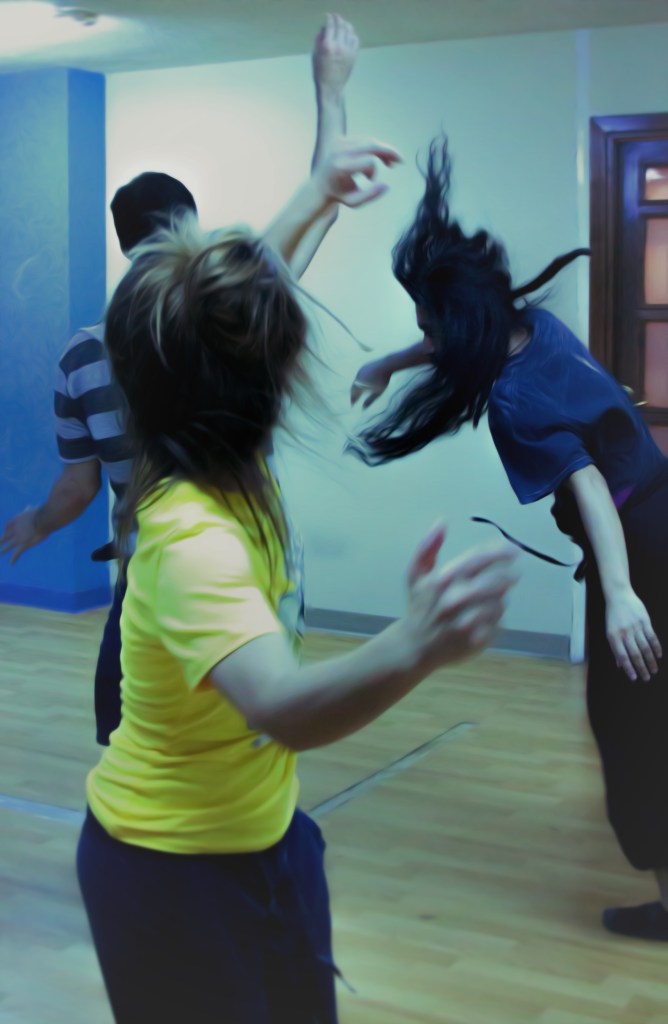
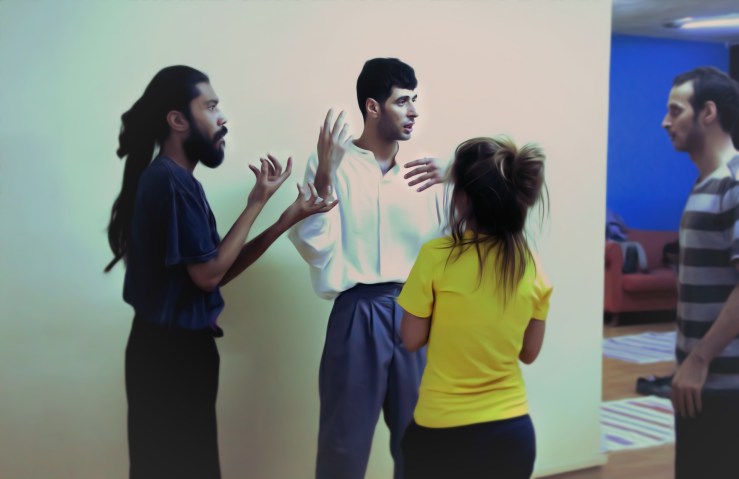
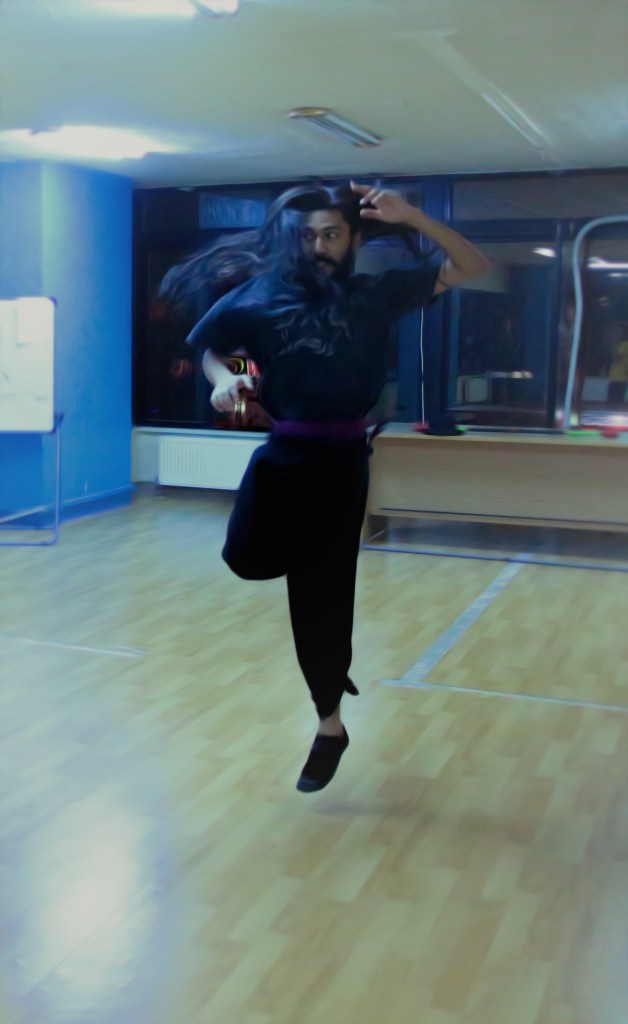
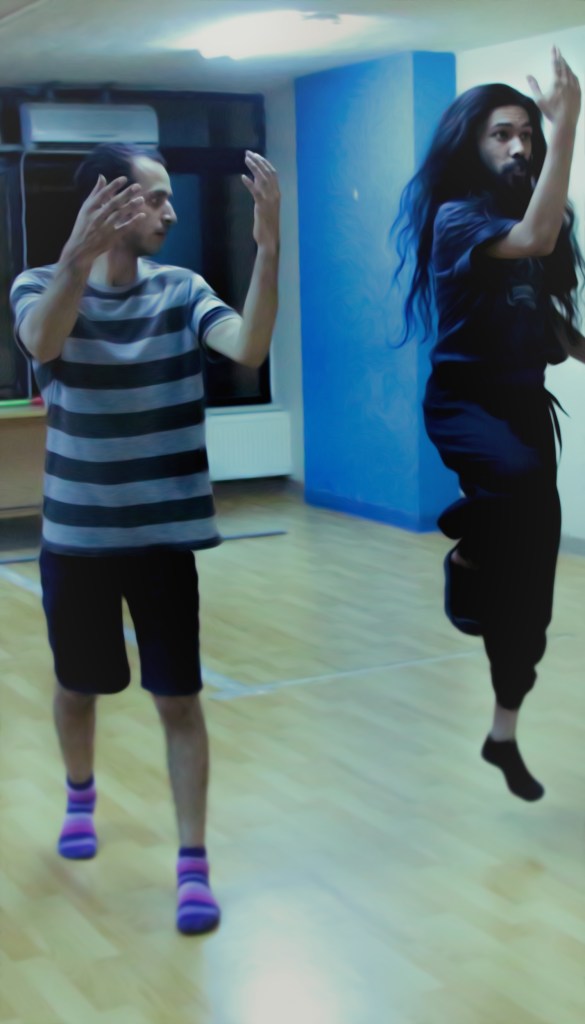
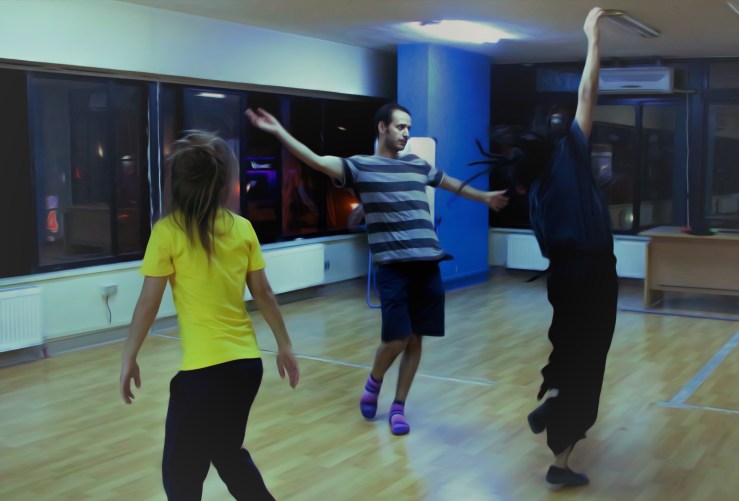
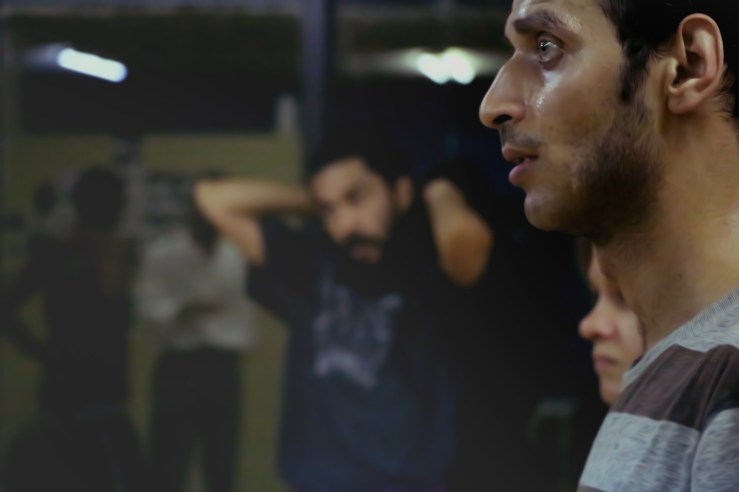
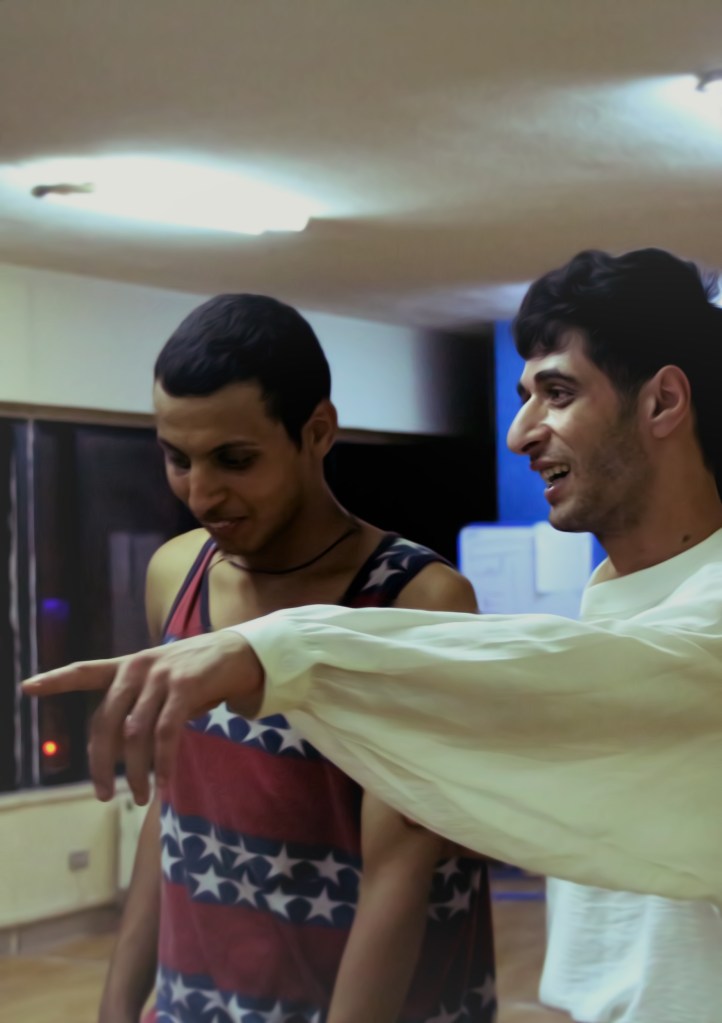
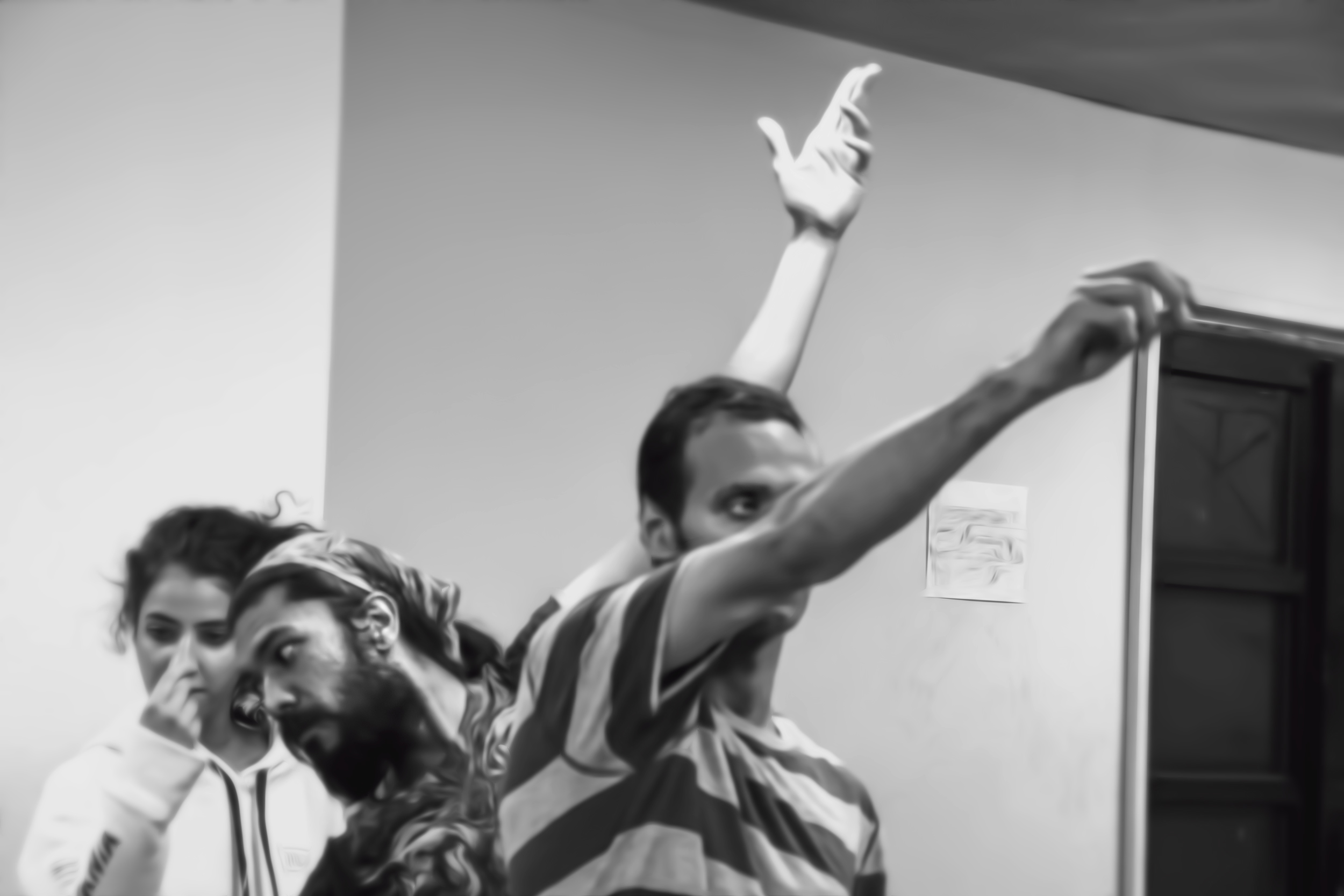
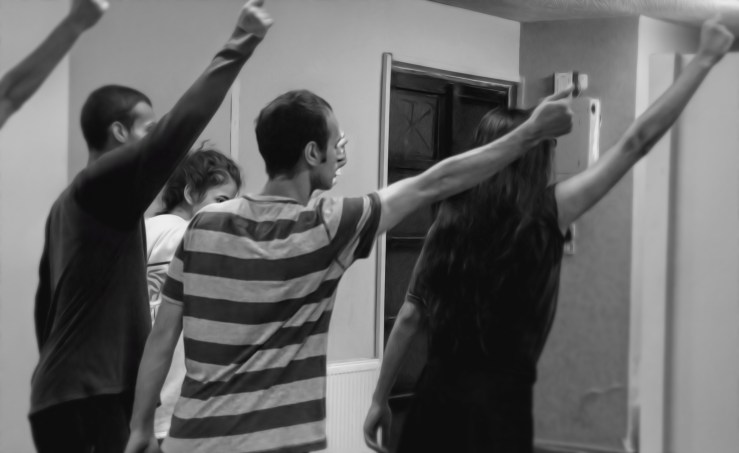
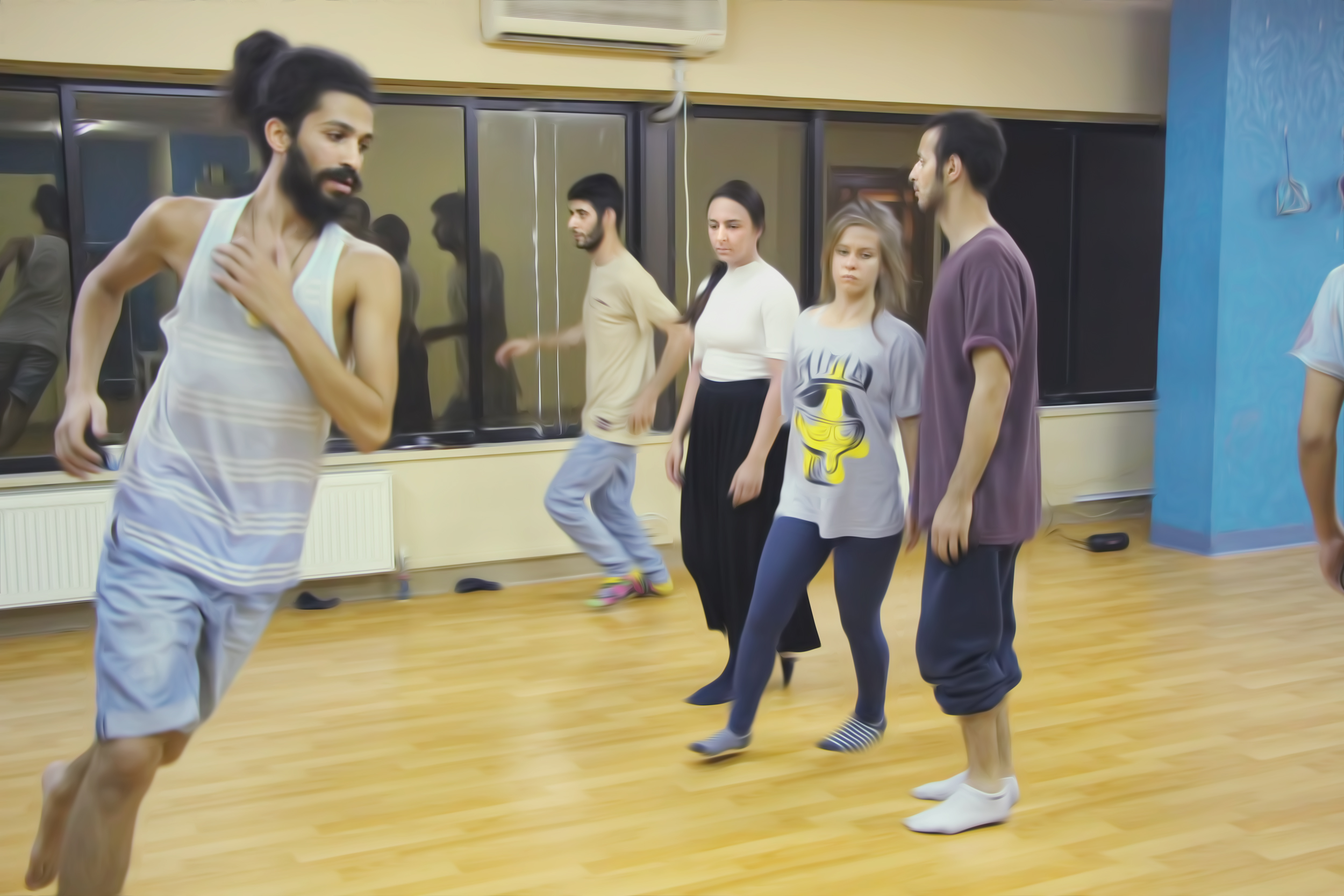
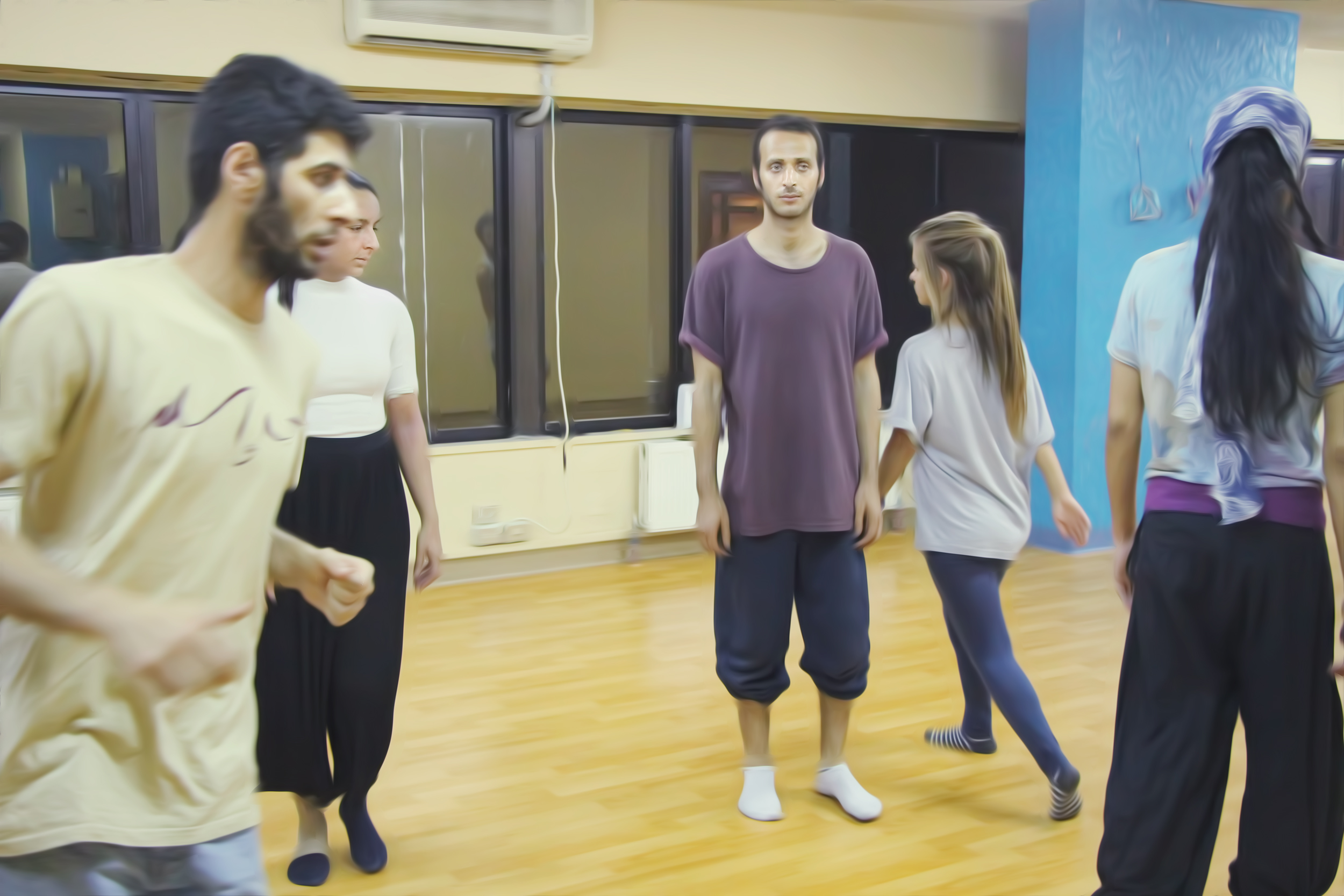
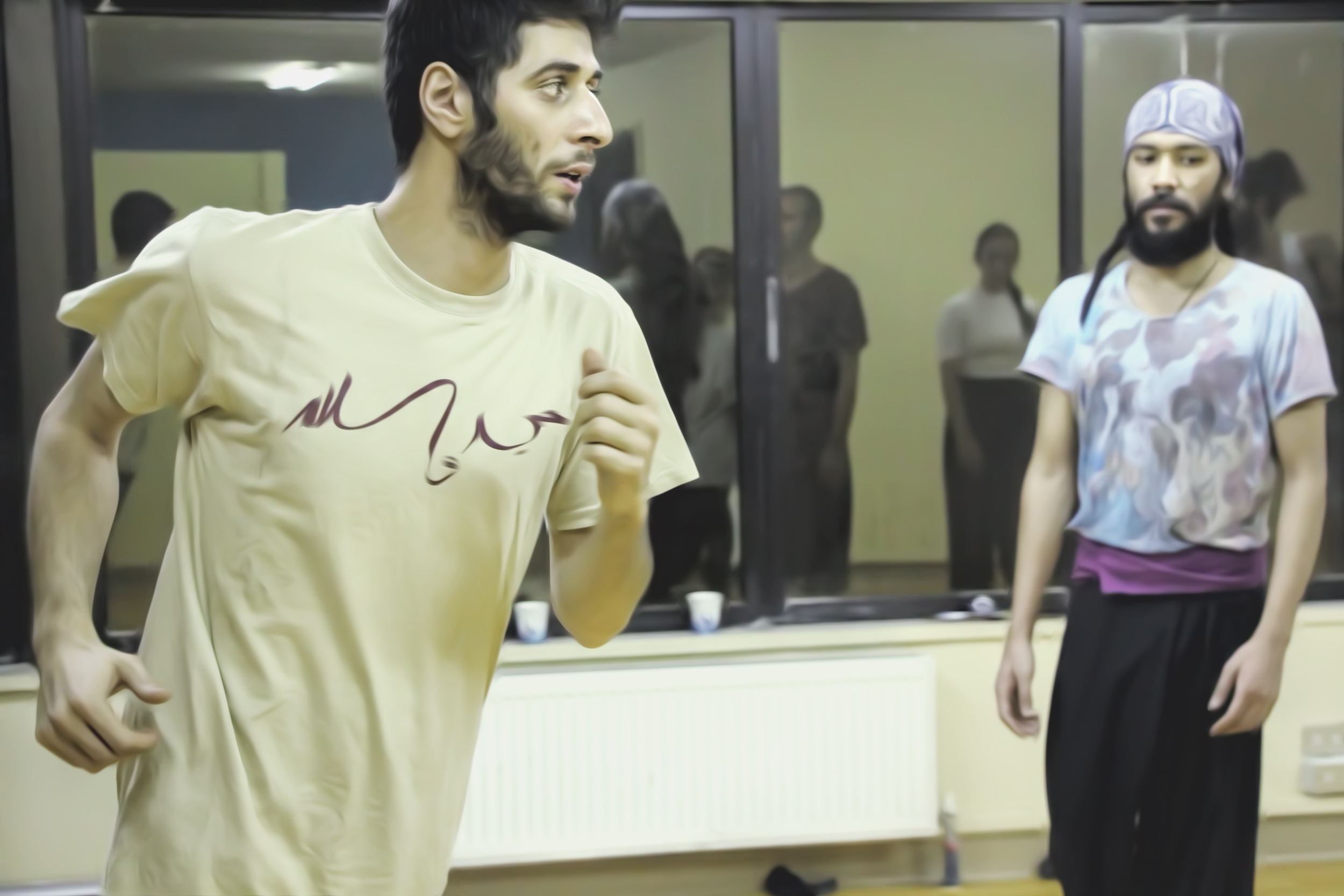
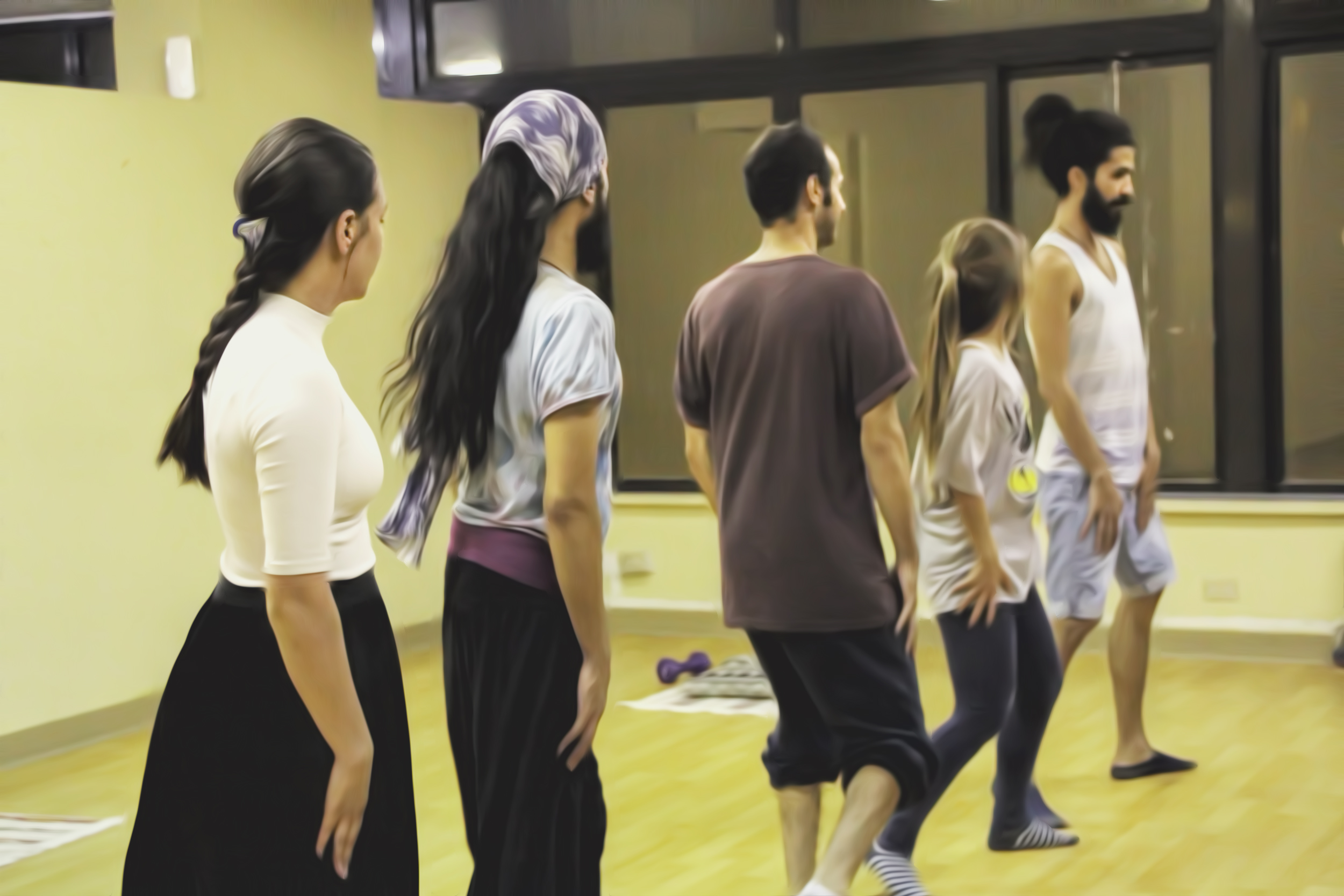
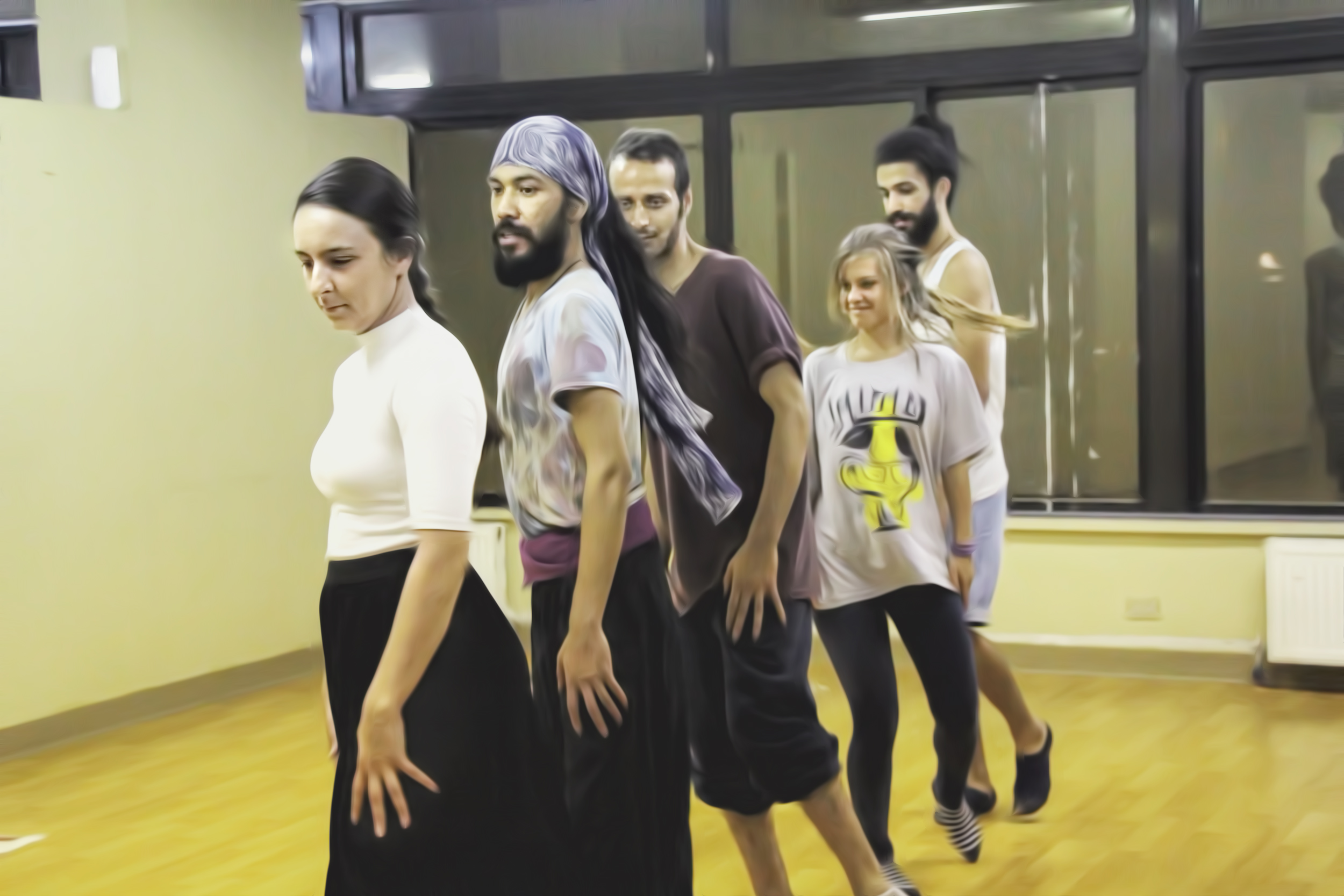
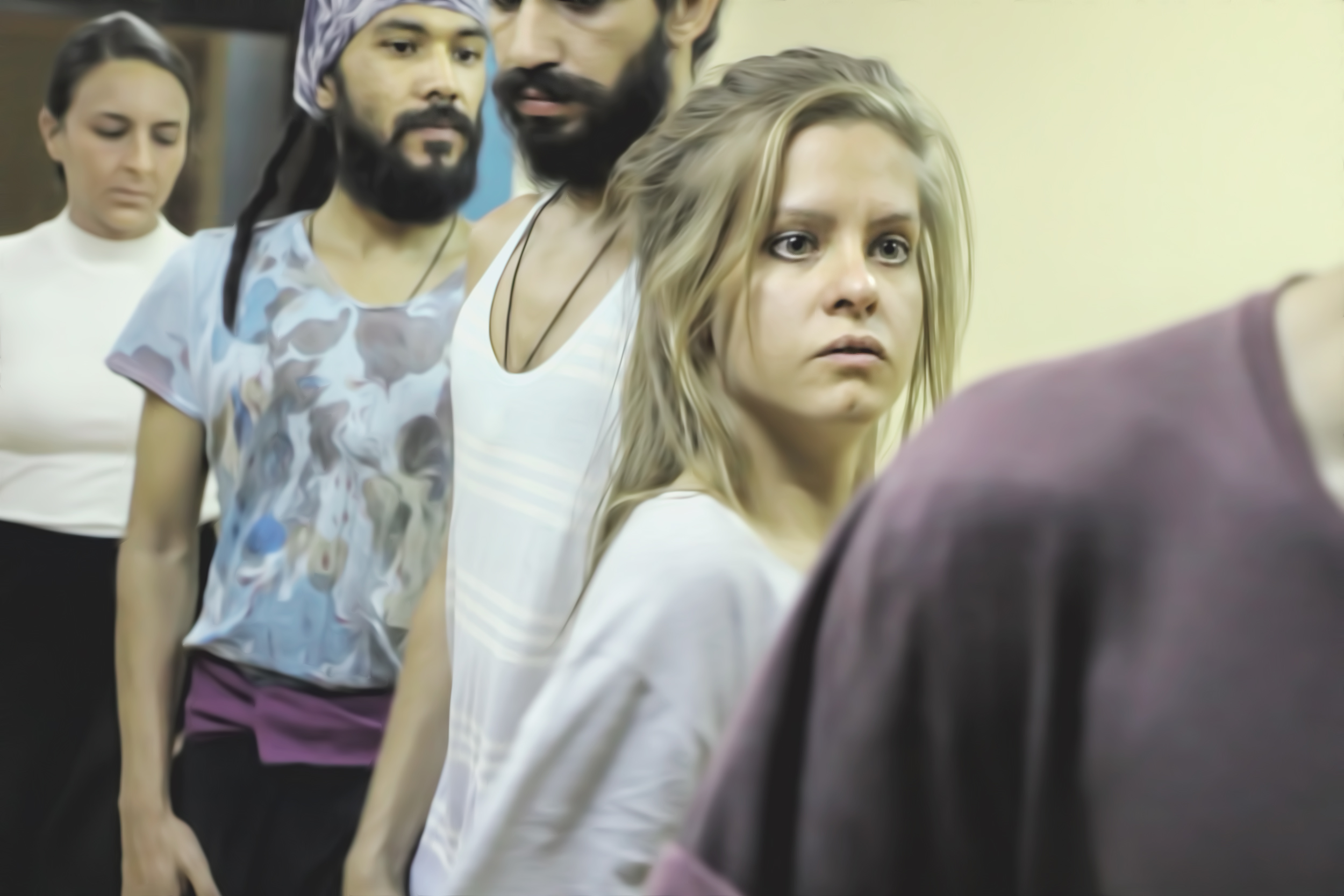
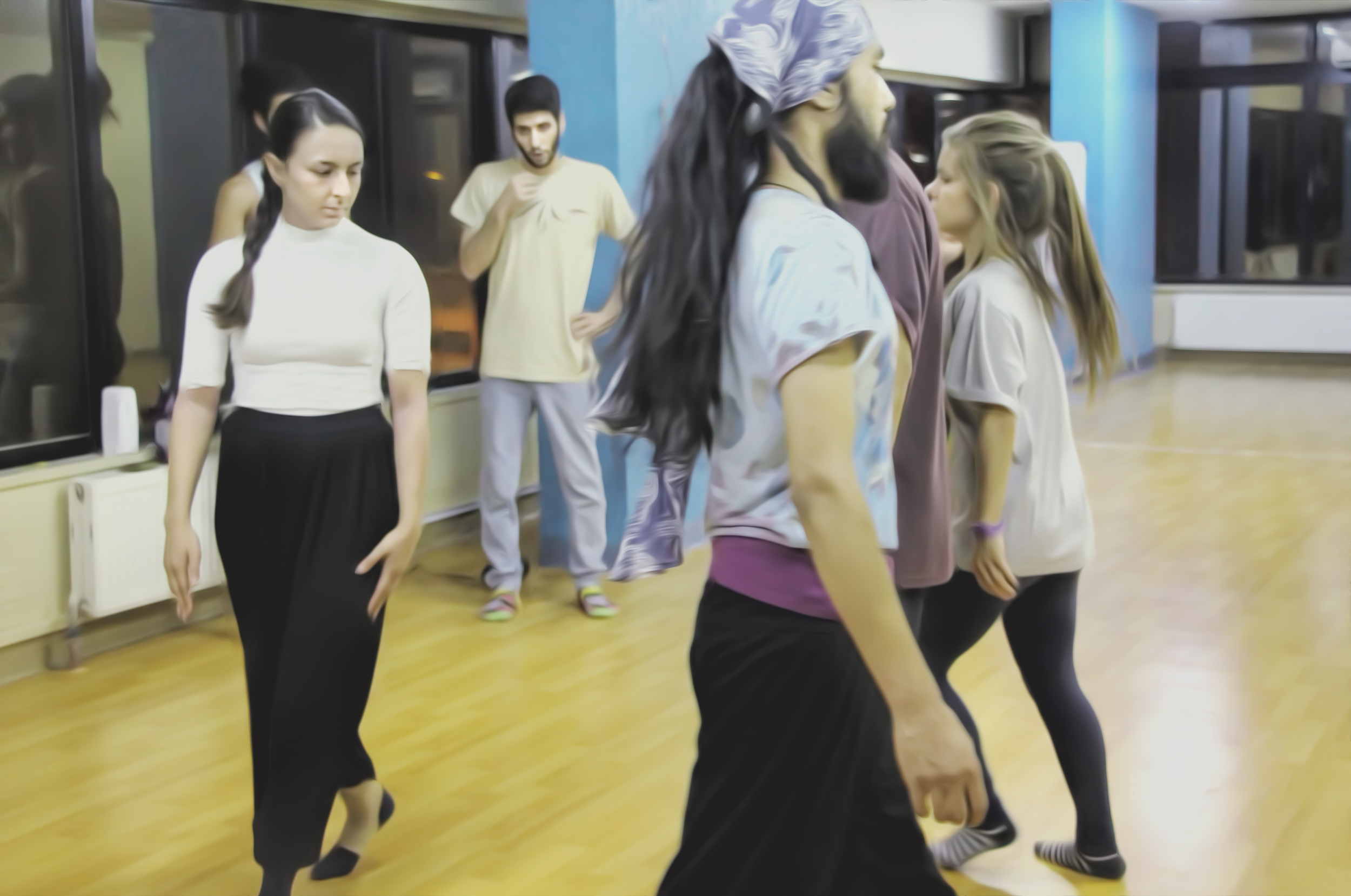
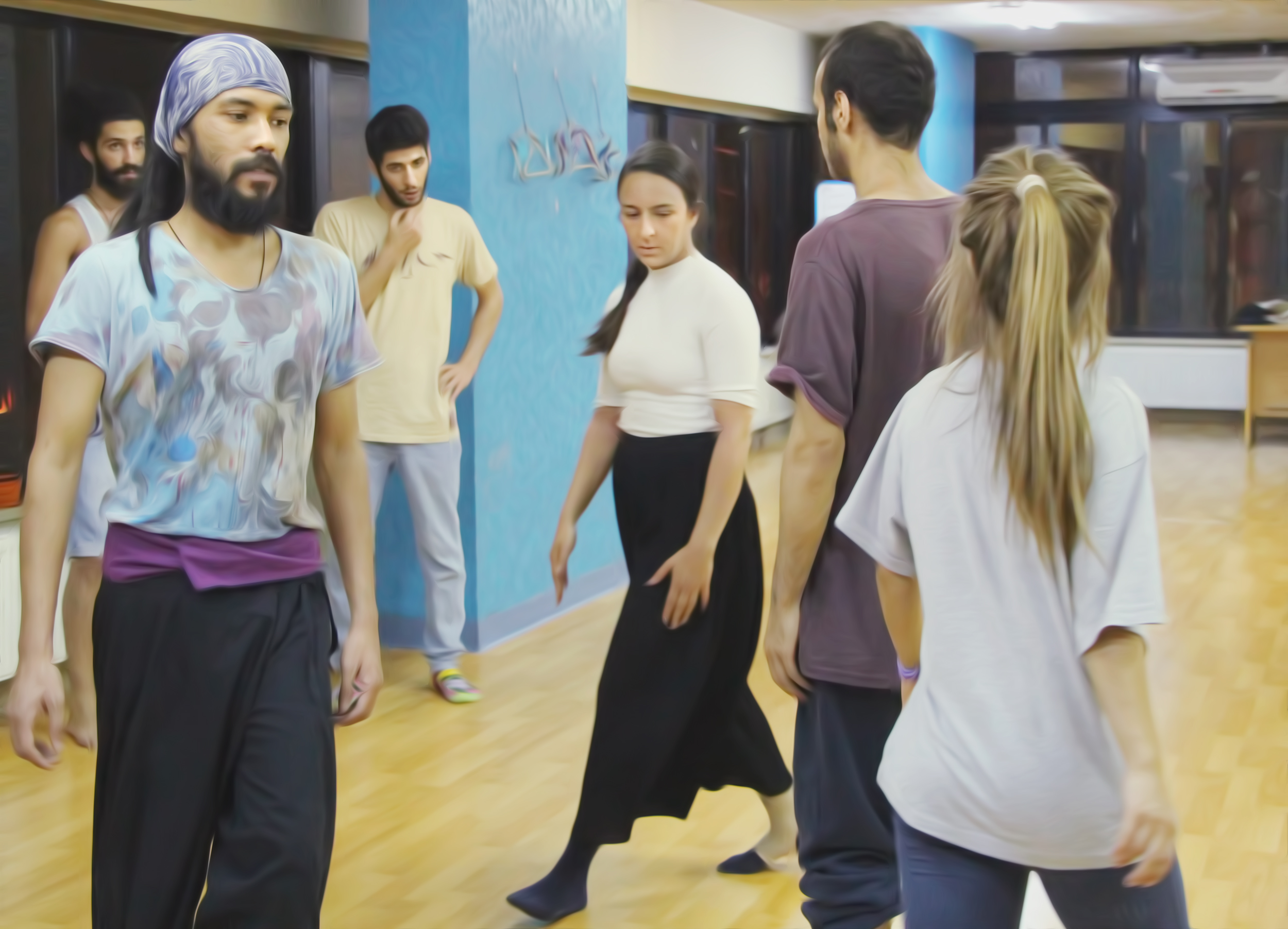
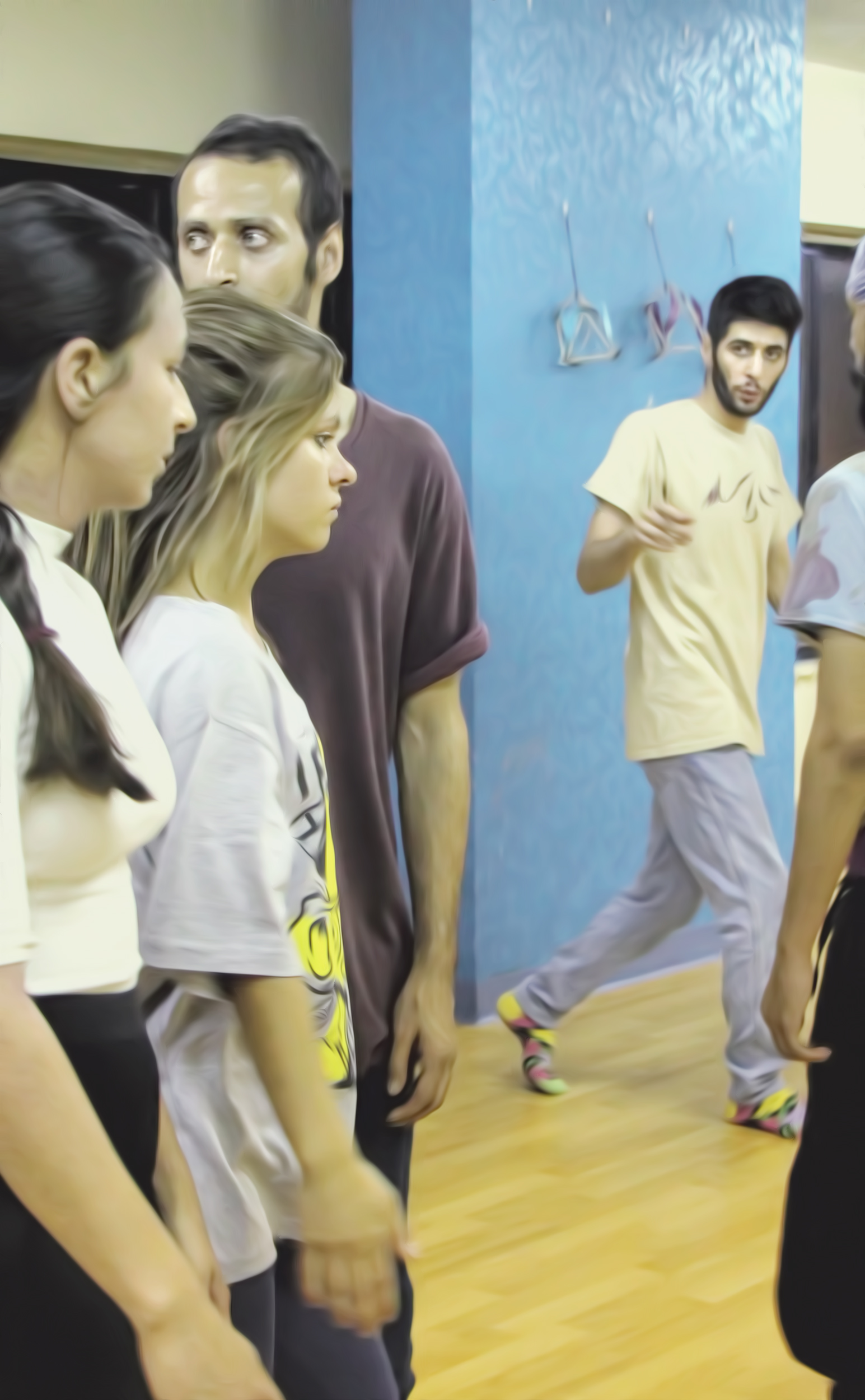
Prior to the residency, six dance artists have developed 15-20 minutes movement sequences. For the first day of the residency, visual artists, sound designer and dance artists shared their thoughts on the movement-design-in-progress, explored the connections between movement and visual arts, performative arts and sound, installations and dance. For the second day, artists met in Osama El Mashini Theater tasked to expand the possibilities of art through the merging of disciplines in an experimental process of collaboration.
Location: Osama El Mashini Theater, Amman, Jordan
Artist: Sound Artist François Donato, Visual artist Golnaz Behrouznia, Dance Artist Abd Al Hadi Abunahleh, Dance Artist Anas Nahleh, Visual Artist Ren, Dance Artist Emran Alamareen, Dance Artist Daniel Issa, Dance Artist Nadeen Dabass, Dance Artist Kate Port, Dance Artist Ziad Hajir
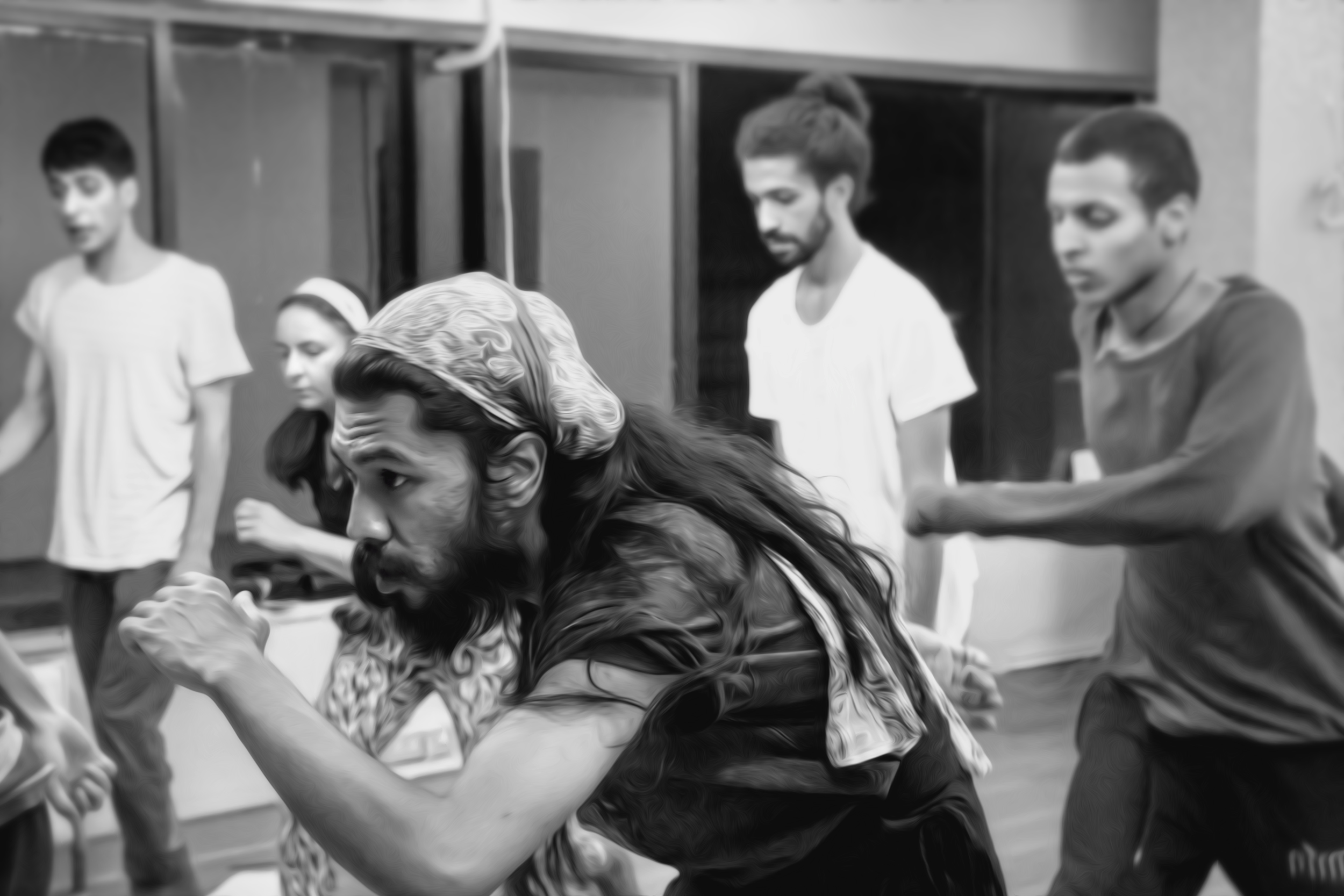
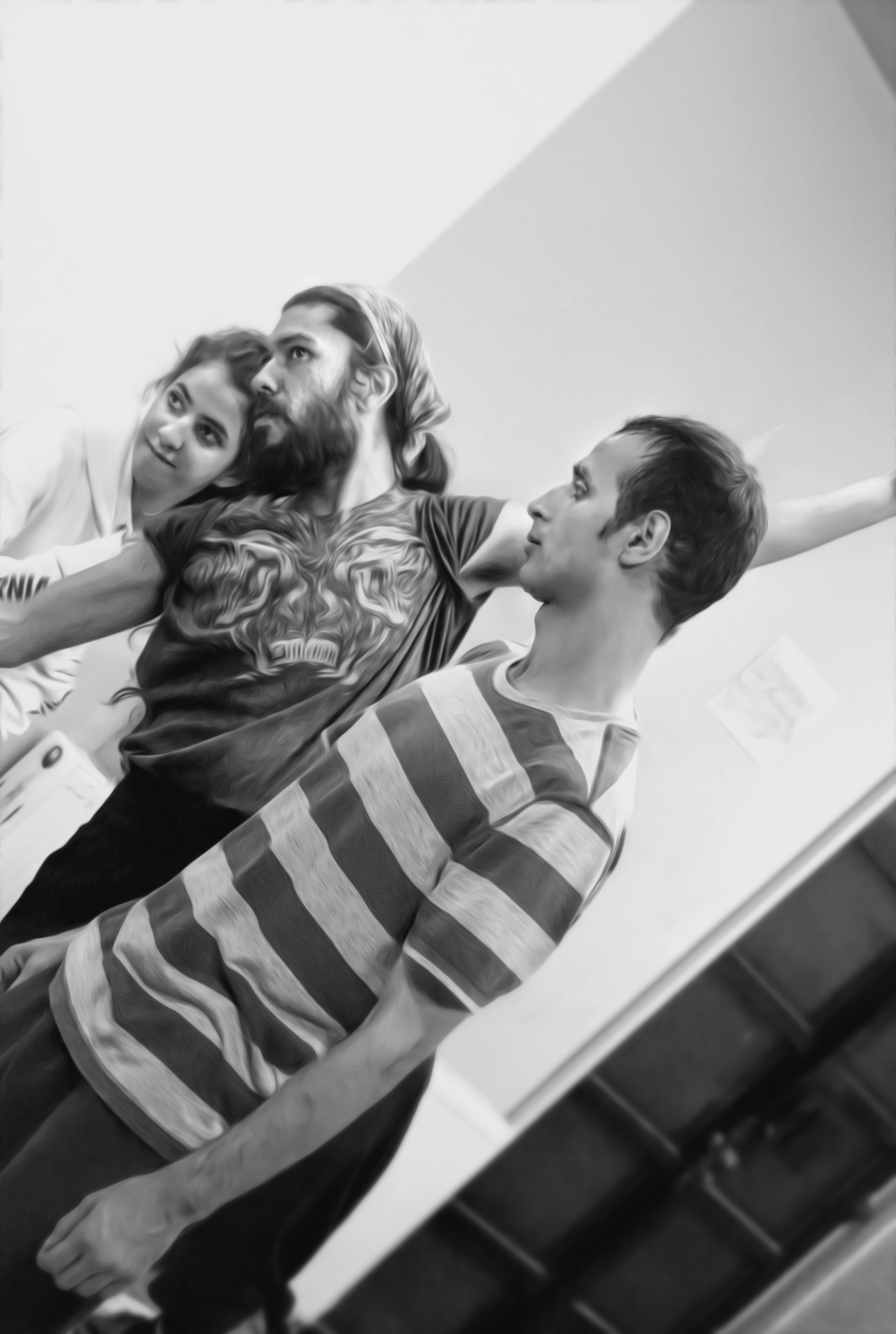
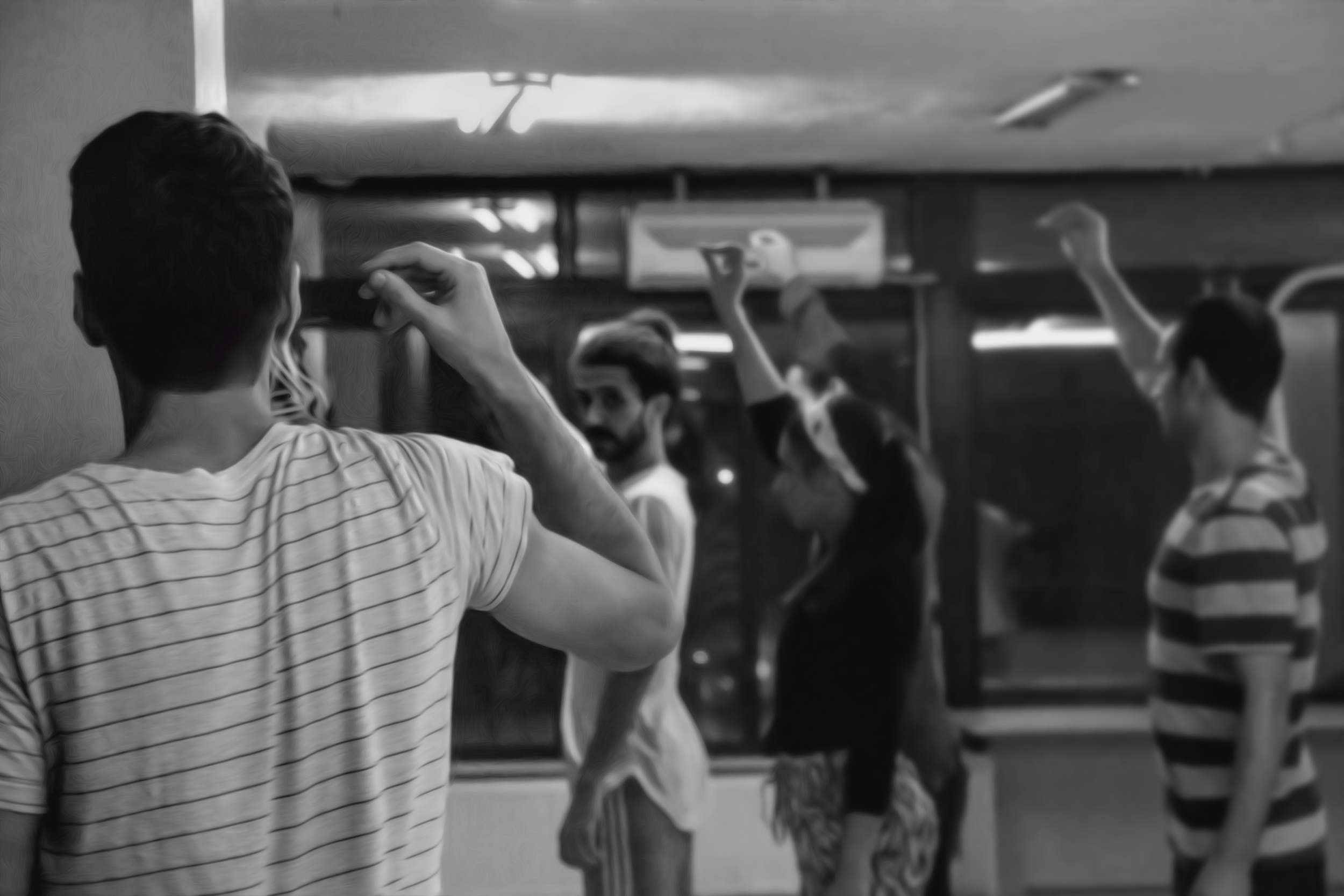
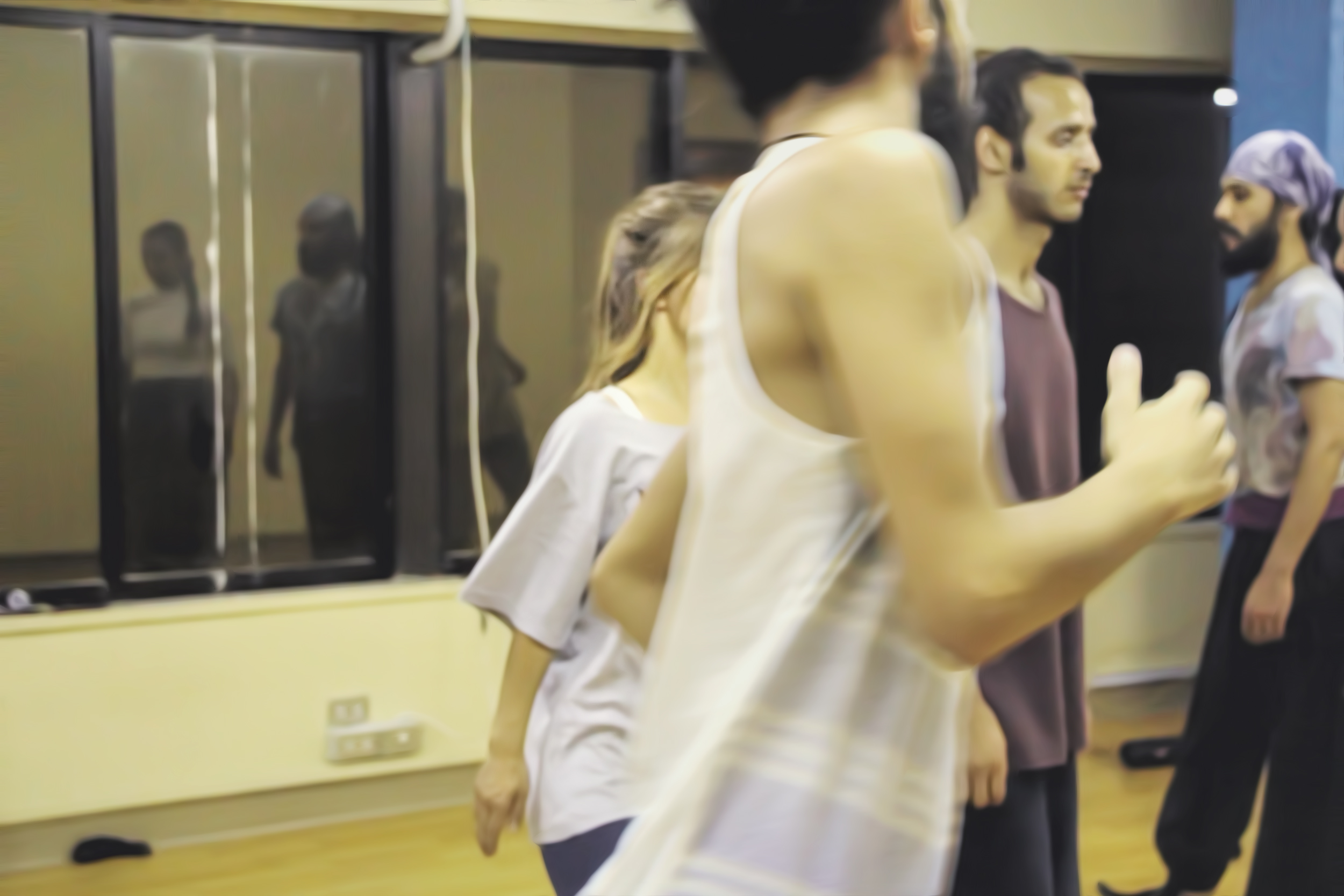
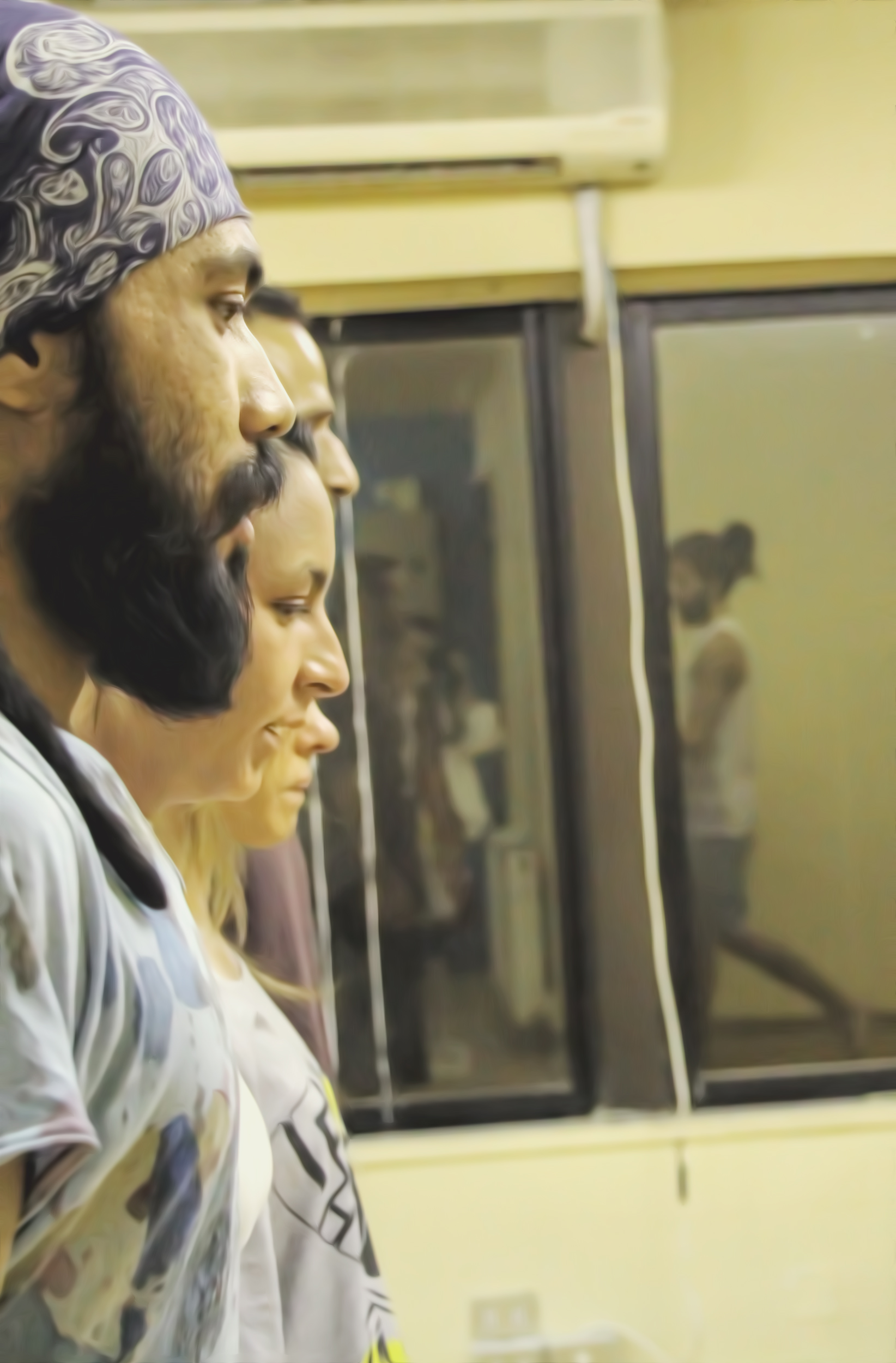
From 18 to 25 of July 2019, an interdisciplinary ensemble of artists who shared a vision to create a dance production that an interplay between a dynamic choreography and an audiovisual immersive environment is presented simultaneously, took a 5-day-residency in Amman, Jordan between dance studio, hotel rooms and theatre. The dance production will be presented to audience in Jordan on August, 2019.
Location: Studio 8, Amman, Jordan
Artist: Sound Artist François Donato, Visual artist Golnaz Behrouznia, Dance Artist Abd Al Hadi Abunahleh, Dance Artist Anas Nahleh, Visual Artist Ren
Date: 7/18/2019
Duration: 120 minutes
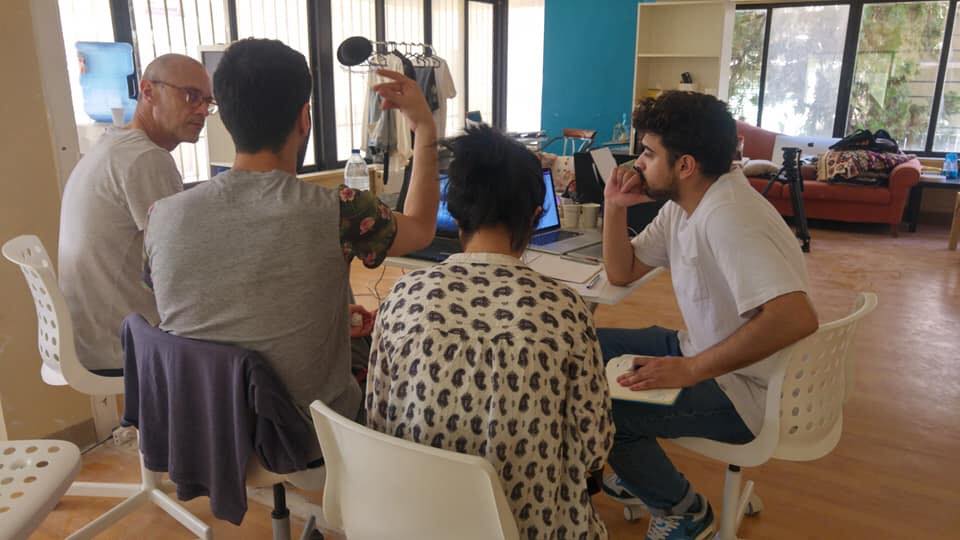
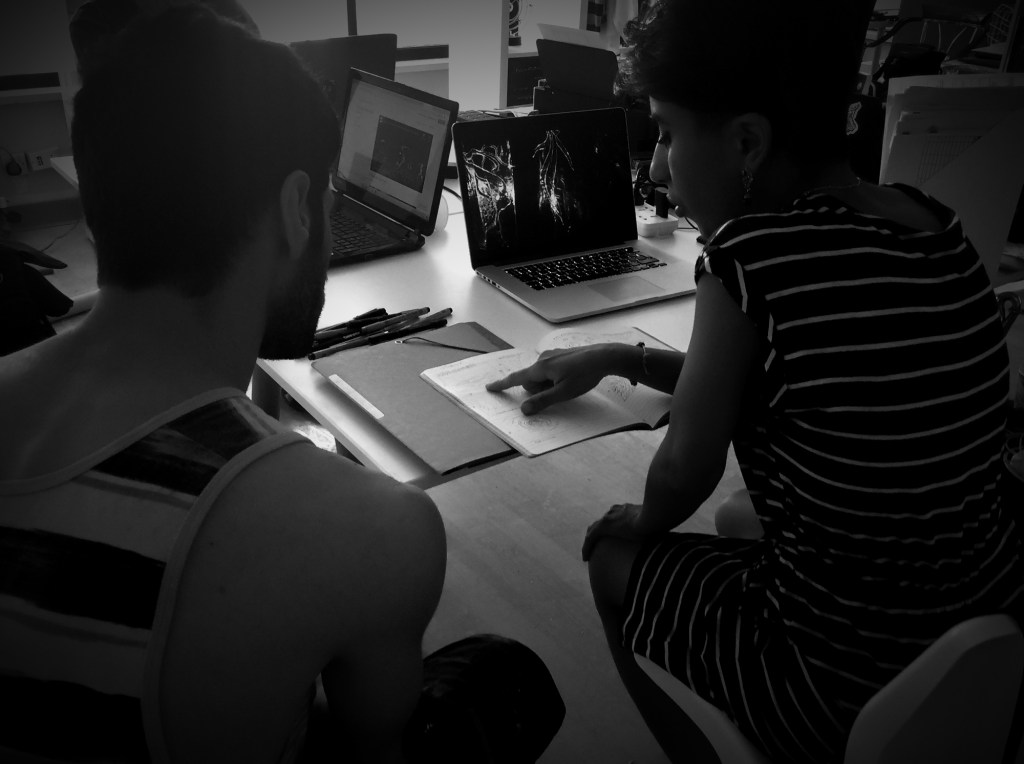
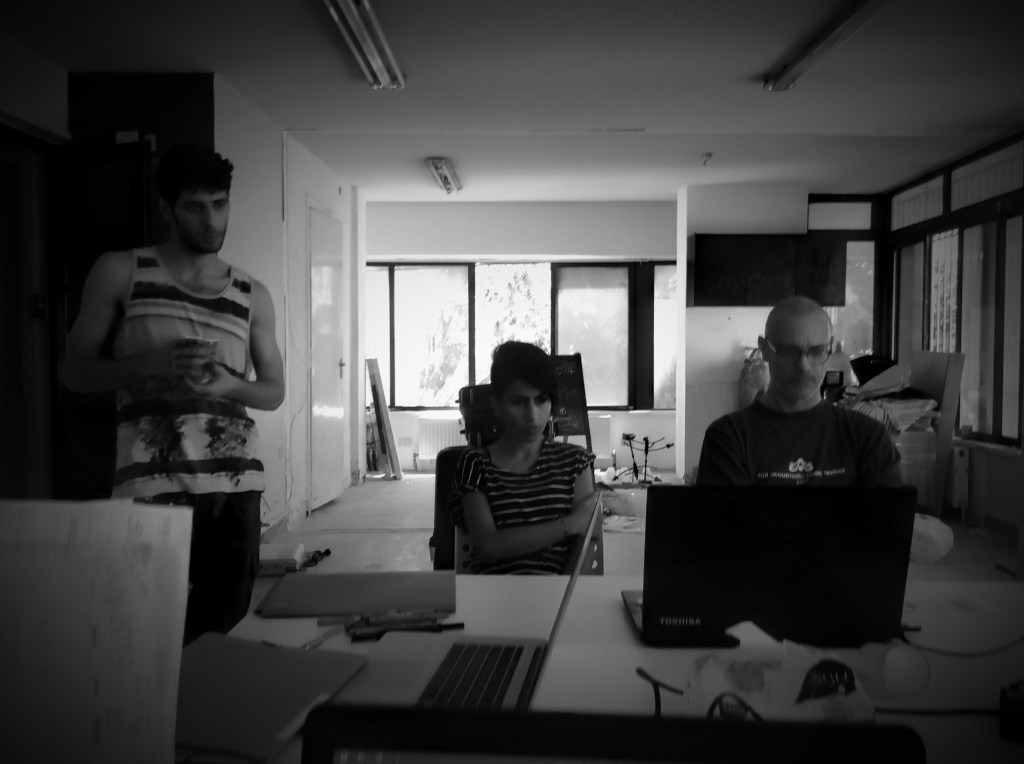
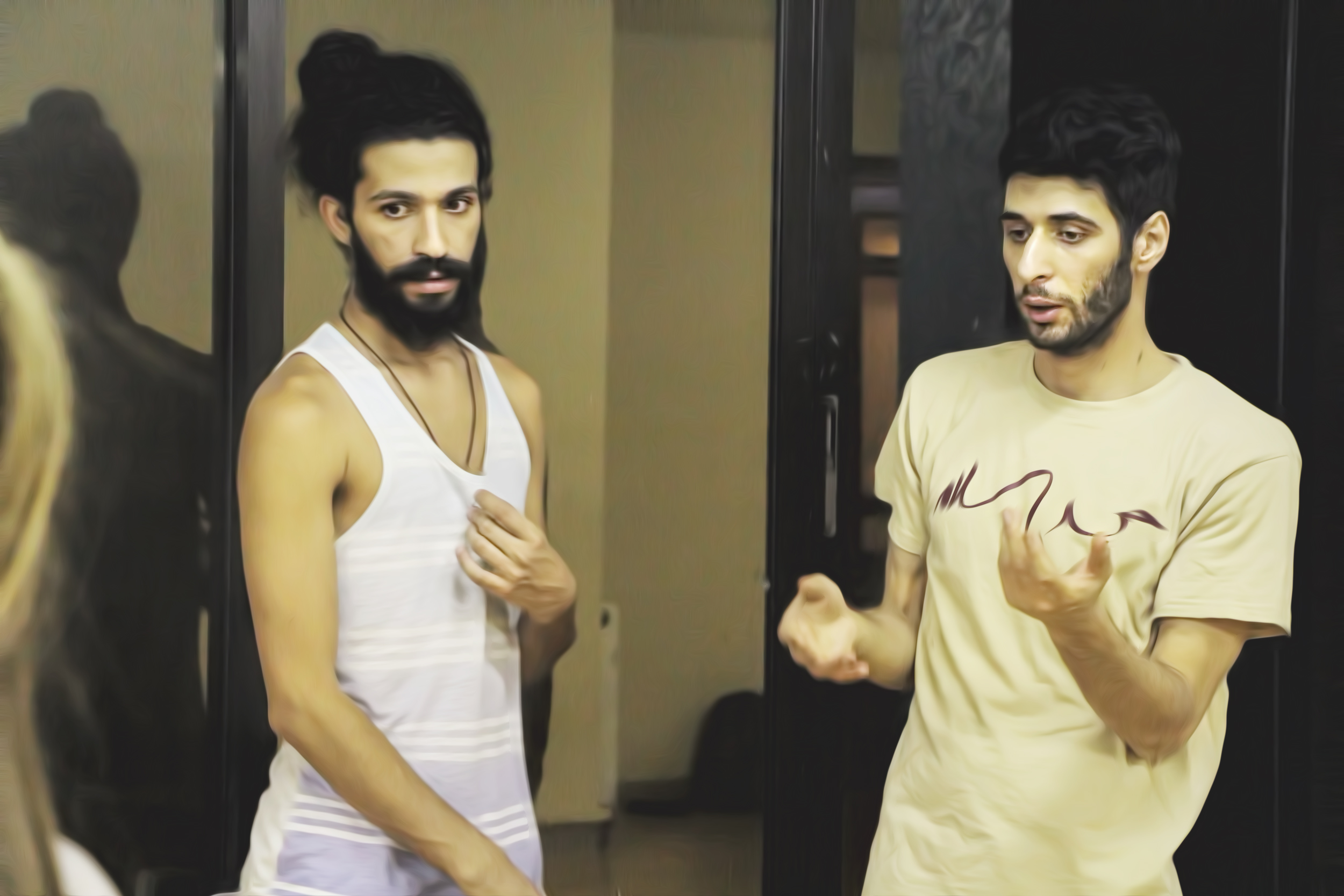
Part 1: Watching rehearsal videos together
I like the choreography. I like its simplicity. I wonder whether we can restructure it.
Golnaz Behrouznia
There are a lot of singularity in the choreography. What we have thought about creating contrast. We could accelerate or intensify. We though about explore the element of time. We could create fraction of time, distortion of time.
François Donato
Part 2: Brainstorming together
I noticed that the background music chosen for the rehearsal is very mechanic. Would it be a good idea to add something organic, something unexpected, something with a completely different energy? Have you thought about a-surprise-sound?
François Donato
The rehearsal you have seen is the 1st layer we have designed so far. More layers will be added through out the time.
Abd Al Hadi Abunahleh
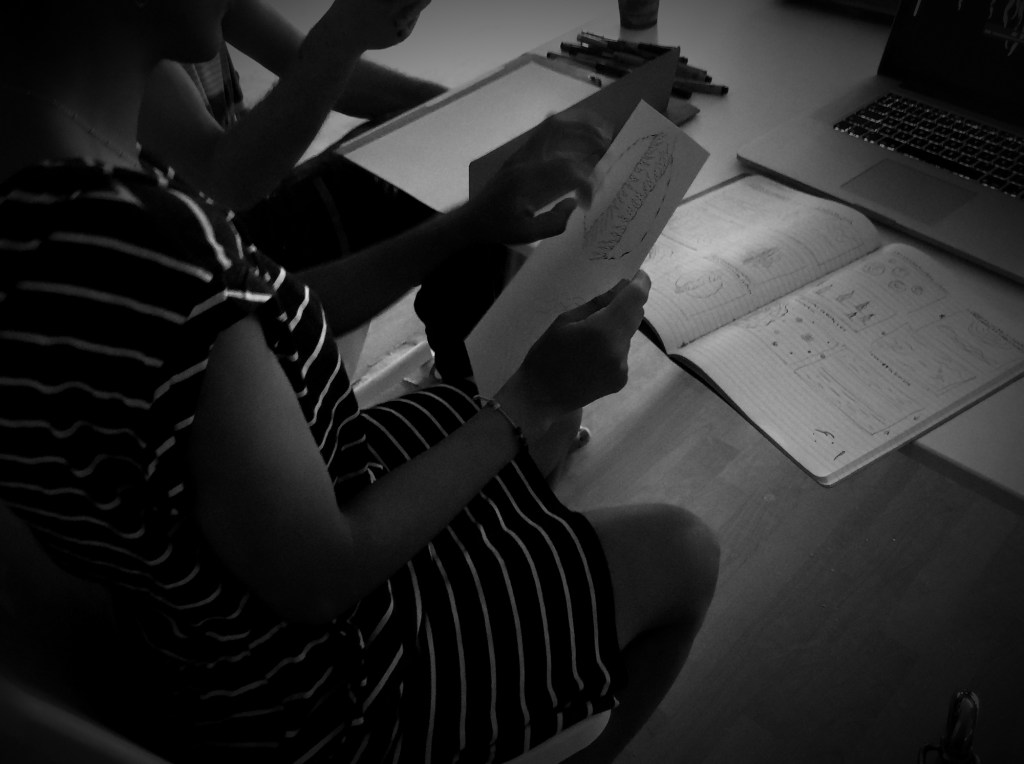
Part 3: Going through performance storyboard together
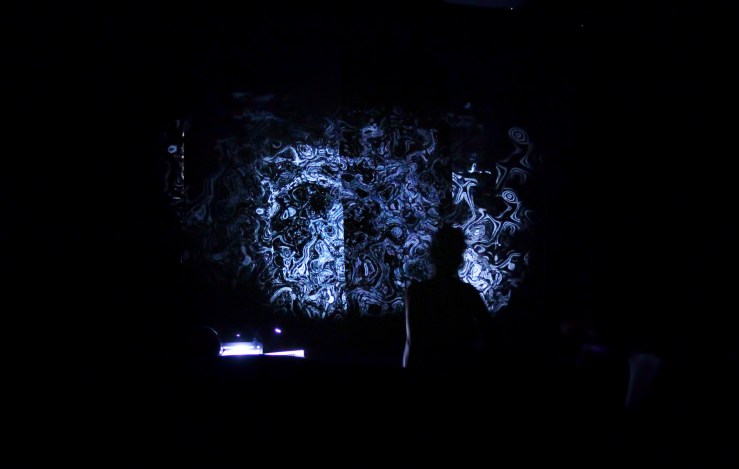
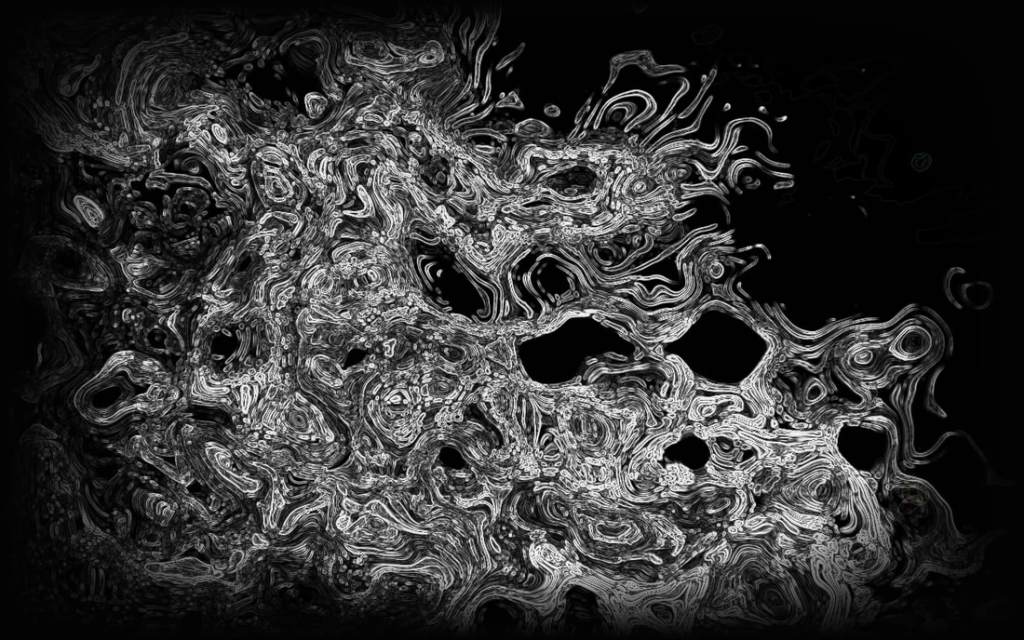
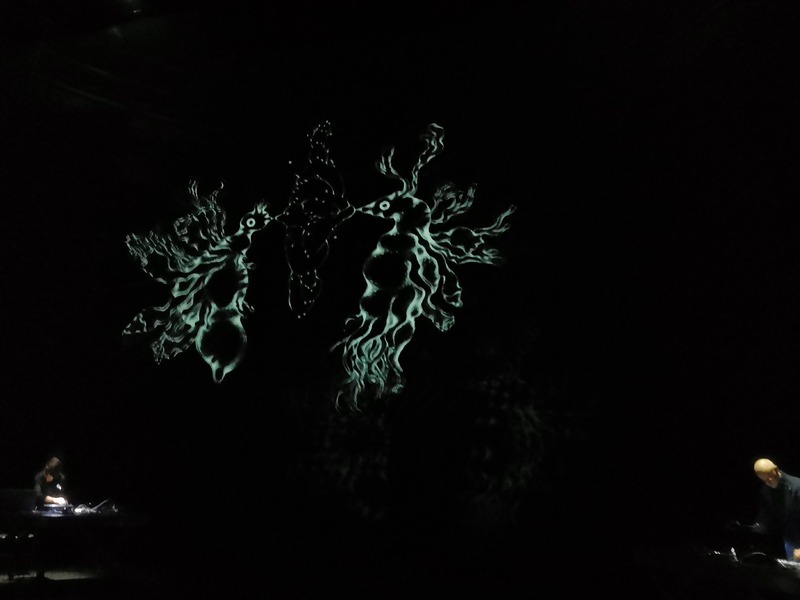
I imagine a black background with abstract white animations.
Golnaz Behrouznia
I imagine a series of animations, each lasts 30 seconds to a minute.
Golnaz Behrouznia
How do you image the light on the stage?
Abd Al Hadi Abunahleh
There will be a projector. There will be a moment of darkness, perhaps silence. There will be a moment of bright light on the performers. There might a moment of stillness, just the sound flowing. There might be a moment of when human presence disappears, only digital arts remain…
Golnaz Behrouznia
Bear in mind that my visual animations only make sense when with sound.
Golnaz Behrouznia
Part 4: What is next?
At the stage, let’s not focus on aligning dance, sound, visual art. Let’s experiment and explore on our own and meet again soon.
François Donato
I can imagine myself being inspired by sound and visual art. I look forward to our next meeting, our experiment of experiencing a sudden sound while dancing in our next rehearsal.
Abd Al Hadi Abunahleh
What do think of the costume?
François Donato
I imagine costume either in black or white.
Abd Al Hadi Abunahleh
We are designing an experience for the performers and the audiences.
I am really delighted to start a new experience in this part of the world that I want so much to discover , Jordan , with François Donato and as part of a new artistic collaboration with Studio 8. Studio 8 (which is) dedicated to dance practices in Amman, with a very motivated team to expand its artistic experiences, invited us to develop with them the universe of their new piece “Time out of Time”. First residency in Amman Jordan July 18-25 .
Golnaz Behrouznia turned very early to the visual arts. The direction of her artistic work is guided for a long time by the major interest which she carries in the natural sciences, in the observation of the alive and its diverse dimensions.
Further to her studies in the Fine arts of Tehran she pursues her work of visual artist in Iran and participates in several collective and individual exhibitions in particular in the Saba Museum in Tehran in 2007, and several times between 2005 and 2008 in the art center The House of the Artists in Tehran. She won several prizes during biennial events and festivals as the third prize of the Iranian Academy of the Arts, during the 5th Biennial of the Sculpture, in Tehran.
In 2008, she came in France to develop her work in the digital arts field in Toulouse. Since 2010, she presented several works and hybrid creations, between sculpture and multimedia creation as the scenography Labo Organika, at the gallery of the National School of civil aviation ENAC, to Toulouse in 2012, at the contemporary art museum Les Abattoirs, within the framework of the digital Forum of the Festival Novela, in Toulouse in 2011, as well as in the collective exhibition Vita Nova, Vivant festival, Gallery Claude Samuel, in Paris in 2015.
Her video installations were presented during the exhibition Are We Already Gone? Artists one the Art of Leaving, FlickerLab, New York 2014, in International meetings Arts and systems, in the art center Ciam-La Fabrique, in Toulouse in 2012.
In 2015 she created the interactive multimedia installation Lumina Fiction1 in association with the sound artist François Donato, with Xavier Malbreil’s curating, thanks to a grant of creation of Dicréam / CNC. This work was presented at the collective exhibition Hemispheres / Biennial of the Digital arts, Enghien les Bains in 2016 by Philippe Baudelot Currating, as well as in the International event of the digital arts, Abidjan, Ivory coast in 2017.
In 2017 she has created the interactive multimedia installation Lumina Fiction *2 with François Donato within the framework of a grant and support to creation of Clermont-Ferrand Communauté 2017. The work was presented within the framework of the Festival of digital art Vidéoformes in Clermont-Ferrand in 2017, in the Festival Tadaex, in the gallery Mohsen in Tehran in 2017, in Quai des Savoirs by the curating of Nomade Art center in Toulouse in 2017, and by Gabriel Soucheyres’s curating to the festival of digital art ADAF in Athens, Greece in 2017.
Her multimedia performance ElectroAnima-Experiment with the artist François Donato, was presented to the Festival OverTheReal in Italy, on 2017, and to the event Etat Instable, Patchwork-Emergent Arts association, in Mix Art Myris, Toulouse in 2017.
Her transmedia Scenography Vanimentis in collaboration François Donato, is presented in exhibition Label (2=3), in the art center Espace Croisé in Roubaix in 2017 and in the ElectroAlternativ Festival, to the Cultural center Bellegarde, Toulouse in 2016.
Other projects of Golnaz Behrouznia in the visual arts are in particular:
The project Imaginary of the Vegetable Seeds, in reference to the images by microscope of plant elements, 1, 2 and 3 wallpainings, in collaboration with the artist Xerou, in the emergencies of the Chiva Hospital, in Foix in 2016 and 2017.
Both series of sculptures of floating bodies in gelatins or oil, congealed or mobiles, Floating Pieces and Aquatilium:
The series Aquatilium was presented during the event to Cross the Art, the Science and the Environment, in Sfax in Tunisia in 2015. This series obtained the Individual Help to the Creation of the DRAC Midi-Pyrénées in 2014.
The series Floating Pieces were presented to the Pavillon of the Arts and the Design in the Tuileries, Paris en 2013, during a collective exhibition in the Dey gallery, in Tehran in 2008 as well as in the monographic exhibition of the artist with Aria gallery, in Tehran in 2007.
At first self-taught, he deepens his musical knowledge to the University of Pau (Master of musical pedagogy – 1989), to the Academy of Gennevilliers and to the Higher National Conservatory for Music of Lyon (electronic music composition).
He won several composition prizes, among them : Young Composers Contest in Orleans (1988), Noroit Composition Prize (1989) and Varese Composition Prize (1991). Responsible for the musical production of the Groupe de Recherches Musicales (Paris) from 1991 till 2005, he is settled in Toulouse today where he used to manage the technical coordination for the collective of composers Eole from 2005 to 2017.
From 2007 till 2012, he was a speaker at the University of Toulouse Mirail, department Plastic arts & Decorative arts on sound design and interaction design. He is now an independant artist working on several kind of Digital Arts and Musical projects, alone or in collaboration with other artists.
His works, firstly dedicated to the acousmatic music, are more and more developping in the field of Digital Arts.
He has received commissions by G.R.M., DAAD of Berlin, the French Ministry of Culture, Eole collective, Centre Culturel Bellegarde Toulouse, Teatro Massimo Palermo,Grant holder of the DAAD and the Technical University of Berlin in 1999/2000.
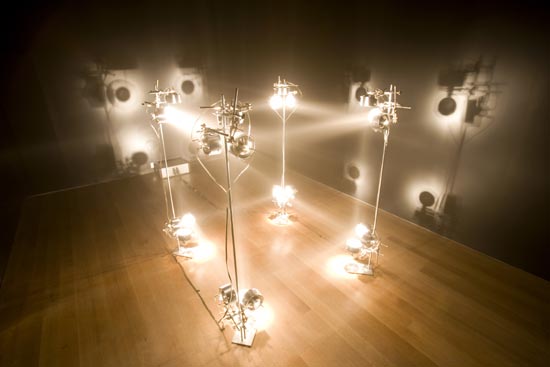
The concept is based on memory resurgence and aims to make sensitive the notion of springs of time. Physically, the installation is made of an array of small speakers distributed in the venue according to it’s topography and presented like sculptures. Each of them are augmented with an infrared proximeter sensor which detects the presence of a person nearby and triggers randomly some memory from a bank previously prepared with sound material recorded in the venue (voices, ambiances, noises…).
An exhibition that is about the artist’s process and is at once a scholarly retrospective, an experimental site and a laboratory.
A attempt to create an all-inclusive, top, comprehensive, first, grand, laboratory, experimental, superlative, everything type of exhibition, showing a major artwork next to a loose sketch or draft for other pieces, in retrospect, eclipses the simple, captivating beauty and impact of Eliasson’s installations.
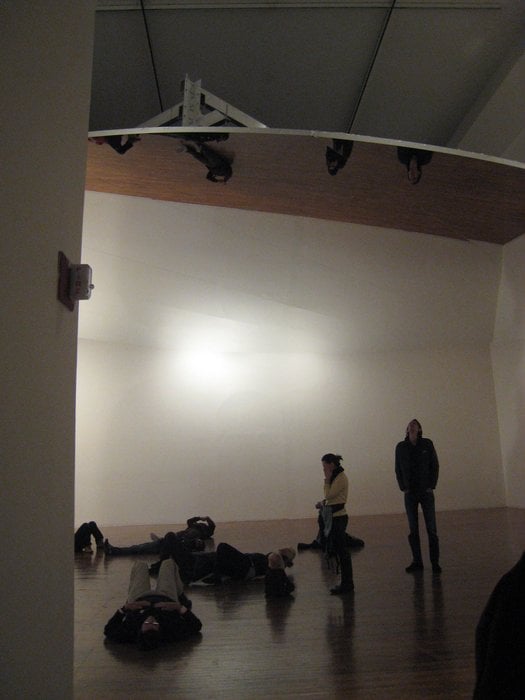
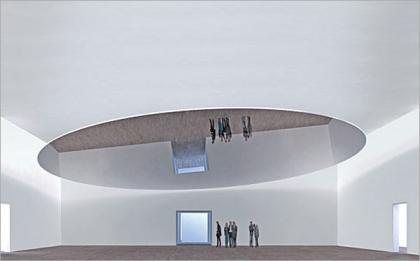
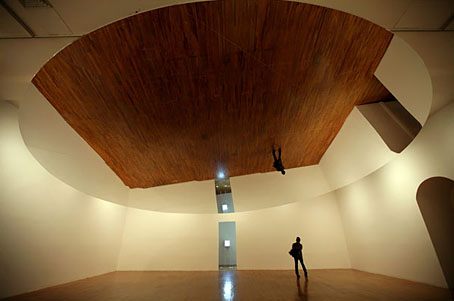
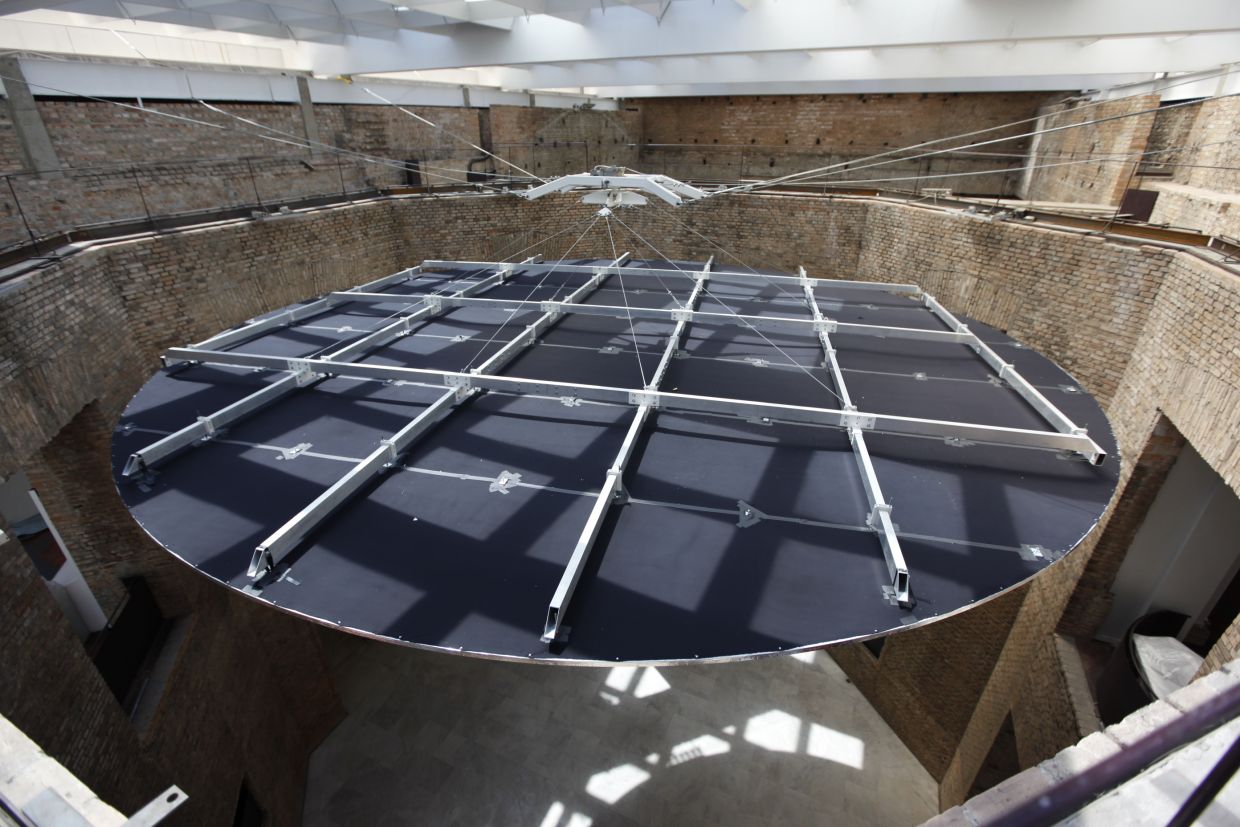
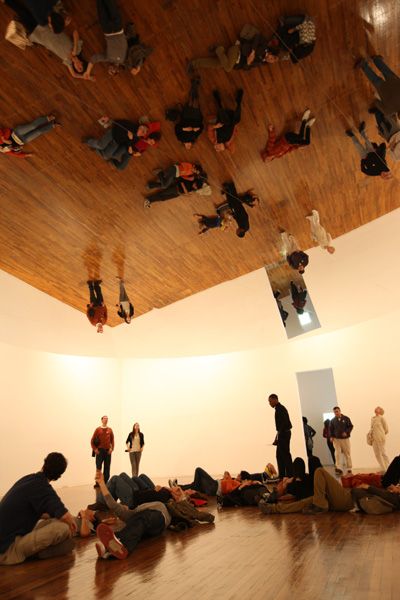
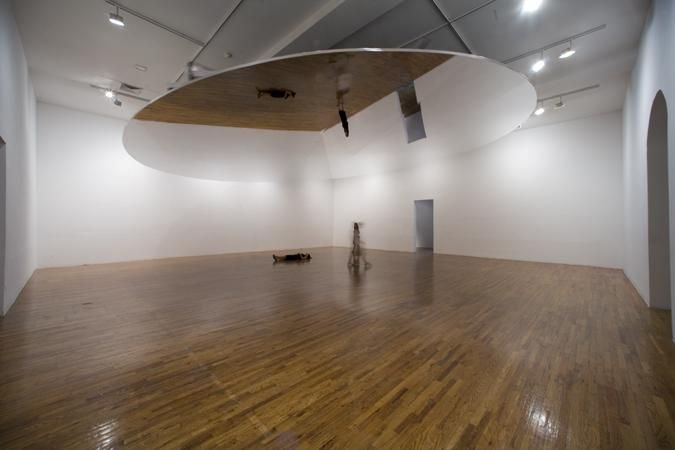
A giant, circular-shaped mirror, 40 feet in diameter and weighing 600 pounds, is mounted to the ceiling at an angle, rotating at one revolution per minute. The installation destabilizes viewers’ perception of space as they pass beneath it. Through the reflection of the gallery in the mirror, the piece actually adds light and space to the whole exhibition. Inevitably, partially also due to the weird and unpredictable layout of the rest of the exhibition, this room becomes the centre of Take Your Time. The slow motion of the ceiling piece, as well as its awkward angle that evokes the illusion that the walls bend, turn the gallery in a fascinating surreal-meditative space. Spontaneously, visitors lie down on the vast, hardwood floor and stare into the bright reflective surface of the mirror, observing how the environment distorts glacially.
Mirror foil, aluminum, steel, motor, and control unit.
How did you go about working together to build this dance hybrid installation?
A new type of collaboration.
A massive part of the whole project is just to start to have a conversation, what interests us, what kind of things might stimulate further conversation or dialogues.
….. to give us a baseline in terms of rhythm to work on top of ….
Music is very physical too. Should it be following the dance and the set? Music touches you. It could hit you, or stroke your neck.
I don’t see art as an object. I see it as a relationship, a relationship between dancers, between dancers and the stage, between dancerss and the audiences…
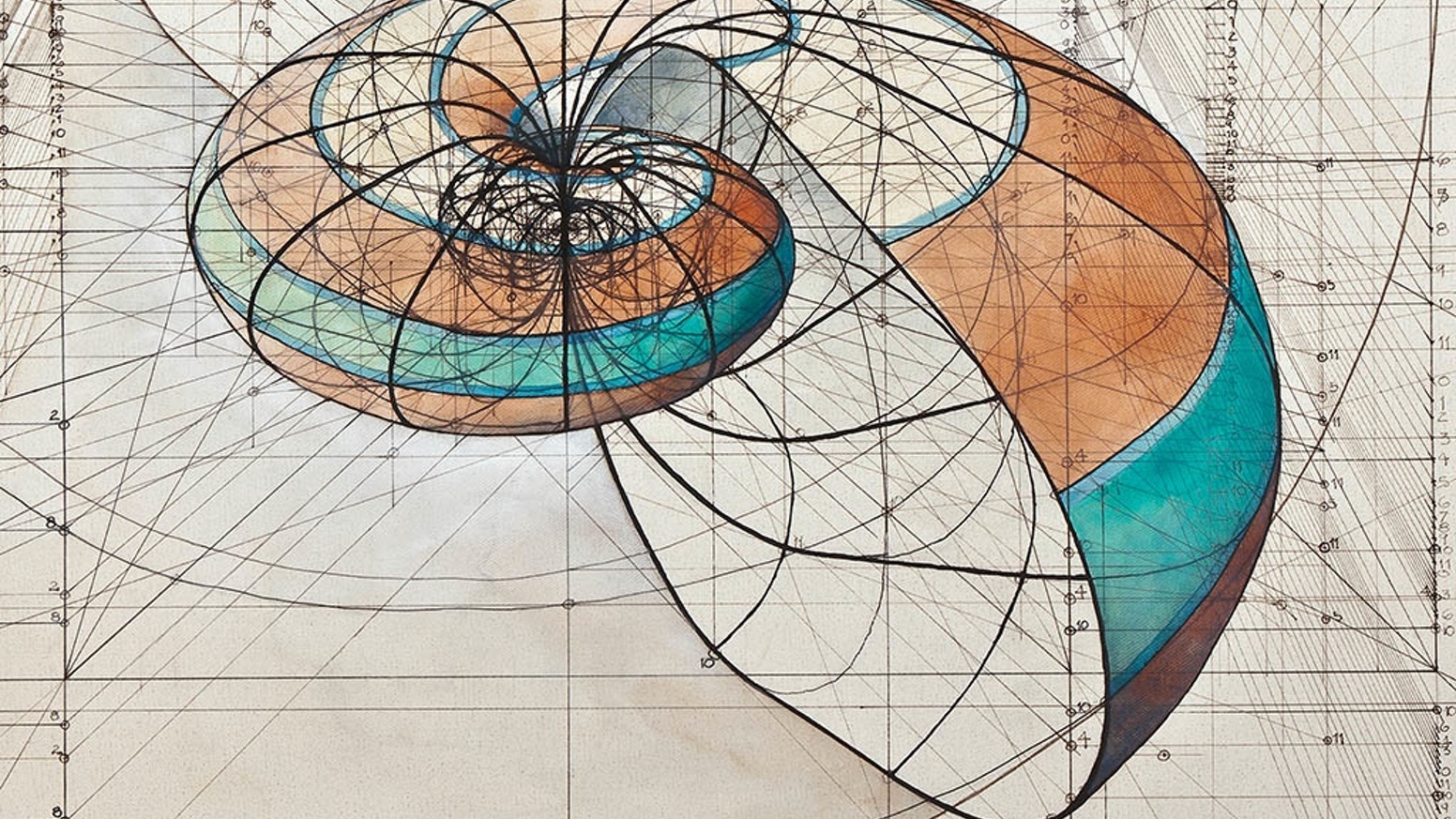
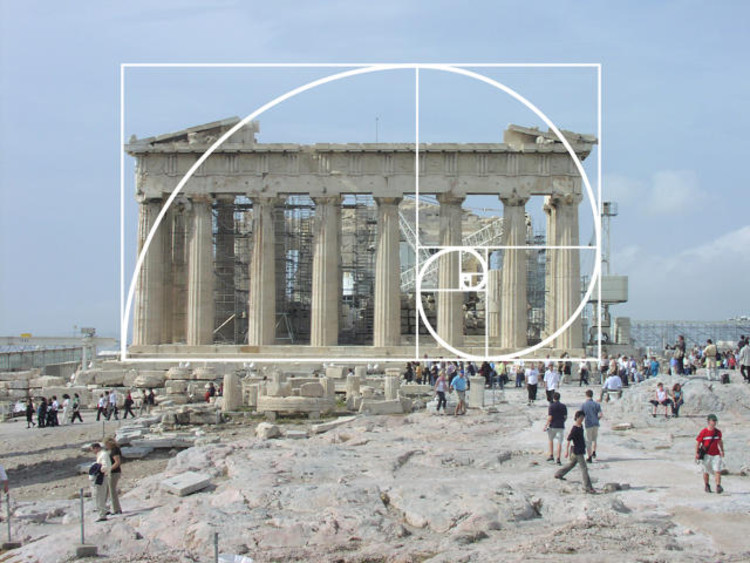
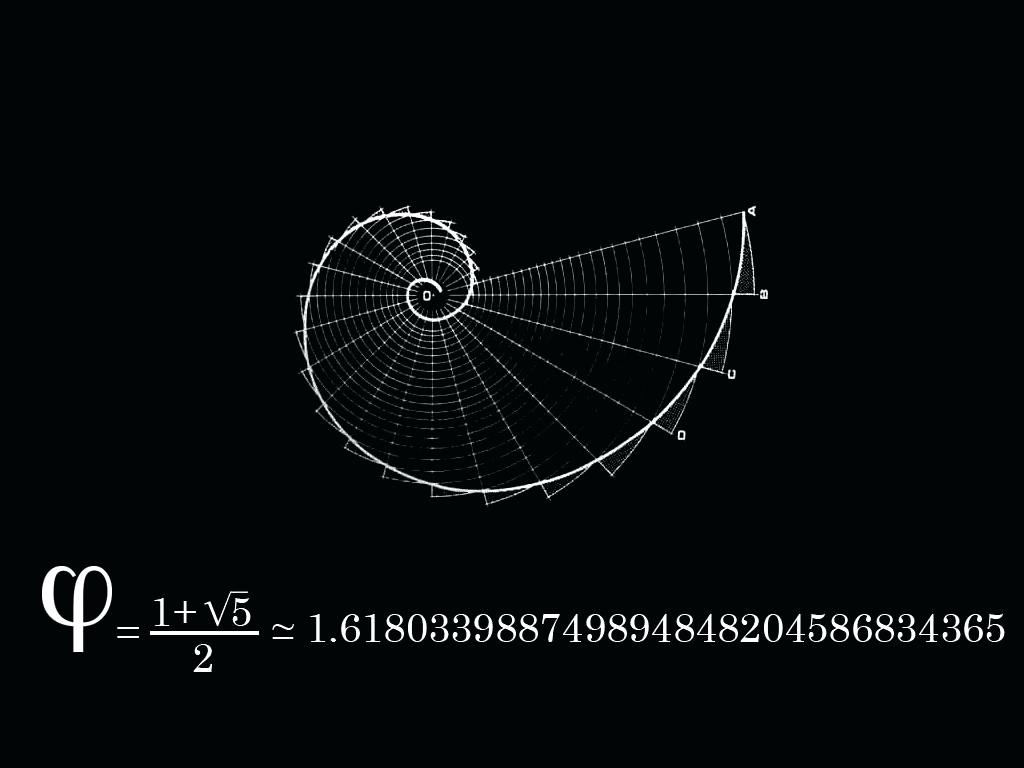
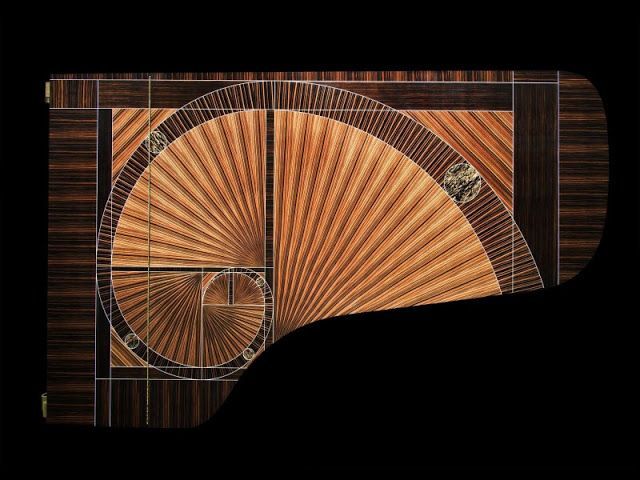
As a mathematical and natural phenomenon, the Golden Ratio has links with the Fibonacci sequence, the Stradivarius Violin, and the Vitruvian Man. The golden ratio has been widely used throughout the visual art, architecture, and music fields, by Mozart and Le Corbusier, among others, however it is rarely utilized within the field of dance.
The relationship of the highly subjective field of dance and the pragmatic field of mathematics has not yet fully been explored.
The mean and extreme ratio, later named the Golden Ratio, was first clearly defined mathematically circa 300 BCE by Euclid of Alexandria.
In Book VI of his Elements, Euclid describes the ratio:
A straight line is said to have been cut in extreme and mean ratio when, as the whole line is to the greater segment, so is the greater to the less.
In the beginning of the 20th Century, Mark Barr termed the Golden Ratio, phi, after the Greek architect responsible for the many Parthenon sculptures such as “Athena Parthenos”, Phidias 2 6. Use of phi, or the Greek letters, Φ and φ, is now commonly used as a reference point when discussing the properties of the Golden Ratio.
There have been connections forming between dance and mathematics education as well as mathematics and dance definition which have furthered both fields.
Why the Golden Ratio? The Golden Ratio is considered to be the “mathematical concept which is at the centre of … discussion,” by many mathematicians and math historians alike.
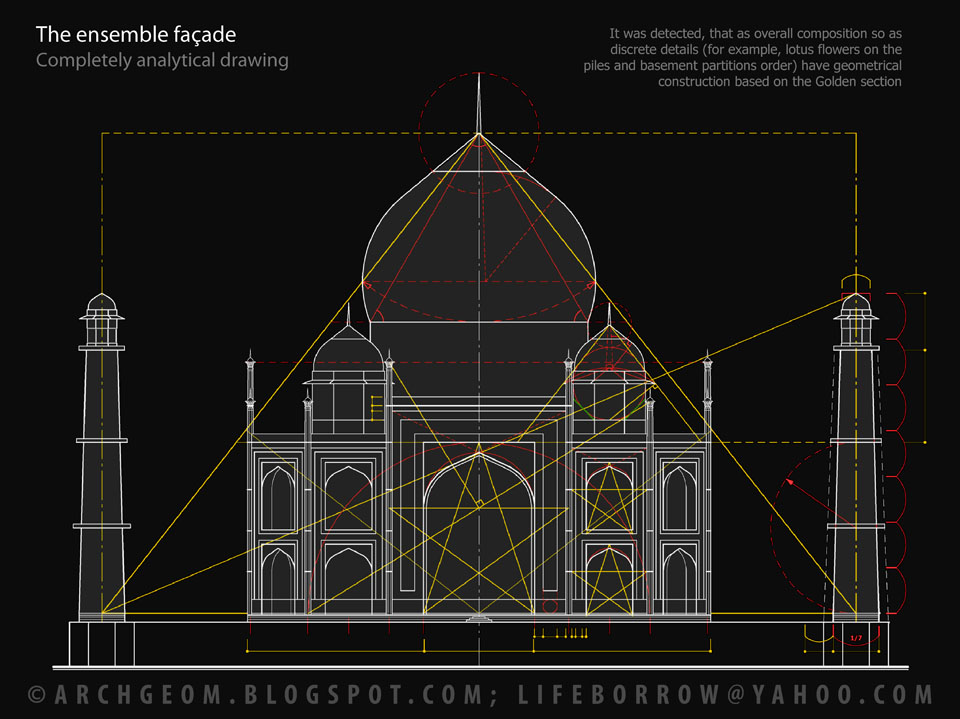
The Golden Ratio, while being a relatively simple mathematical concept, can be linked to numerous natural phenomena and artistic expressions throughout history: from the number and arrangement of petals on flowers to the beautiful works of music composed by Mozart; from the structures of the galaxies to the evolution of deep sea creatures; from the design of the soccer ball to the architecture of the Taj Mahal. Golden Ratio can be seen in a wide variety of natural and artistic mediums internationally and throughout history.
The Golden Ratio as a Series of Numbers
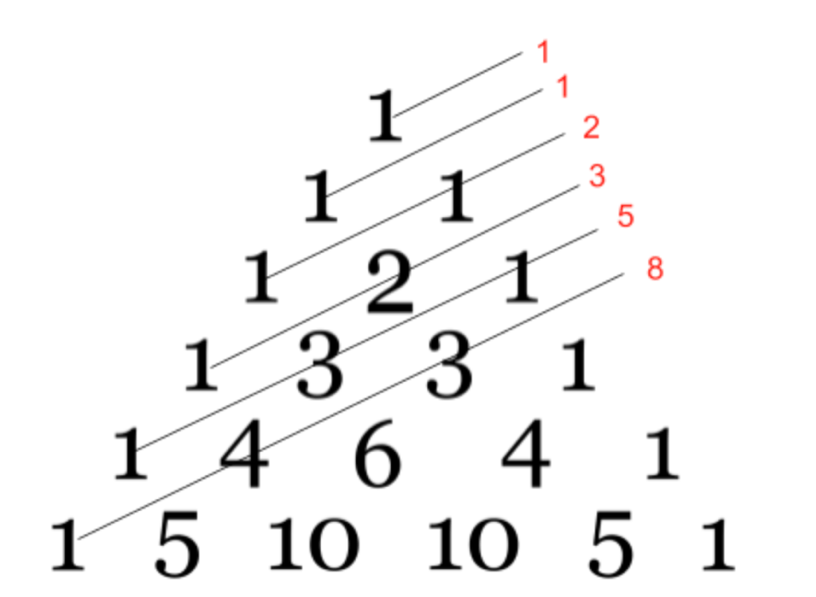
The sequence 1, 1, 2, 3, 5, 8, 13, 21, 34, 55, 89, 144, 233, . . . , in which each term (starting with the third) is equal to the sum of two preceding terms, was appropriately dubbed the Fibonacci sequence in the nineteenth century, by the French mathematician Edouard Lucas (1842-1891).
Golden Ratio in Music
Mozart, one of the most timeless and well-known composers in history, was known to show very high interest in mathematics. There are even math equations jotted down in the margins of many of his compositions.
The Golden Ratio can be mathematically defined as a number, a ratio, a series of numbers, and many other forms. Often related to nature and works of art, the Golden Ratio will also be defined by these occurrences. The arrangement of flower petals’ growth and the design of the pentagram are a few of the natural and artistic expressions of the Golden Ratio.
The process of relating the mathematical, natural, and artistic expressions of the Golden Ratio is comprised of three phases:
Utilizing the four main components of the Laban Movement Analysis – Body, Space, Effort, and Shape – the mathematical expressions can be related to movement constraints.
Relating the natural expressions of the Golden Ratio into choreographic structure.
By relating the existing artistic expressions of the Golden Ratio to choreographic methods to create choreographic ideas.
Dance and Mathematics, while displaying many degrees of separation today, were both founded as ways of explaining and creating dialogue with the natural world.
Mathematics is present in dance.
If mathematics is a study of pattern, then dance choreography can be described using mathematics.
Geometry is perhaps the most apparent subfield of mathematics present in dance. Each dance has its own characteristic way of applying mathematical concepts.
Mathematics originated from the desire to use concrete relationships to better describe and explain the natural world. Modern clock time originated from the mathematical investigations into the relationship between the Earth and the Sun while the modern Gregorian calendar was derived from the relationship between the Earth and the Moon.
The relationship of the highly subjective field of dance and the pragmatic field of mathematics has not yet fully been explored.
Geometry’s inherent connection to the moving body has also been studied by several dance and design scholars. Most important among them are two German artists: Oskar Schlemmer, a Bauhaus influenced choreographer, artist, architect and costume designer, and Rudolph von Laban, founder of the most widely used notation system in dance: Laban Movement Analysis – a system of documenting a dance with symbols or descriptions based on the dance’s effort, time and space. Schlemmer and Laban both kept geometric ideas, and Platonic solids in particular, at the core of their movement and design philosophies.
What is the role of conceptualization in the artistic practice?
This session is an attempt to reflect on the relation between theory and practice, philosophy and art, and the role of conceptualization in dance and choreography.
How to practice theory? In which way is art a form of theory?
What is main driving forces motivating our journey? Have we ever observed how our obsessions or needs become the detonator of our artistic research.
How do we translate a concept, an idea, a problem into a series of exercises, which will allow us to experience each others´ practices from tangible physical/performative situations?
A – Presentation of the collaboration by Golnaz Behrouznia
A1
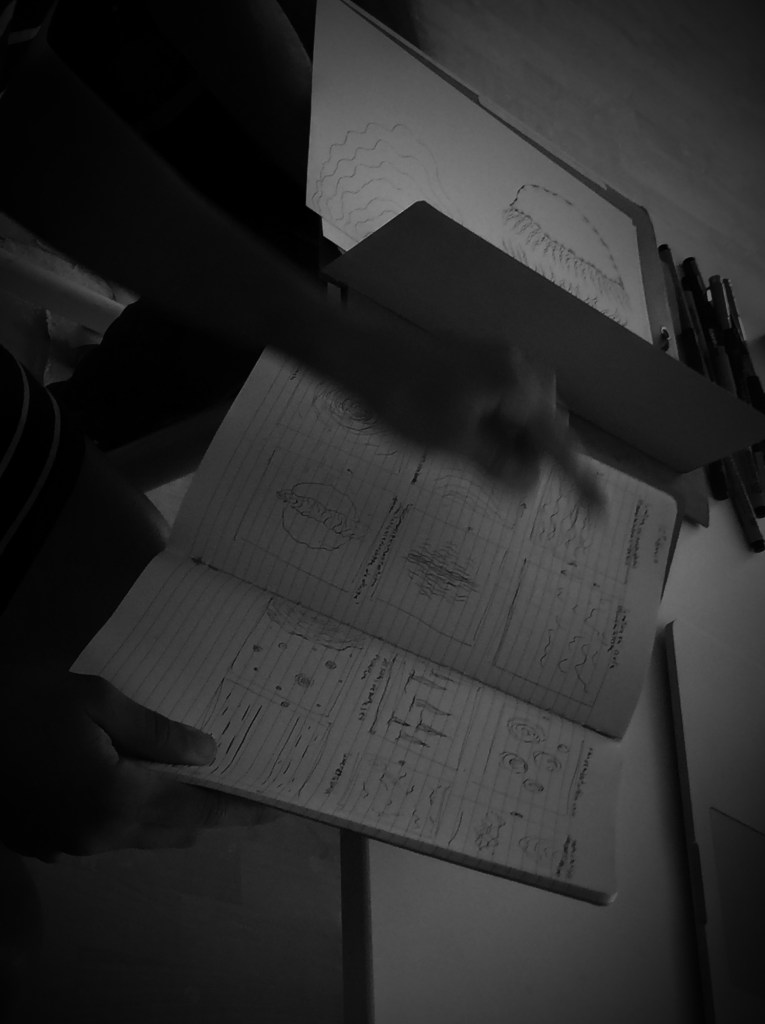
Studio 8 contacted me by showing its interest in my visual universe and my space installation.
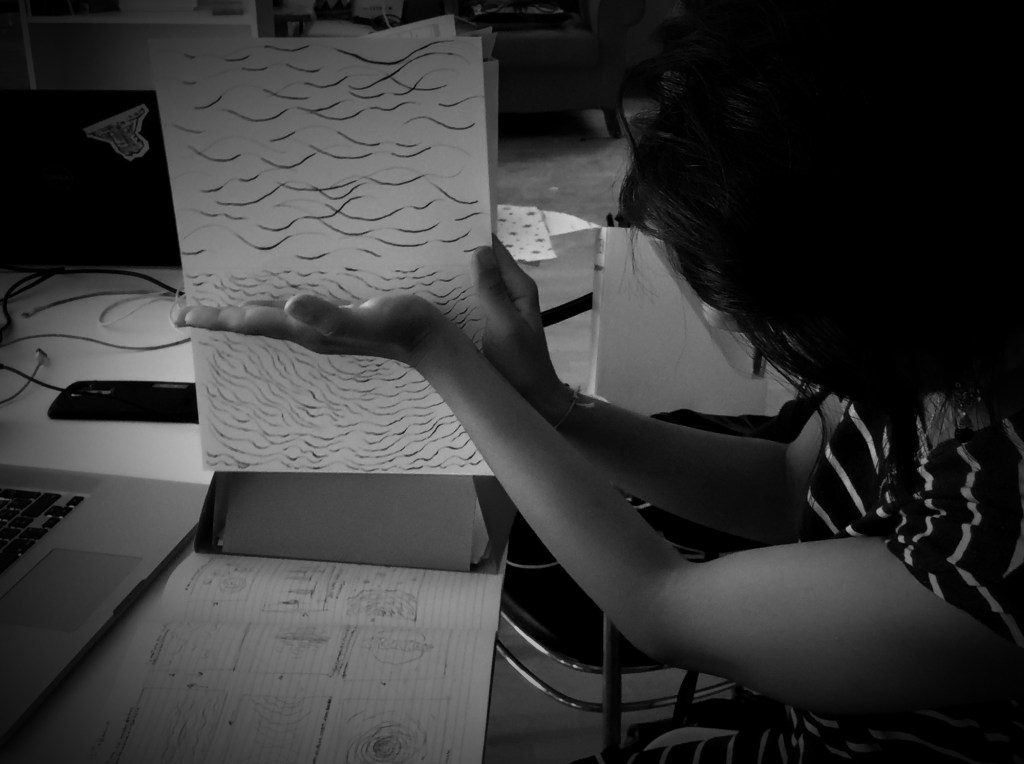
I have visual work related to organic shapes, curves, aquatic environment, microscopic world or environments.
My mediums are between sculpture -drawing in motion -video or multimedia installation.
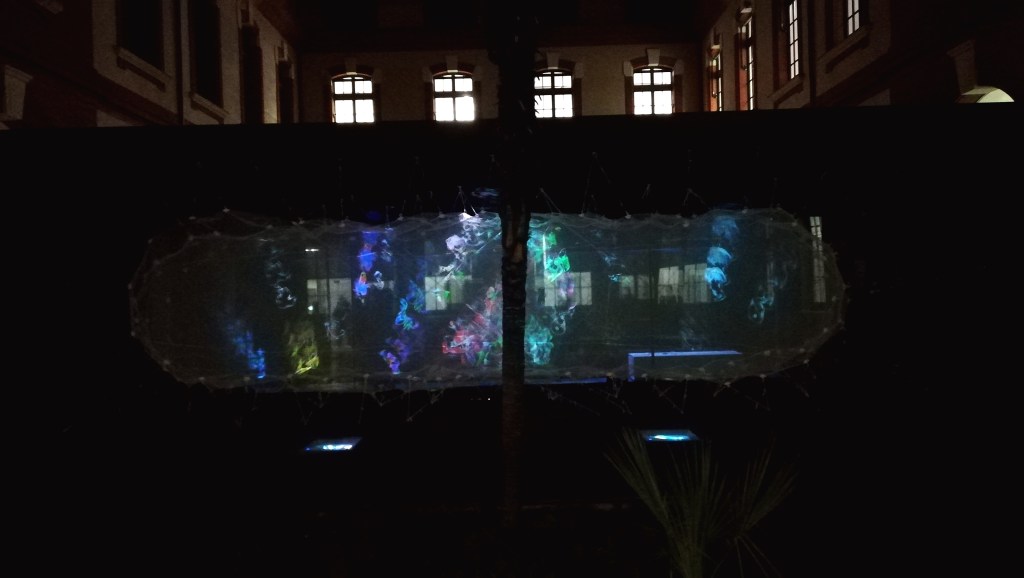
In my multimedia installations, the video projection has always faced a support in sculpted volume, thus seeking to give an embodiment to its contents related to life.
It is a meeting of plastics and digital materials and practices.
A2
I proposed to Studio 8 to work on Time out of Time with the sound artist and computing designer François Donato my partner in Imaginary Systems, with whom we have conducted several collaborations in connection with my universe. Our works have already met several times and there is a coherence that can be established.
François Donato is inspired by and interested in Studio 8’s project, he agrees to join the project. Thus the collective Imaginary Systems will collaborate with Studio 8 in the creation of the show Time out of Time.
A3
Imaginary Systems, echoing Studio 8’s project with its concept and choreography around liminality theme, will bring its visual creation, its scenic thinking, its sound creation by the two artists with above all the perception and the artistic line of the project team, for realization of the work Time out of Time worked out by Ab Al Hadi.
The whole work cannot be created and developed for the preliminary presentation of 2019 August 25, but only a part for it with a duration of about 30 minutes. The time is very short to interact/dig/create in an advanced way.
B – Golnaz Behrouznia ideas for the visual aspect & the stage
For the project that Studio 8 wants to address with my visual work on the theme of Liminality and all that derives from this concept, I think of a real influence of the image on the reading of choreography, of a tangle of choreographic work and my images because the two constitute together visual matters of the stage.
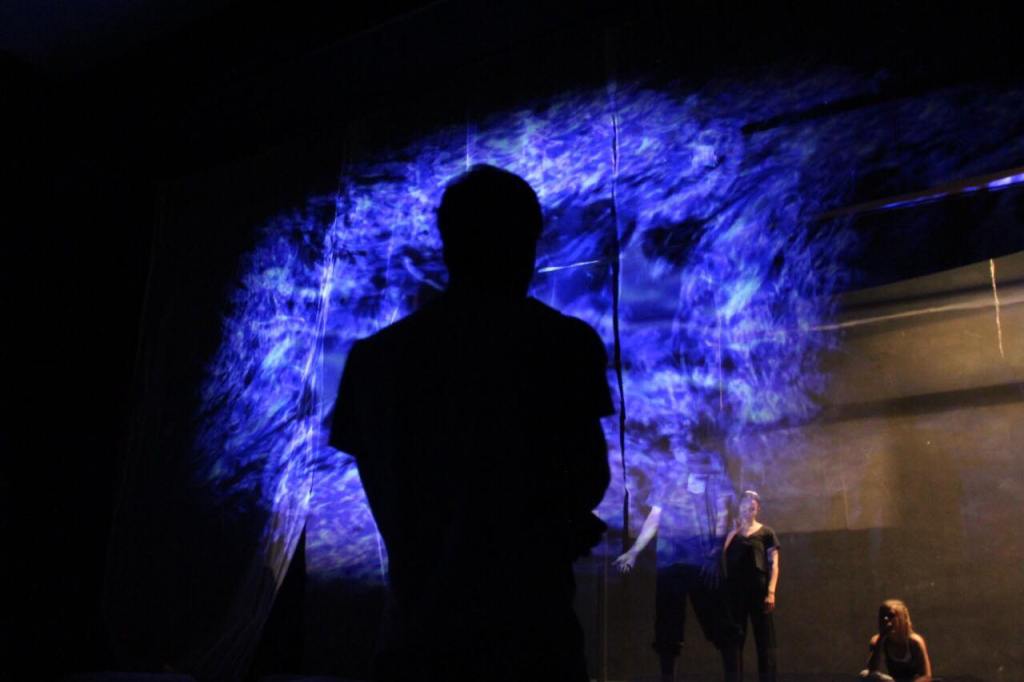
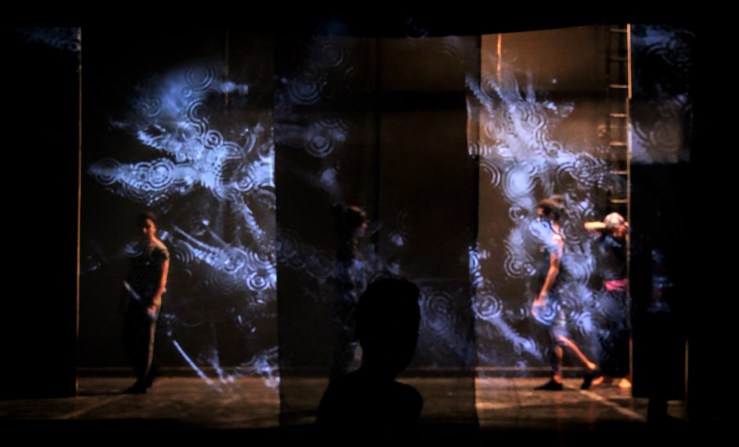
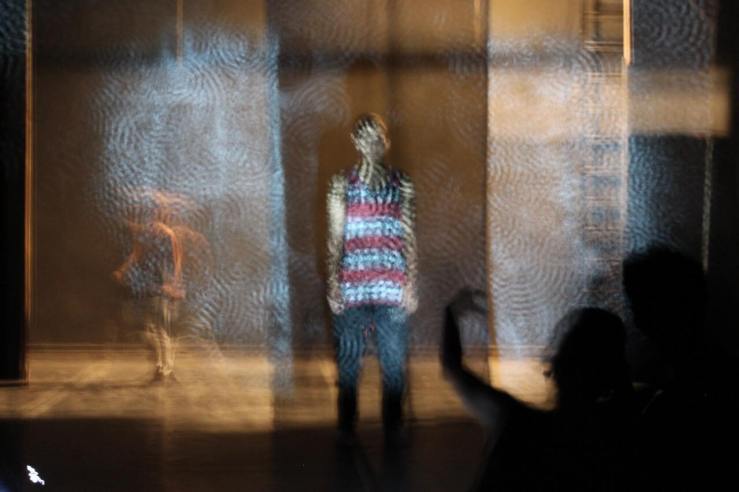
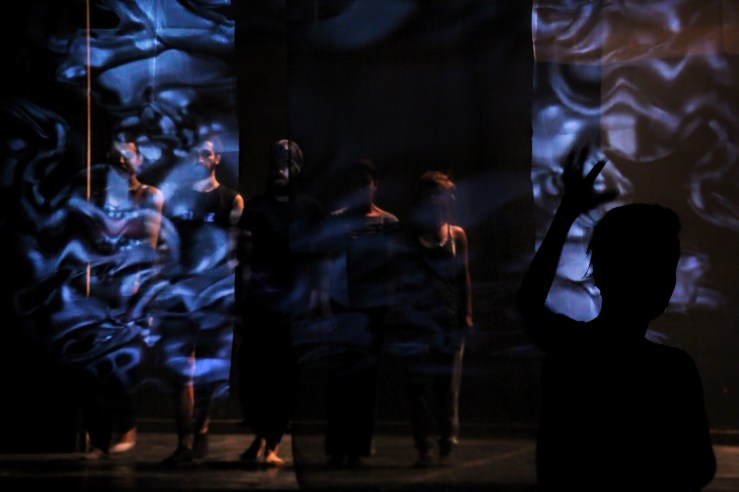
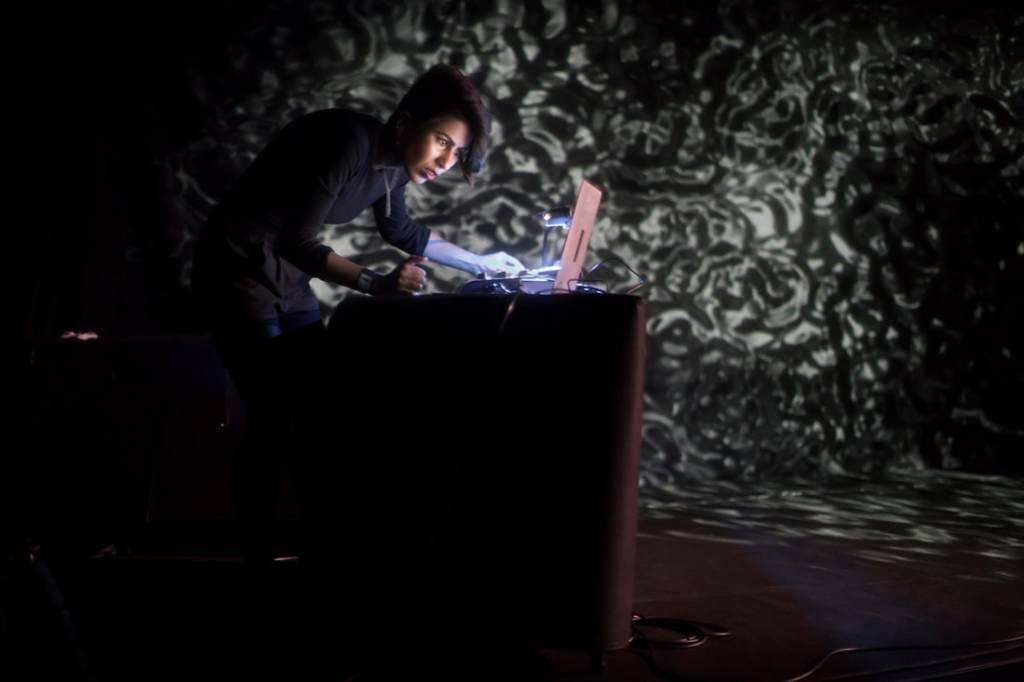
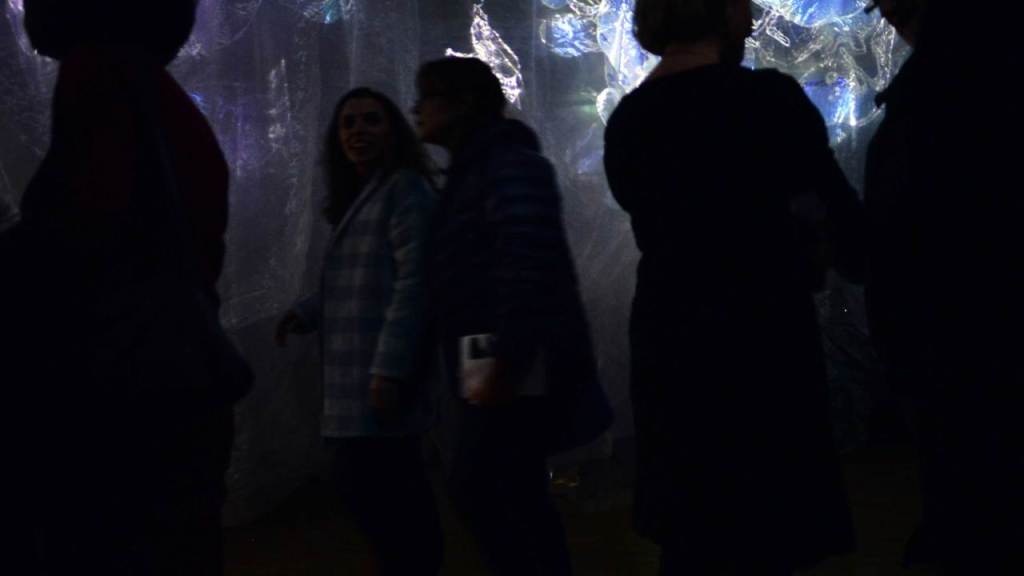
In the performance Time out of time, I think the image creates a virtual set for the stage. By building spaces, performance environments, by showing thresholds, by setting up partitions in the stage, we can set up a universe that transports the audience in its perception of dance nested in the images.
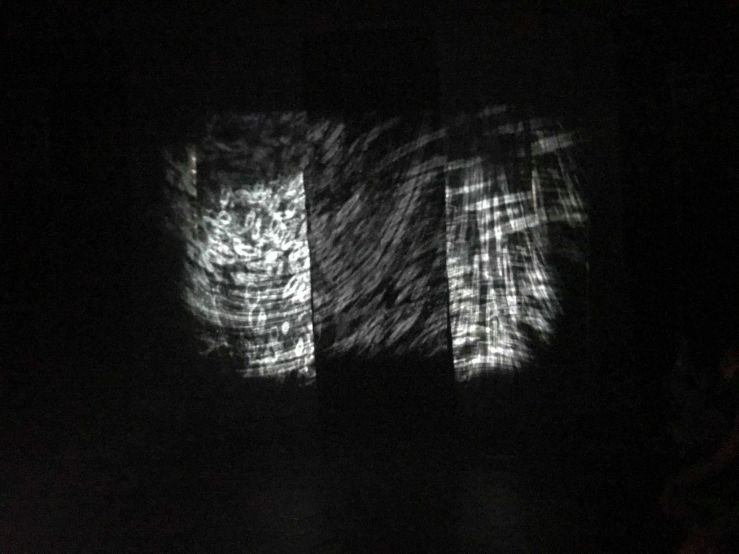
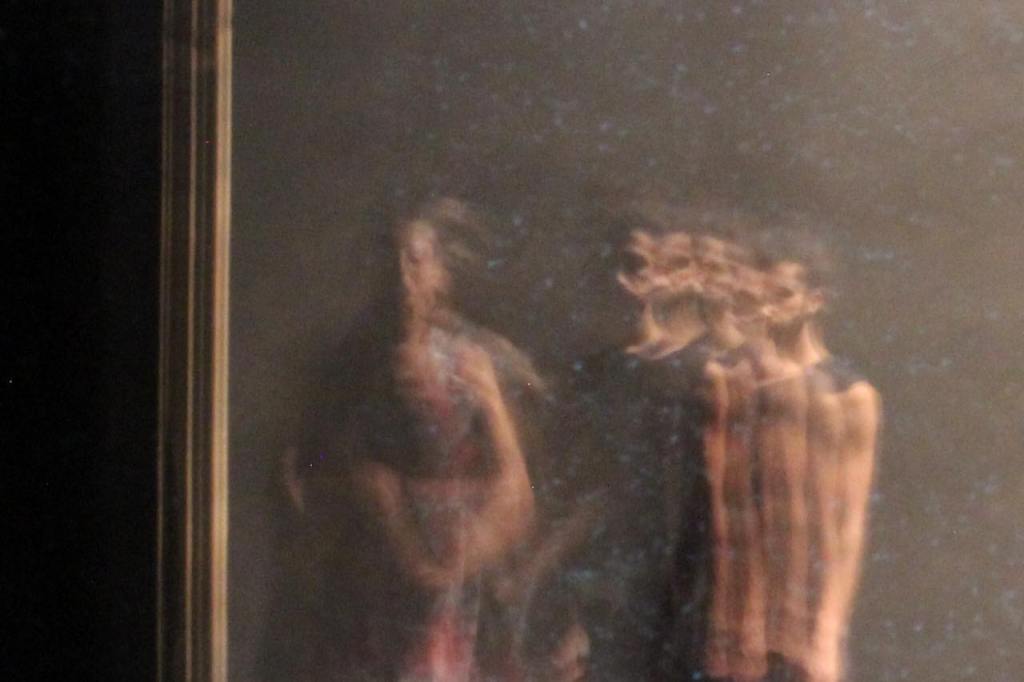
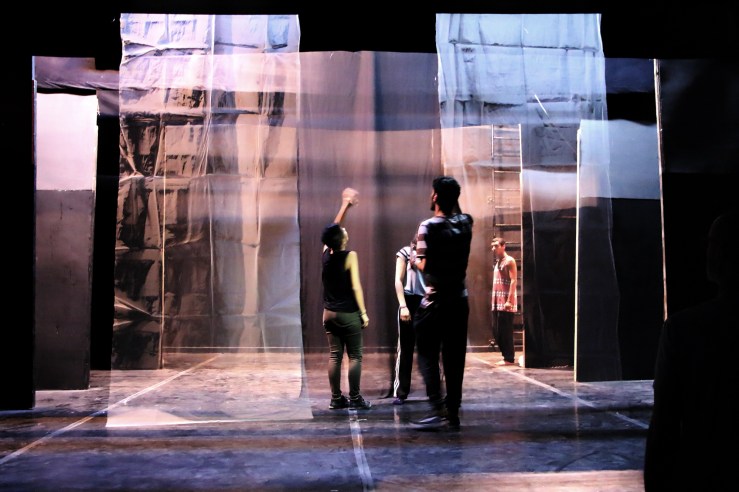
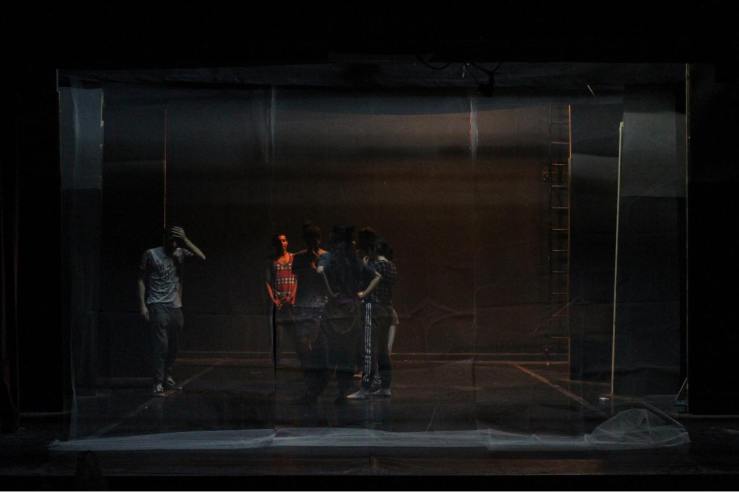
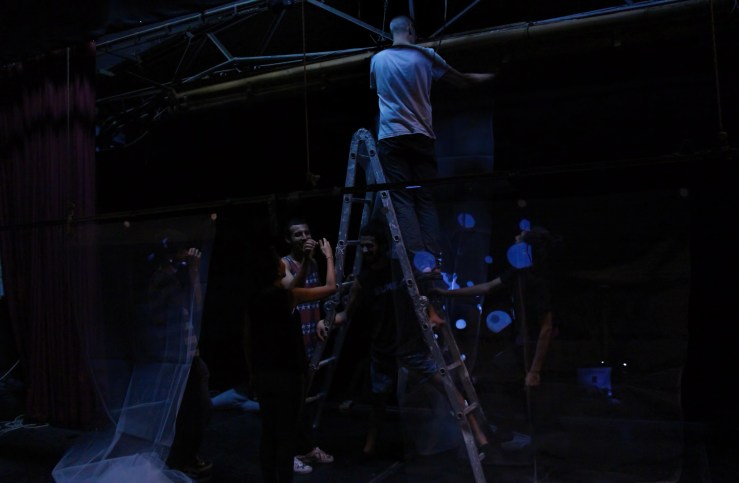
3 levels of tulle or fabrics on the stage should be arranged in parallel with the stage, in connection with the choreography and the structure of the show. These fabrics can partially cover the stage in various places, some of them may use the total width.
The dancers can find themselves, in front between and behind the fabrics, depending on what we decide together between the image, the choreography and the sound.
A strong relationship of the image with sound makes the scene credible and embodies the universe of the decor. Sound gives a reality to the evolution of the image. They echo each other.
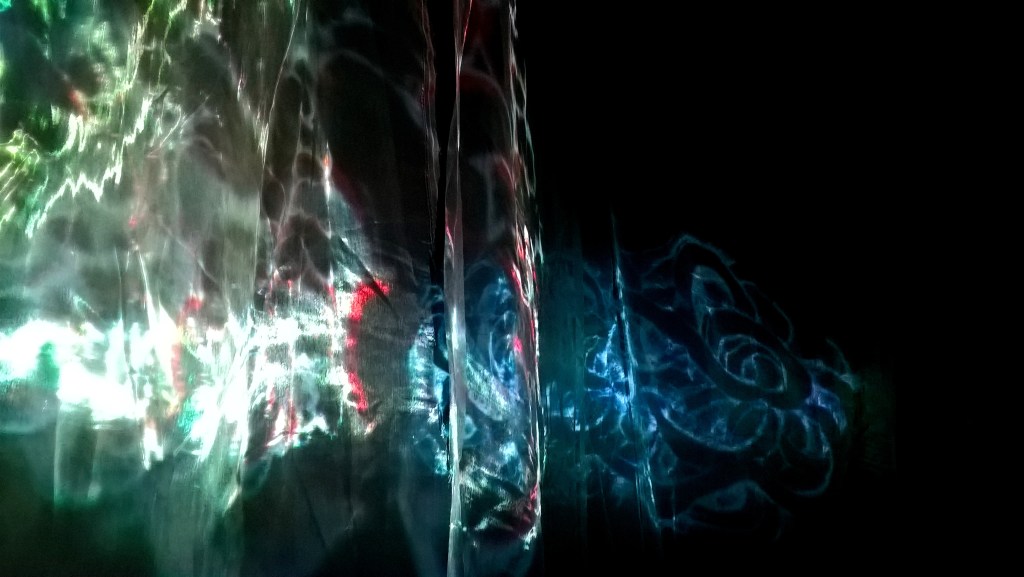
The images created by the videos are of two kinds: from drawings in motion and from materials generated by computer.
For drawings and shapes, more exchanges with Studio 8 can inspire me to design them more in tune with this team.
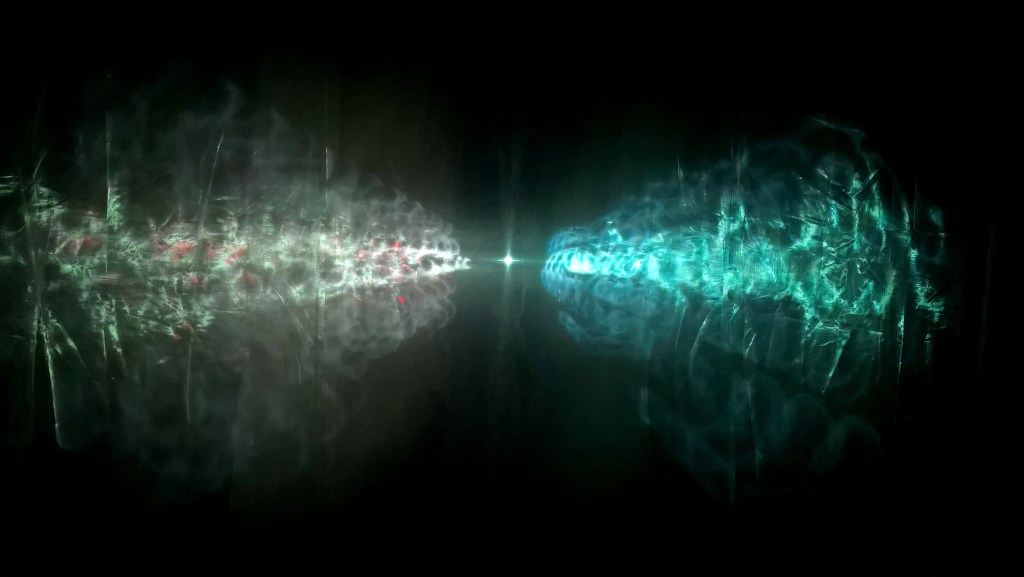
These images create fluid spaces in waves and movements on the stage.
At certain moments they can create 2 different environments at the same time.
Luminality influences me on the question of very delayed rhythms on various phases. Expressive climbs with slow calms.
There will be a sense of floating. Vertigo at times. Abstract materials. Aerial or liquid: as if sometime the performers were in a sea or on the contrary under fluid clouds.
The images create sorts of entrances, mouths in the space of the stage.
C – François Donato thoughts about sound and liminality
Liminality
-> emergence
-> threshold, limit between two states
-> void and appearance
-> instability / stability
-> identity
The liminality would be simultaneously a place and a time that mark the possible transition from one state to another, at the psychological, relational level in particular. It is the breaking of a previously well-established continuum that reveals the possibility of change, a reconfiguration of the context and the exchanges that take place there.
In the multimedia choreographic project Time out of Time, the presence of a composed sound creation can articulate around this notion by working more specifically on the following situations:
emergence of sound from silence: an appearance process that does not involve development but merely implies an initial energy that can generate movement (note that the image can also function on this principle);
the transition thresholds between a sound presence given by the dancers on stage and its extension and development in a composedd sound broadcast on loudspeakers.
The process of organising a noisy and immersive sound material to articulate a musical writing, especially rythmic, or the appearance of a spoken speech, of a real situation. In particular it would be interesting to go and record, capture sound environments of Amman that bear the traces of identities and struggles that cross this region of the world.
Even if it is not a question of politicizing an artistic discourse or of falling into the literality of identity claims, I find it interesting to look for contexts where particular sound elements reveal both cultural roots and social reality.
Of course these tracks have to resonate with the visual and choreographic work. It will therefore be necessary to highlight the specificities of the writing of the sound according to the orientations chosen in common in order to avoid unnecessary redundancy between the elements of the show and to give priority to the openness of the imagination, the multiplicity of possible references and semantic complexity.
The sound must come here to weave the possible reference context of what happens on the stage, both in the action of the bodies and in the writing of the images. Whether this context is a reality from the outside brought back to the stage or the development of a dreamlike universe that extends beyond it, the dynamics of gestures and images.
From a device and performance point of view :
We can envisage at this stage both a fully determined composition with fixed durations and a generative composition, some aspects of which may vary from one performance to another. This will depend on time and financial conditions, the second solution requiring a greater investment of time and on-site presence.
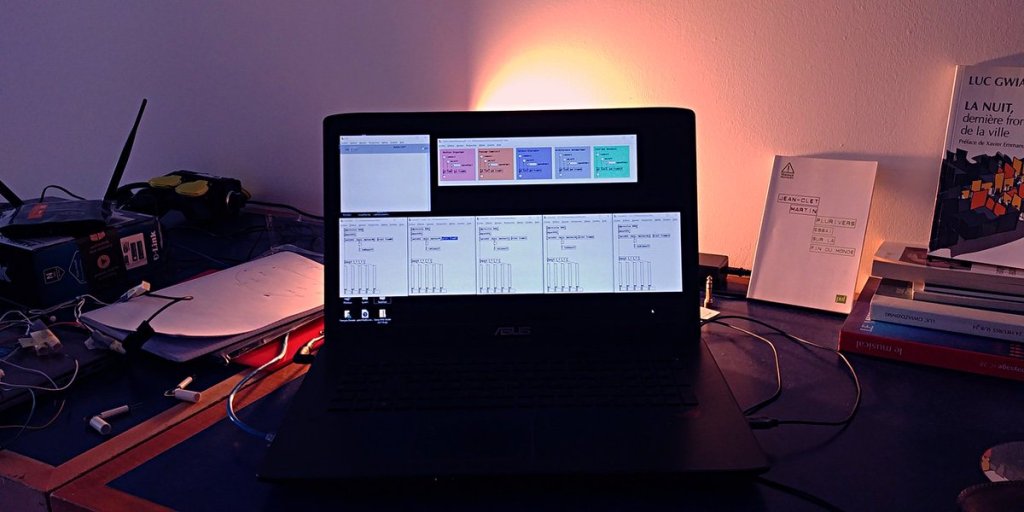
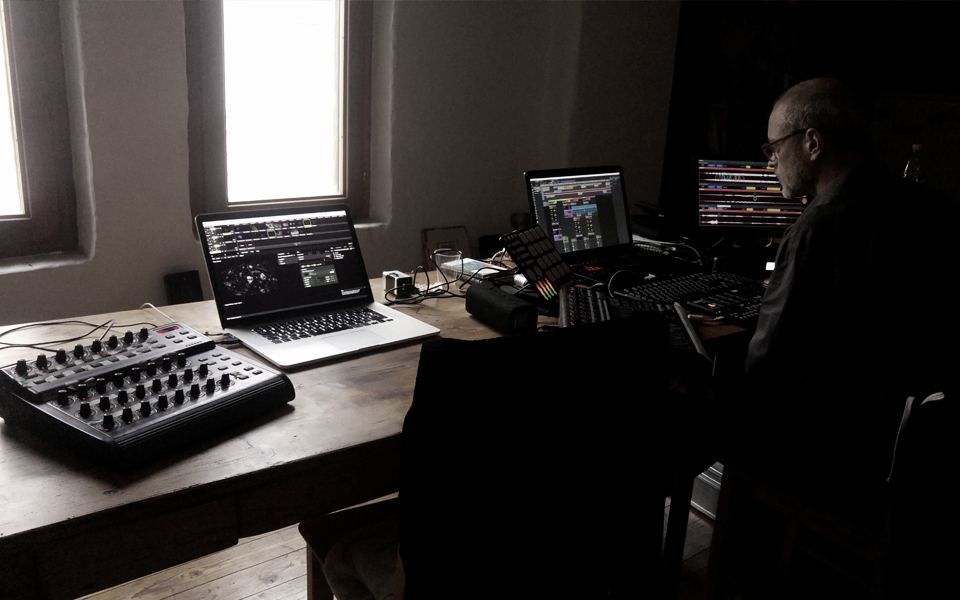
In any case, it is surely preferable to think of a complete integration of image and sound diffusion within a software environment such as MaxMSP or Touch Designer or Hollyhock Factory.
From these dissemination tools, we can also imagine a direct link between bodies in motion and the behaviour of sounds and images. A form of interaction can be defined that would allow choreographic writing to change the course of visual and sound continuity by choosing in real time from among several possible options. This can be established quite simply and inexpensively with a set of piezzo sensors connected to the inputs of an Arduino board that would send this information to the computer.
Another element of the device is essential for the sound dimension, it is the choice of a multichannel diffusion system allowing at the same time a very localized and immersive writing in order to extend the main notions to the entire space of the representation.
D – A multimedia Timeline
To create visual materials that echo Studio 8’s project and interact with François’ sound materials to have things on hand when I come to Jordan in July.
We see together, we test, so I continue adapting and finalizing these subjects in interaction with the choreography.
The choreography on its side, adapts and reinvents itself according to the visual and sound subjects for the stage in order to create a true creation and a coherence. The sound work is for me a soul to the whole visual scene: the image device + the choreography.
I finalize my work until the end of July for a delivery in
August.
François Donato finalises the sound work on his side and integrates the visual and sound materials in his interface for the first presentation on August 25th .
E – Imaginary Systems preliminary statements
Scenography:
Floating fabrics, carrying moving images, are consistent with the notions of threshold and passage derived from the one of liminality.
Audio and visual echoes with concepts and choreography:
Seein the work of Ab Al Ali noted on the online sketchbook about ideas of movements and positions of the dancers, it appears quite clearly that it is a matter of starting from fairly simple and stable situations, often online disposal, which are modified by an imbalance that triggers movement.
This is consistent with our idea of differentiating spaces on the stage through the projection of images.
The idea of fluid materials in evolution of mass, speed and density is echoed in François’ proposal to work on the processes of organising a noisy material (the background noise of our society of communication ?)
towards well-defined musical structures (related to structured language).
The notion of passage, or threshold, being evidenced by the round-trip between the two states with variable mutation processes in speed and density.










 Time out of Time: