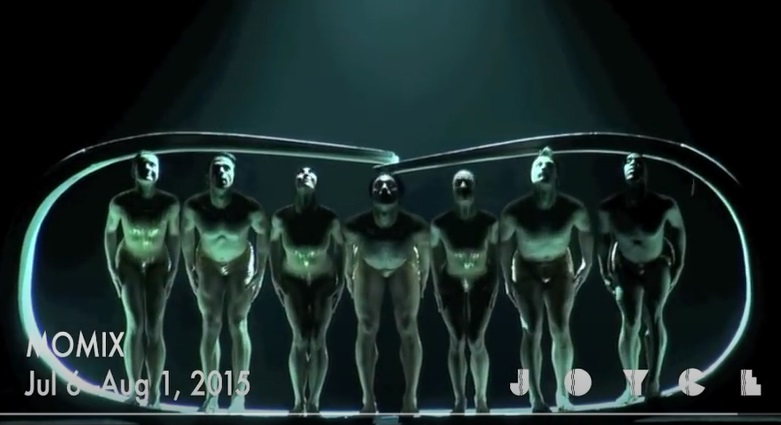
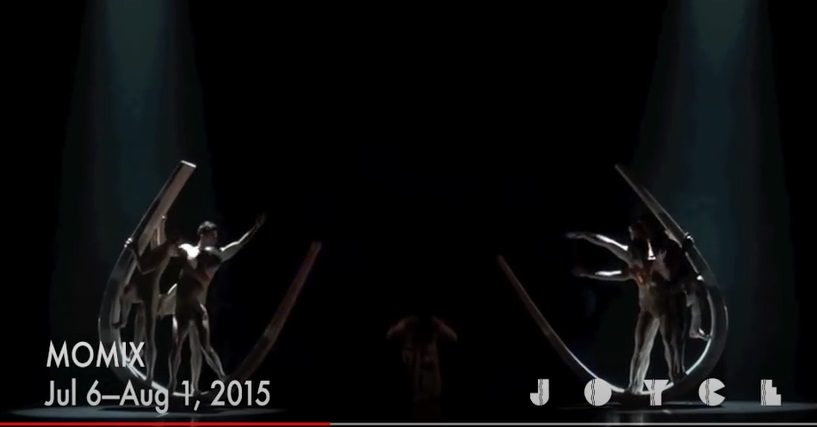
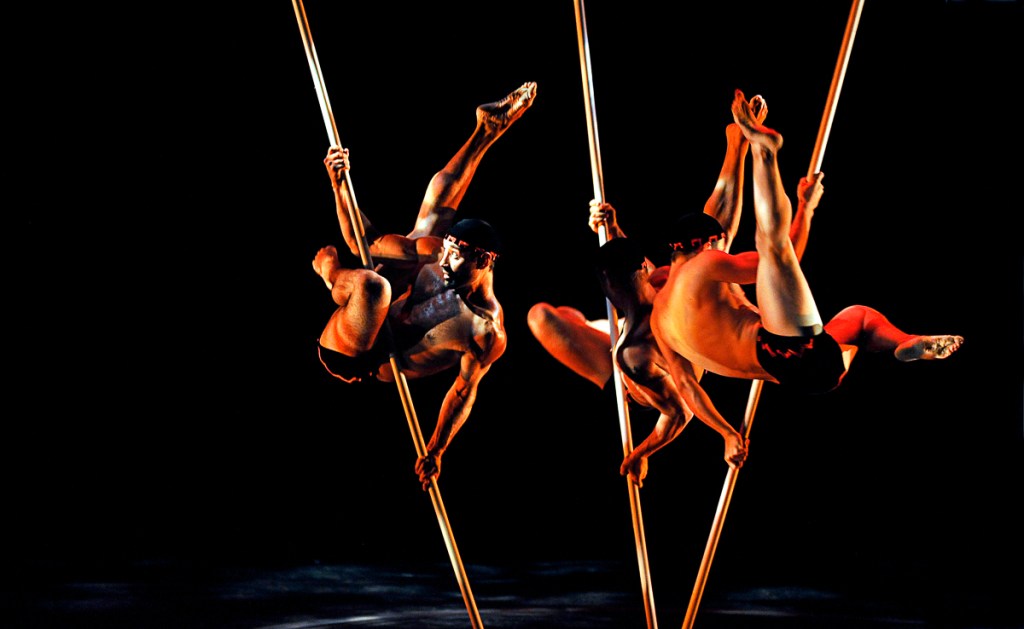
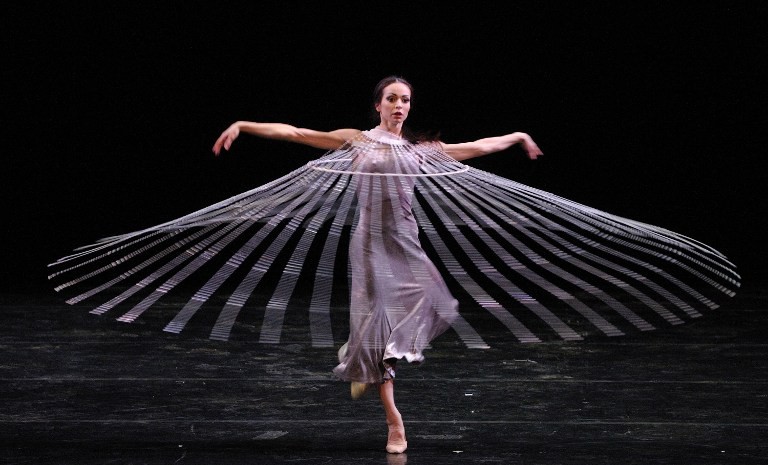
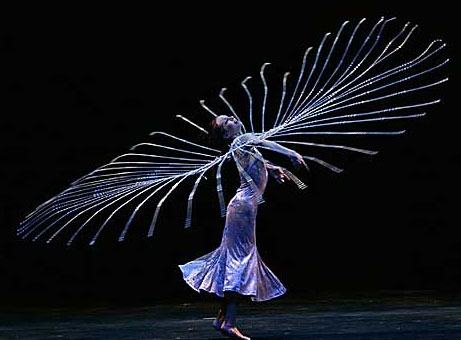
Known internationally for presenting work of exceptional inventiveness and physical beauty, MOMIX is a company of dancer-illusionists under the direction of Moses Pendleton.
Samuel Mathieu’s dancing is halfway between a conceptual approach of the idea he wishes to convey and an assertive taste for a final object danced in a literal way. Early on, for his pieces, he required his performers to show strong physical commitment. Physicality is a word that he often refers to as a choreographer. A word that encompasses the notions of performance, demand, accuracy and speed at the same time.
Moreover, even though his career as a choreographer is interspersed with recurrent moments of self-examination which have led to the creation of a few soli in his repertoire, and even though he is attentive to all the performers individually as human beings, Samuel Mathieu likes the group, the assembly, and even the cluster, the intertwinements and the entanglements of bodies. With the group he searches for the rhythm of his pieces through alternating moments of unison and moments of confrontation.
For many years now, his creations have focussed on the link between music and dance, on the place of sound and rhythm compared to the dance, to the movement. A strong and long-standing collaboration with Maxime Denuc has enabled him to test several musical writing principles to accompany his pieces: real-time electronic musical composition during rehearsals (Generic-X), composition of a score based, just like for dancing, on improvisations, suggestions, exchanges and compositions with the musicians of a string quartet (The Man who Plunges), creation of a musical piece before the choreographic creation in order to observe the musical work’s positioning, in terms of influence, compared with the choreographic work’s (Remarkable identities).
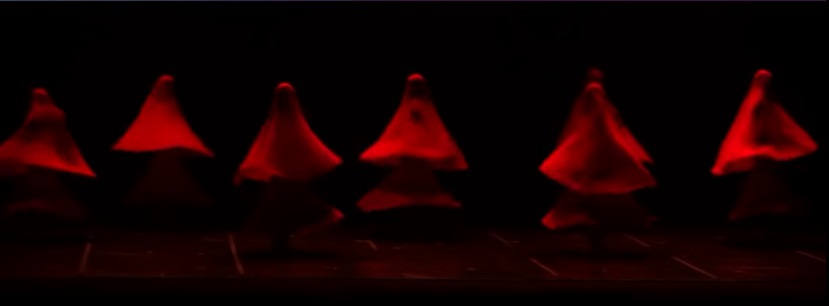
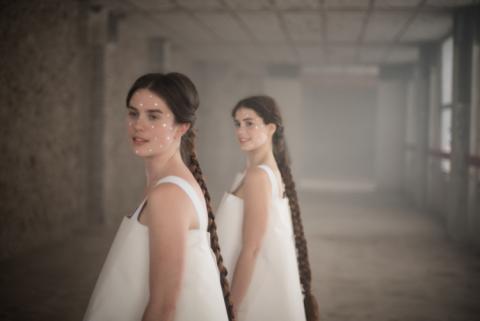
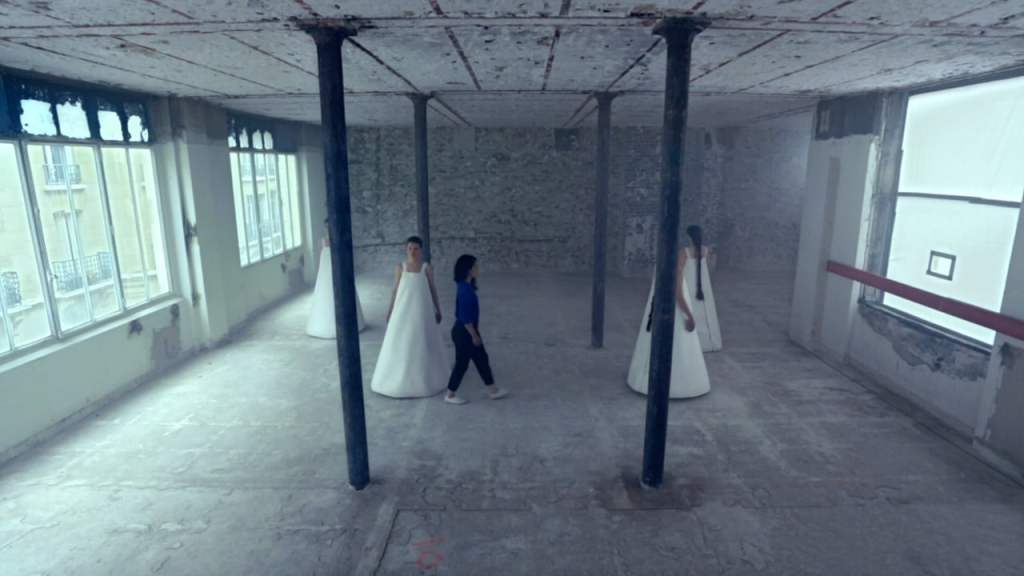
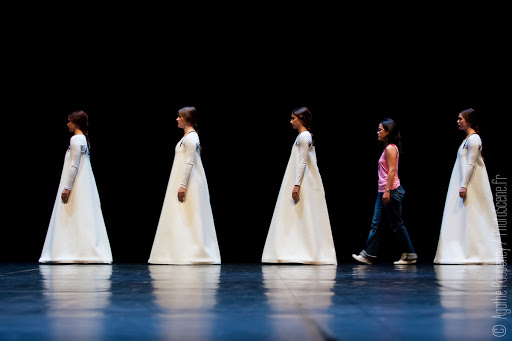
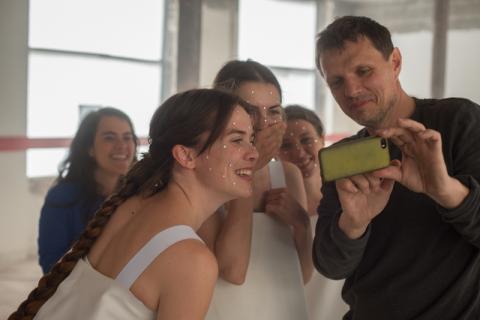
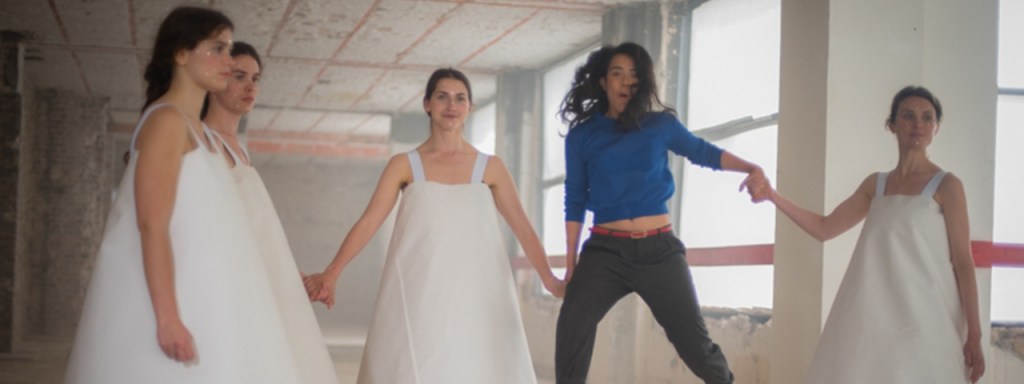
A film by Olga Dukhovnaya and Konstantin Lipatov from the performance Korowod With Amalia Alba, Florence Casanave, Olga Dukhovnaya, Lisa Miramond, Annabelle Pirlot Curated and produced by Amélie Couillaud and Dimitri Chamblas.
A sculpture of interactions, accessible and alive.
Who is Ulysse Lacoste?
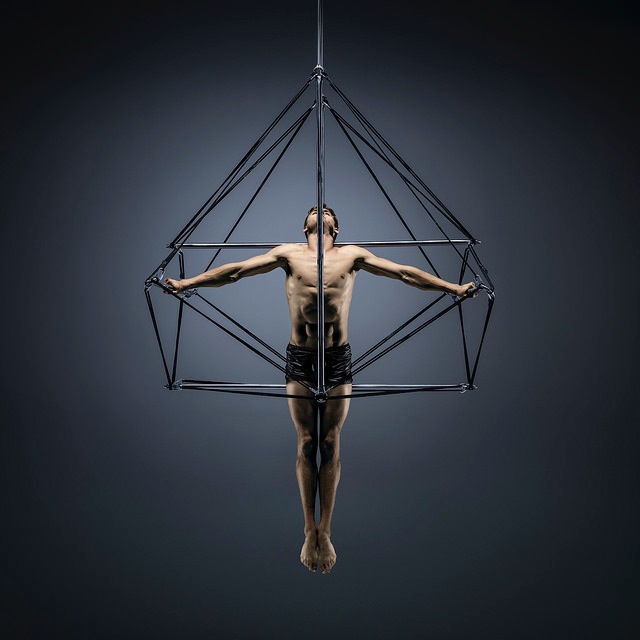
Fascinated by science, Ulysse explores the themes of balance, gravitation and movement. He graduated from ENSAAMA-Olivier de Serres and since 2002 has been developing his own know-how in metal, combining the ancestral skills of forging and brassware with contemporary and industrial techniques. The result is simple forms born of geometric games, mobiles with a point of balance that is constantly lost and found again, stabiles in tension where all forces cancel each other out.
He has collaborated with several science and technology museums (Musée des arts et métiers, Palais de la découverte, IHP, Exploradôme,…), created apparatus and scenography for the circus world, exhibits monumental sculptures and carries out performances in the public space. Sensitive to the nuances of their environment, Ulysses’ sculptures seek synthesis, are interested in abstraction, and speak of simplicity.
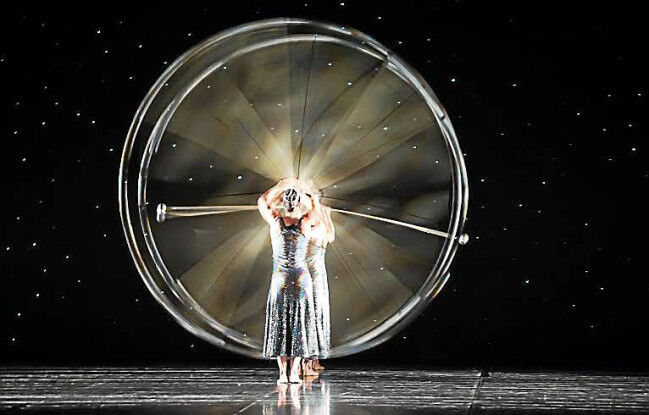
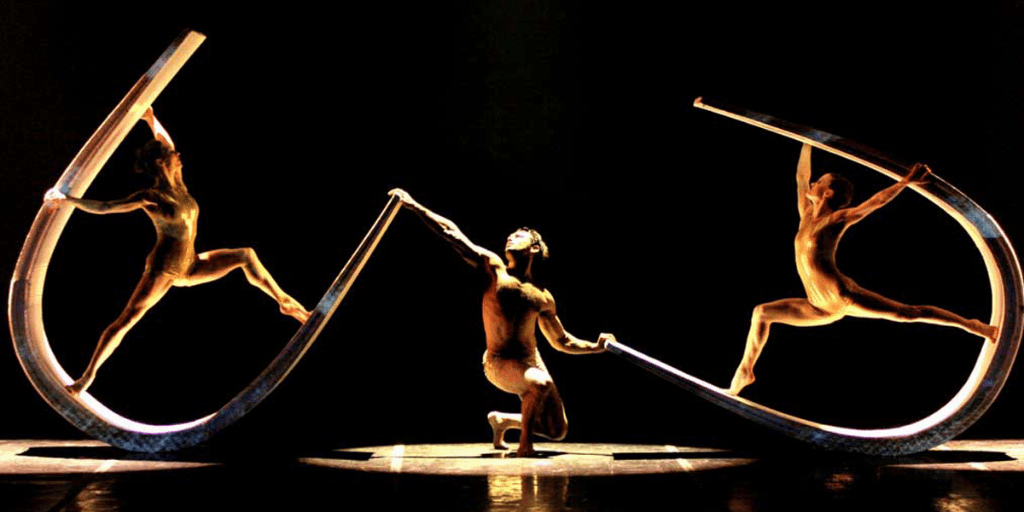
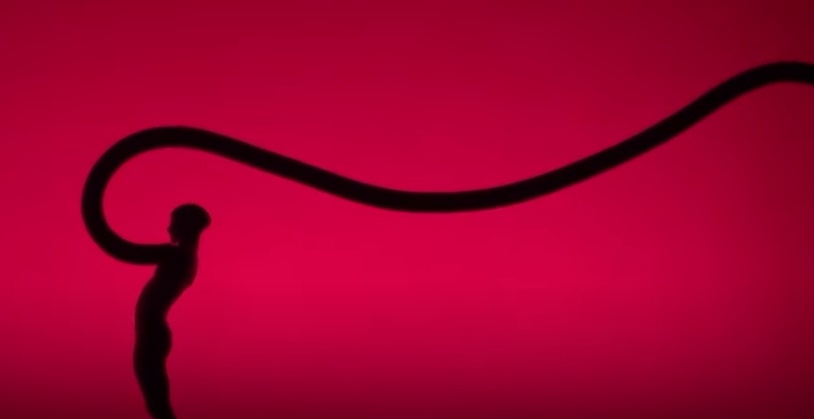
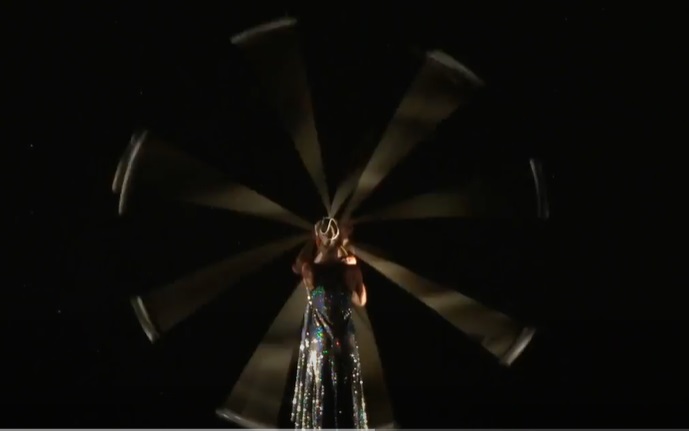
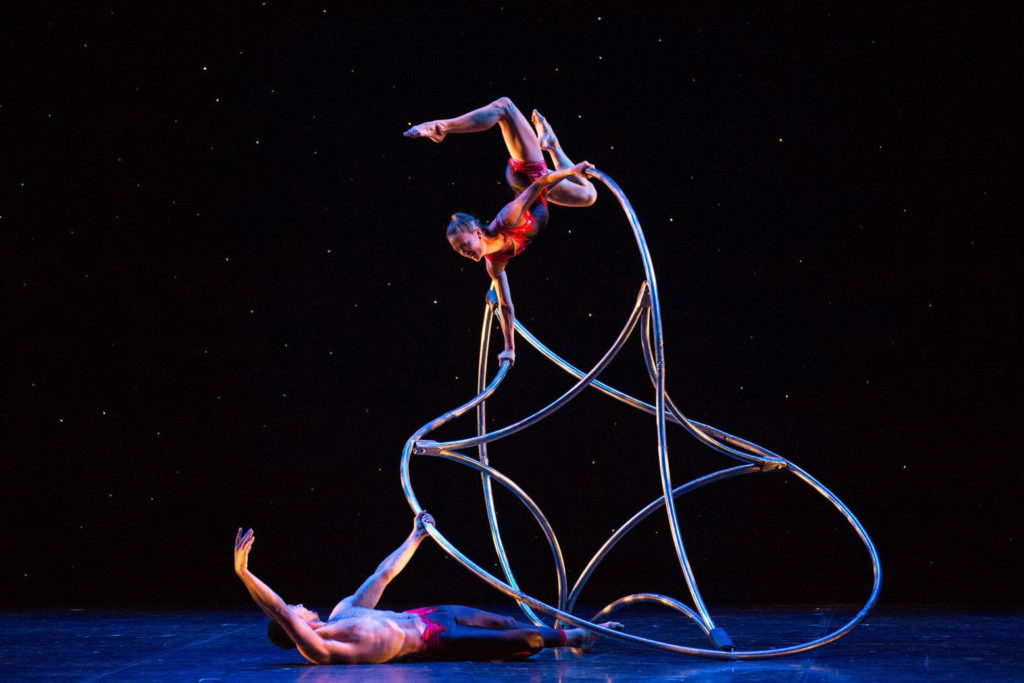
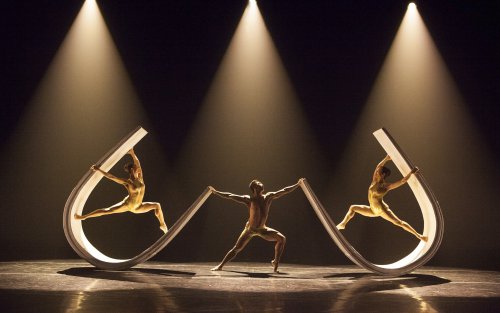
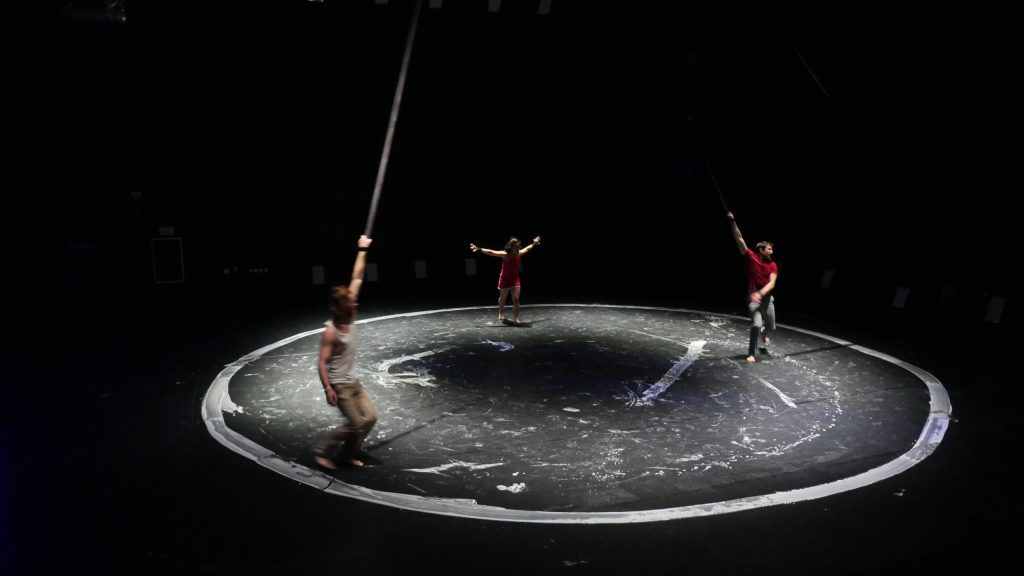
Project 3. the Movement laboratory, A moment of pure research and creation around the circle, at the crossroads of the worlds of the circus and monumental sculpture, this laboratory puts into equation the geometric trajectories of bodies and volumes in an offbeat workshop, an imaginary colloquium of utopian surveyors.
“I always seem to be looking for something that hasn’t been invented yet.” – Alwin Nikolais
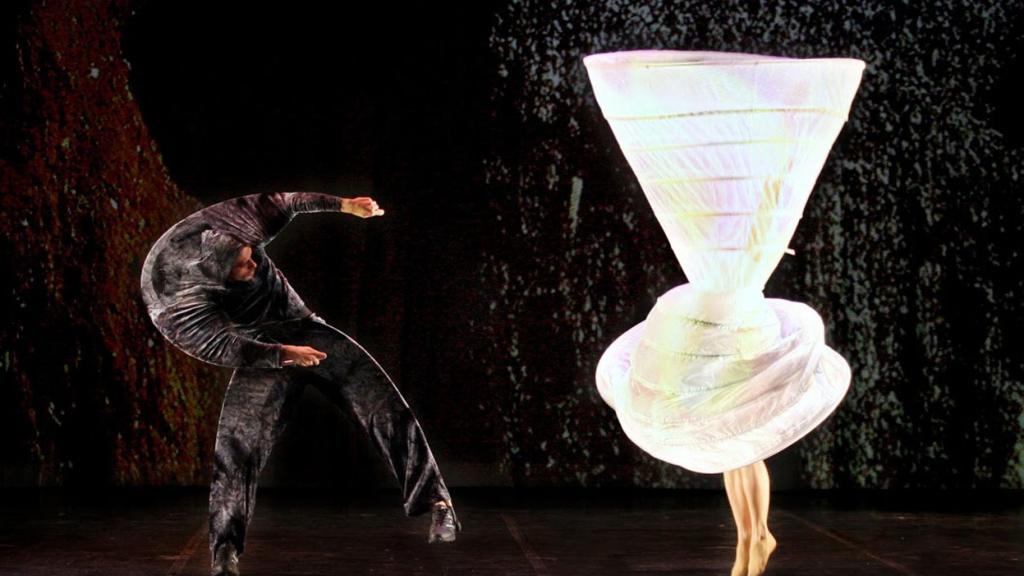
Alwin Nikolais was an American choreographer. He employed lights, slides, electronic music, and stage props to create environments through which dancers moved and, more important, into which they blended.
Viewing technique as a means to an end, Nikolais did not ask his dancers to embody characters or emote, but to simply dance as part of the onstage environments created by his innovative costume, lighting and production designs—most of which he handled personally, in addition to creating his own music and, of course, choreographing the steps.
“I always seem to be looking for something that hasn’t been invented yet,” he once said. He would frequently improvise solutions to gain the effect he wanted without waiting for technology to catch up to his ideas.
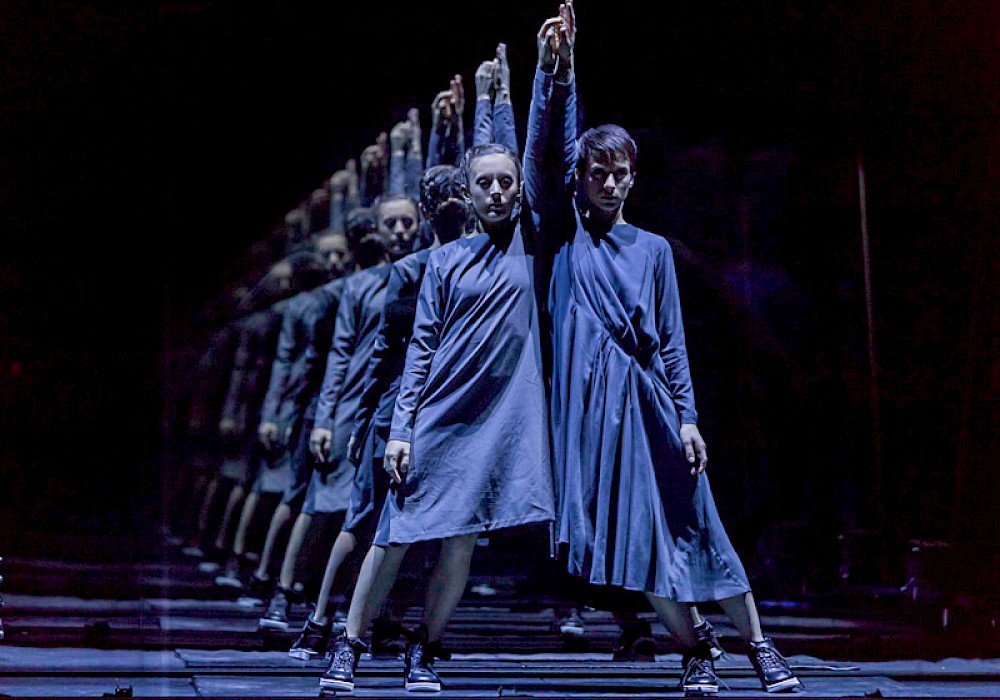
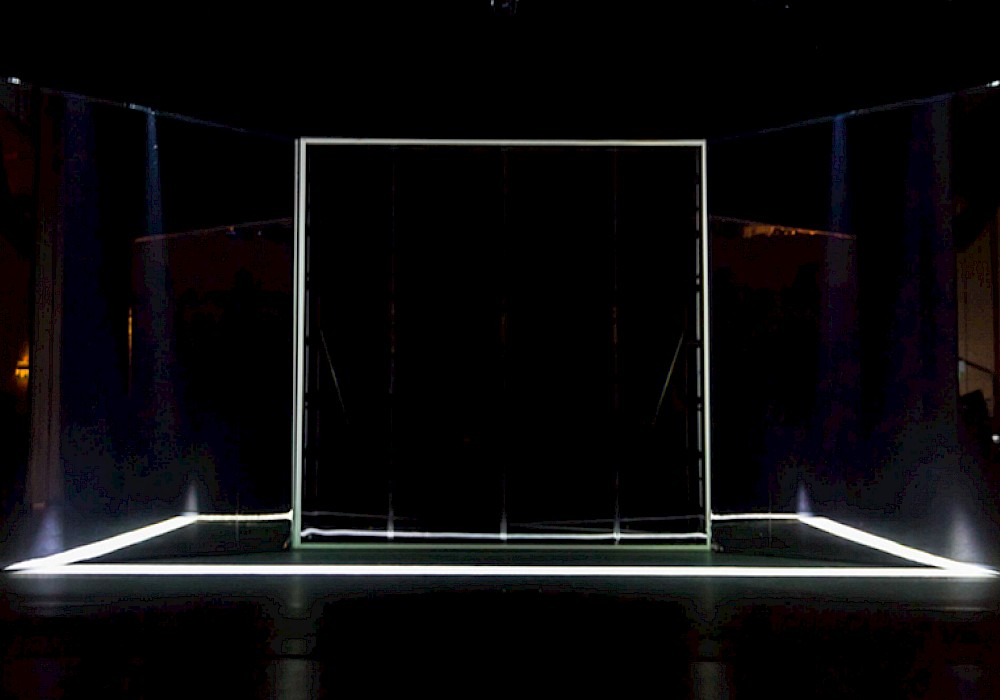
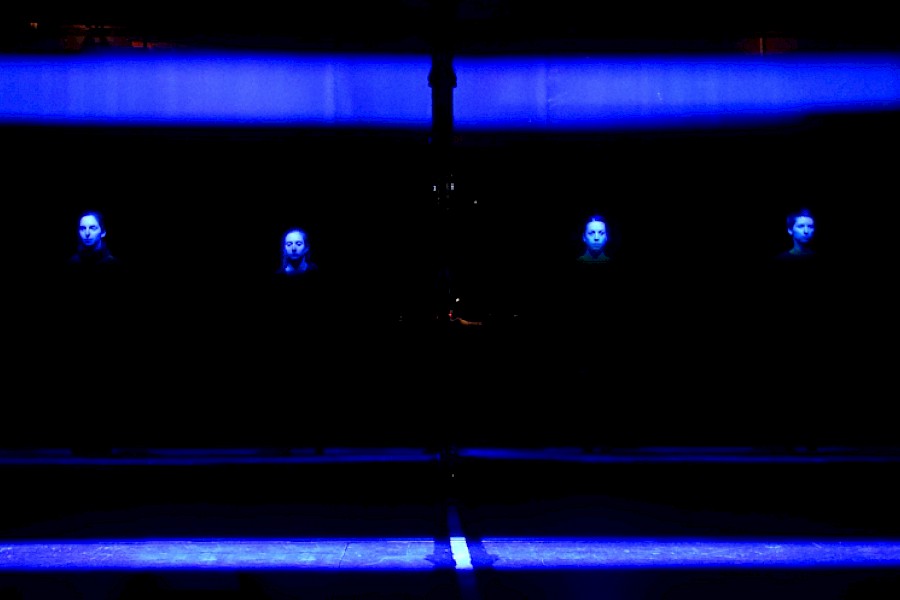
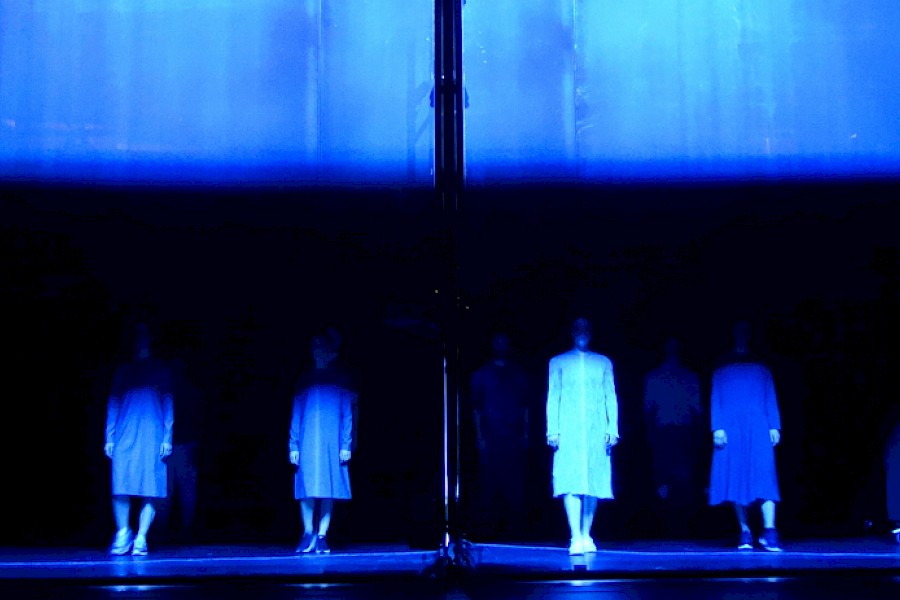
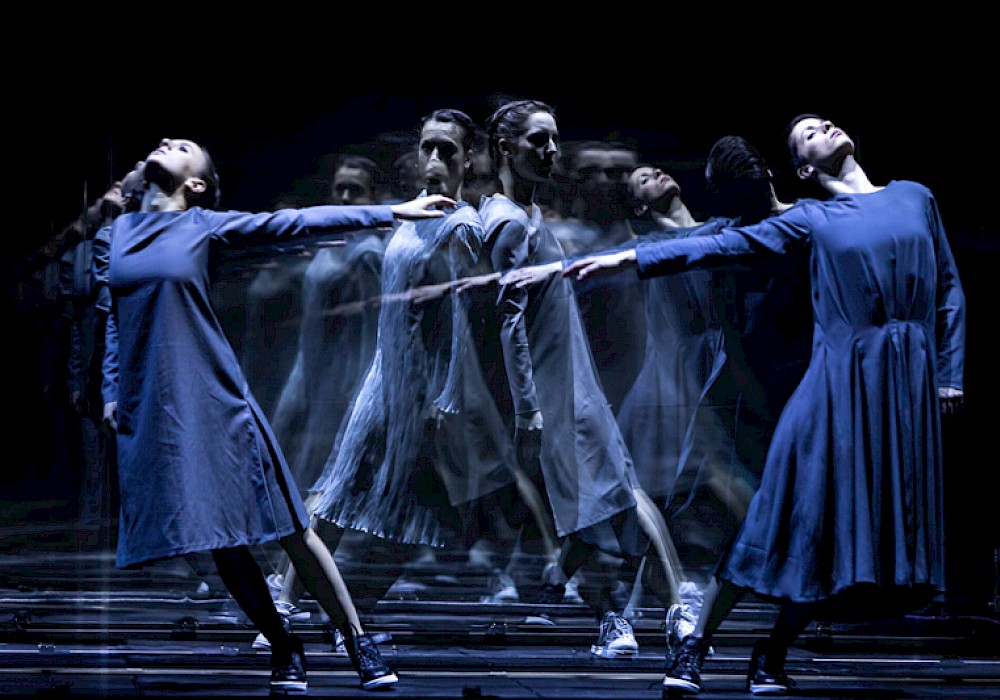
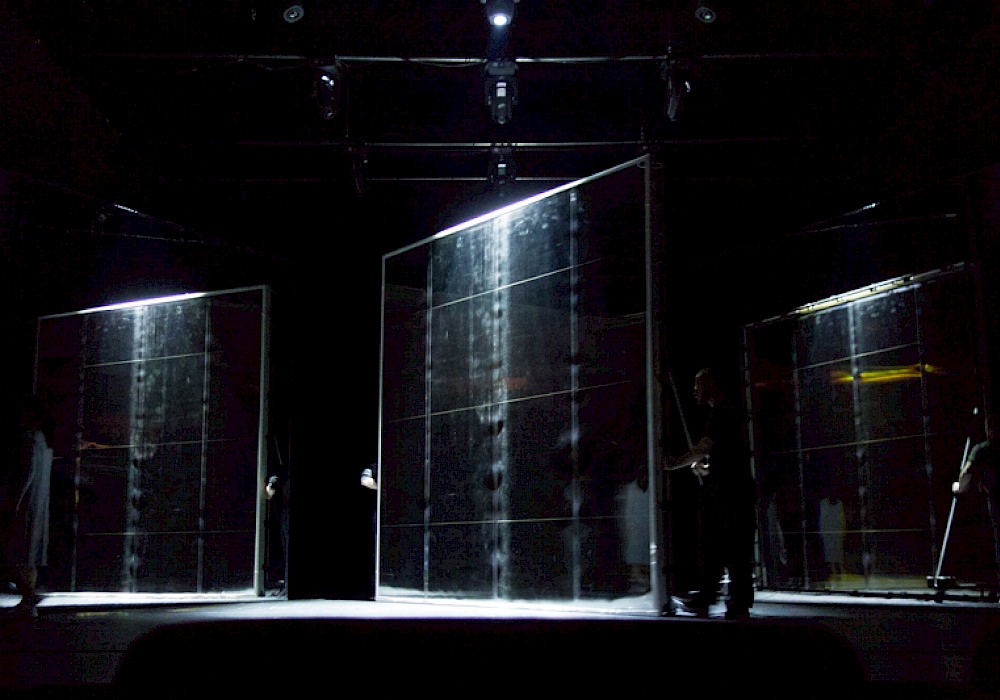
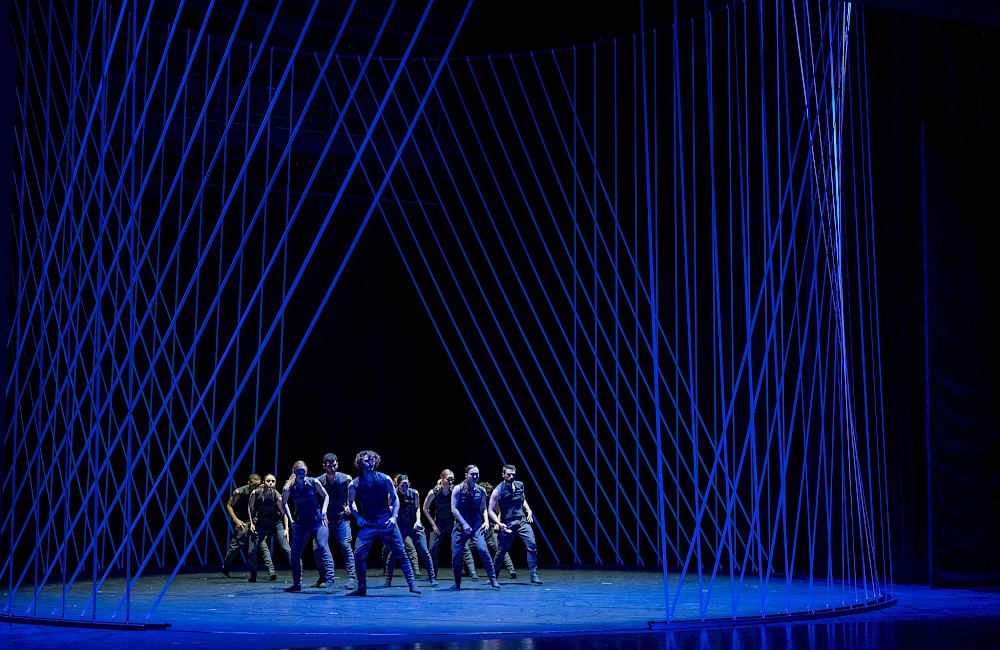
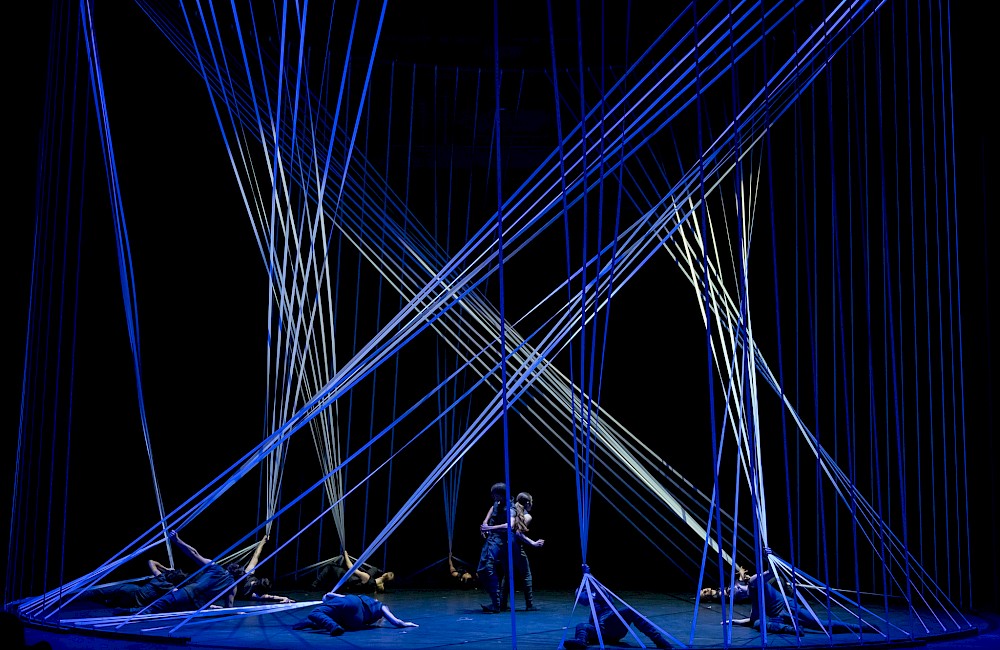
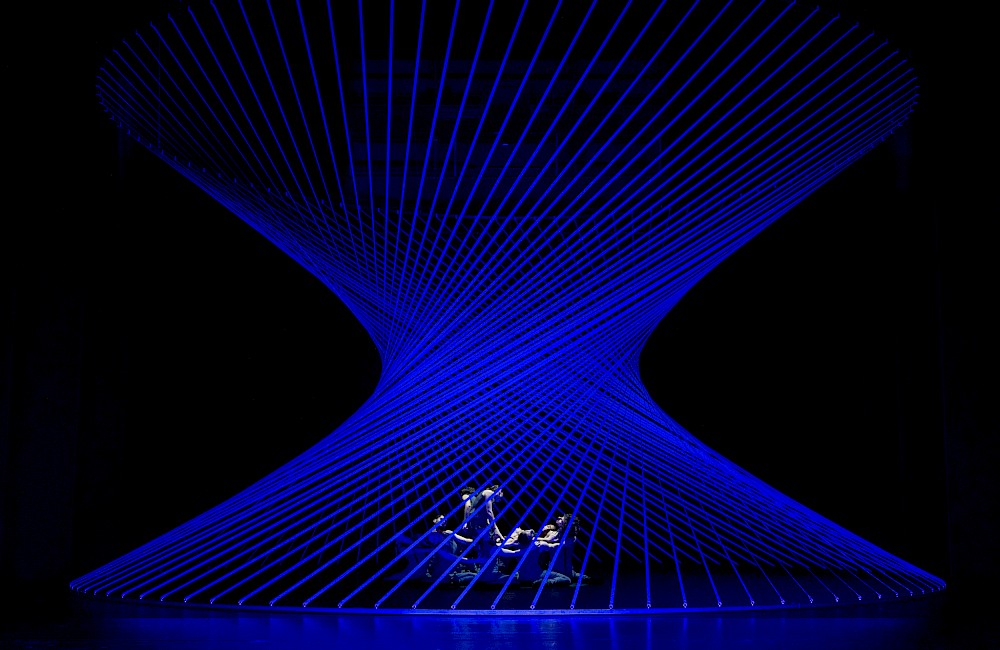
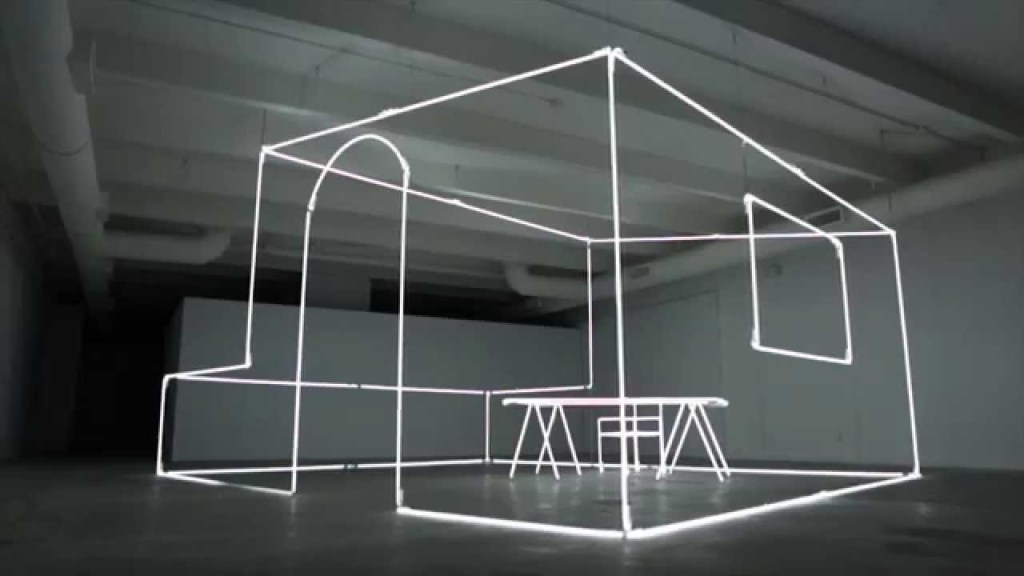
One of the oldest traditions in performing arts is the use of illusion to stage seemingly impossible features, like the Pepper Ghost effect. Magic has charmed and transported audiences for centuries. In the performance Peppers Ghost choreographer Fernando Melo collaborates with visual artist, Yoko Seyama, combineing technology and the use of antique elements like mirrors, reflections, appearance and disappearance to lead the audience on a rhythmic journey of contemporary images.
Choreography: Fernando Melo Music: Dirk P Haubrich Set and Light Design: Yoko Seyama Costume: Jérôme Delbey Artistic Collaborator: Shumpei Nemoto Premiere: 11. March 2017 at Norrdans, Härnösand – Sweden
Cast: Francesco Aversano, Sofia Emanuela Cappelli, Vittoria Carpegna, Peng Chen, Laura Evangelisti, Leonardo Germani, Damien Nazabal, Morgan Perez, Giulia Pizzuto, Giorgio Strano, Prima Tharathep, Madhav Davide Valmiki
Part 1
Choreography: Mauro Astolfi Music: Ben Frost, Peter Gregson and others Set design: Marco Policastro Costumes: Mona Hapke Dramaturgy: Anna-Luella Zahner
Part 2
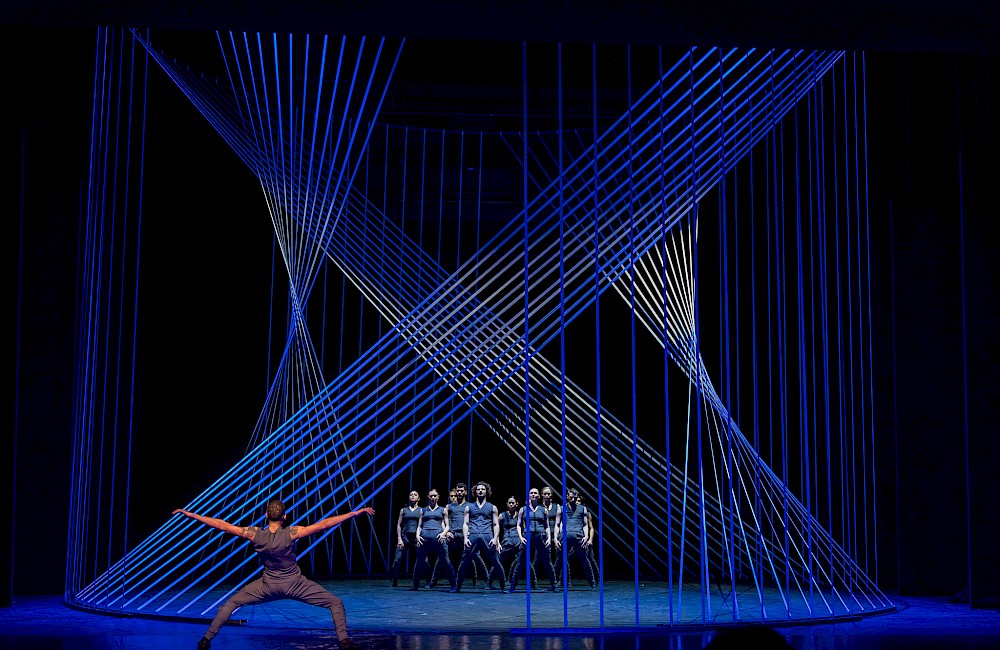
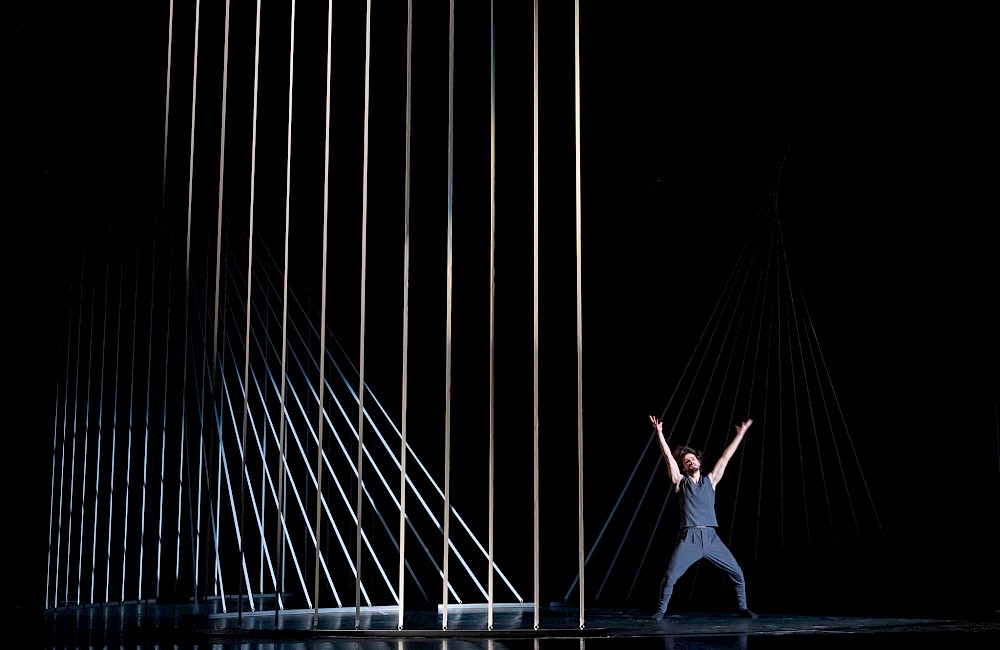
Choreography: Roberto Scafati Composition: Dirk Haubrich Set design: Yoko Seyama Costumes: Rosa Ana Chanzá Dramaturgy: Anna-Luella Zahner
“Featuring a cast that includes two contortionists, an acrobat, a rapper and five dancers, “Synaptic Motion” makes Lomask’s brain sound like a pretty entertaining place to hang out.” — Andrew Gilbert, San Jose Mercury News
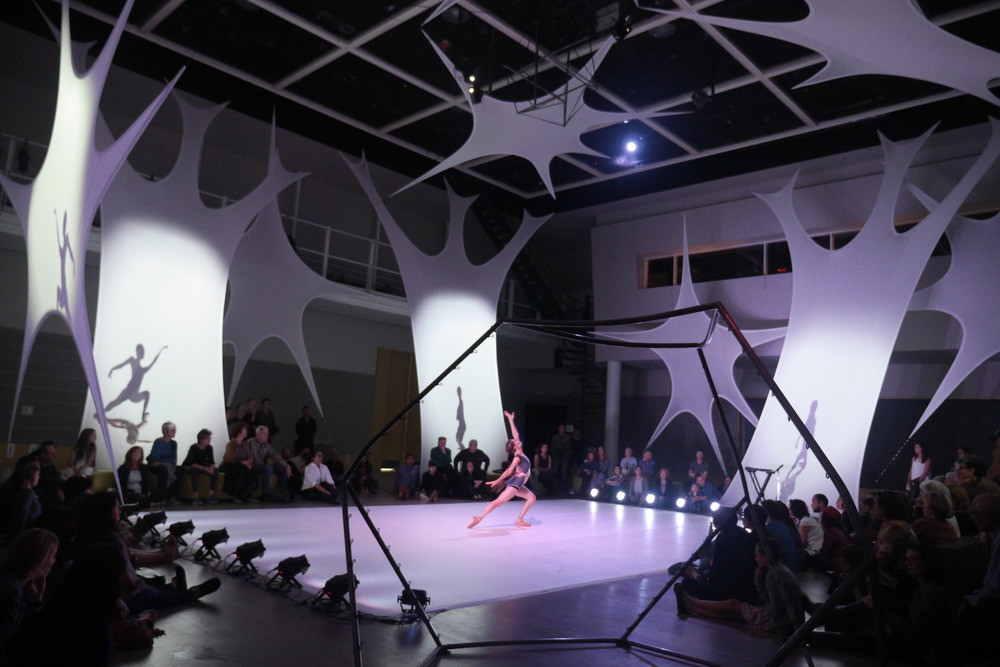
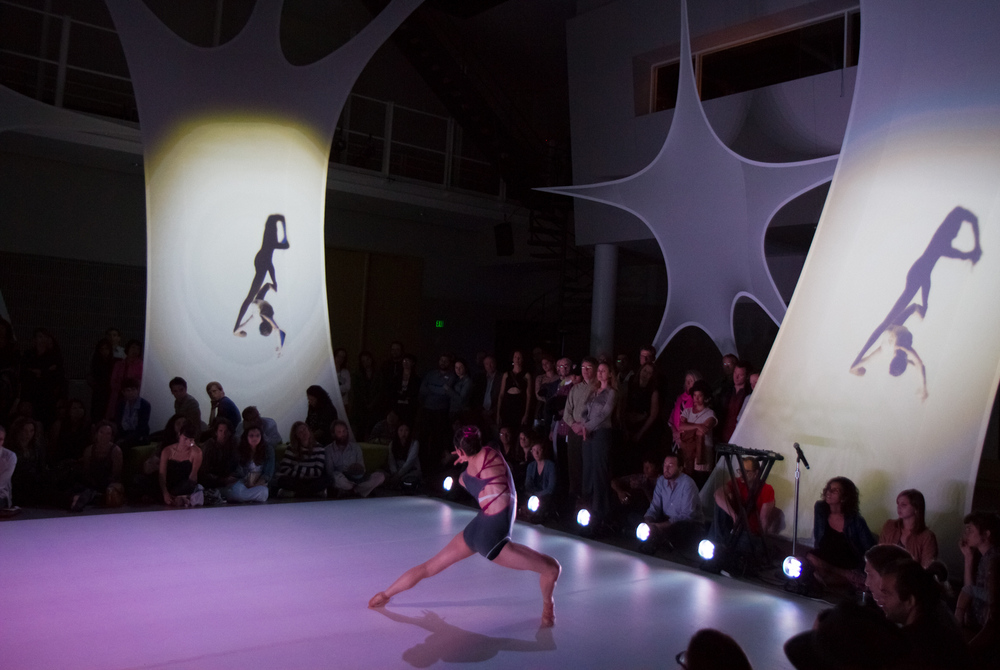
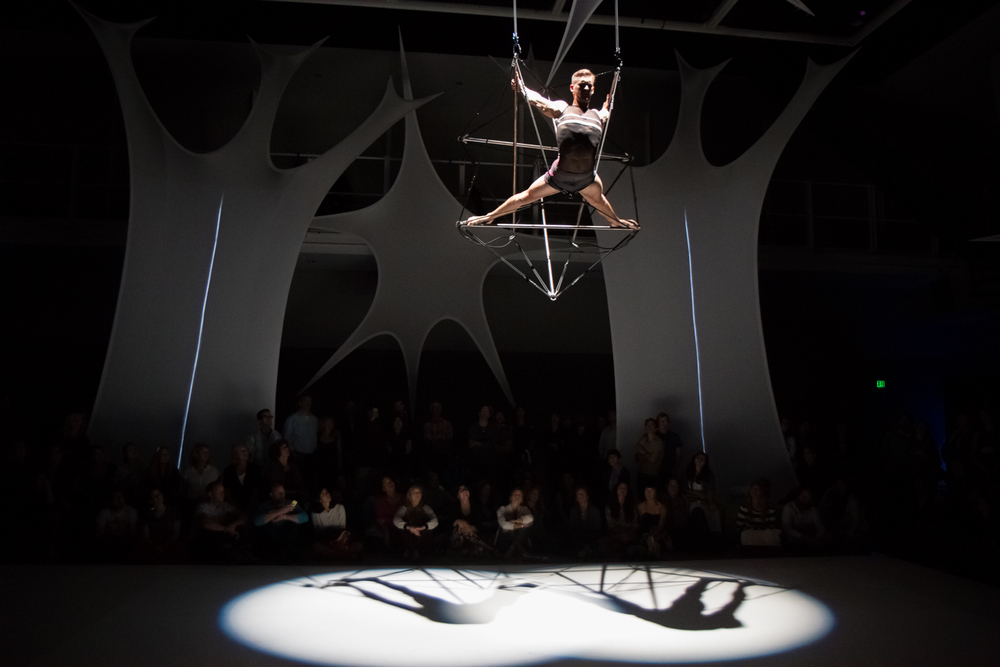
What does the act of creativity look like? San Francisco’s internationally acclaimed science and technology dance company Capacitor tackles this question head-on in the world premiere of “Synaptic Motion.” Conceived and choreographed by Artistic Director Jodi Lomask, this multi-sensory experience is informed by brain scans taken at the UCSF Neuroscape Lab to capture the mind during the act of choreography.
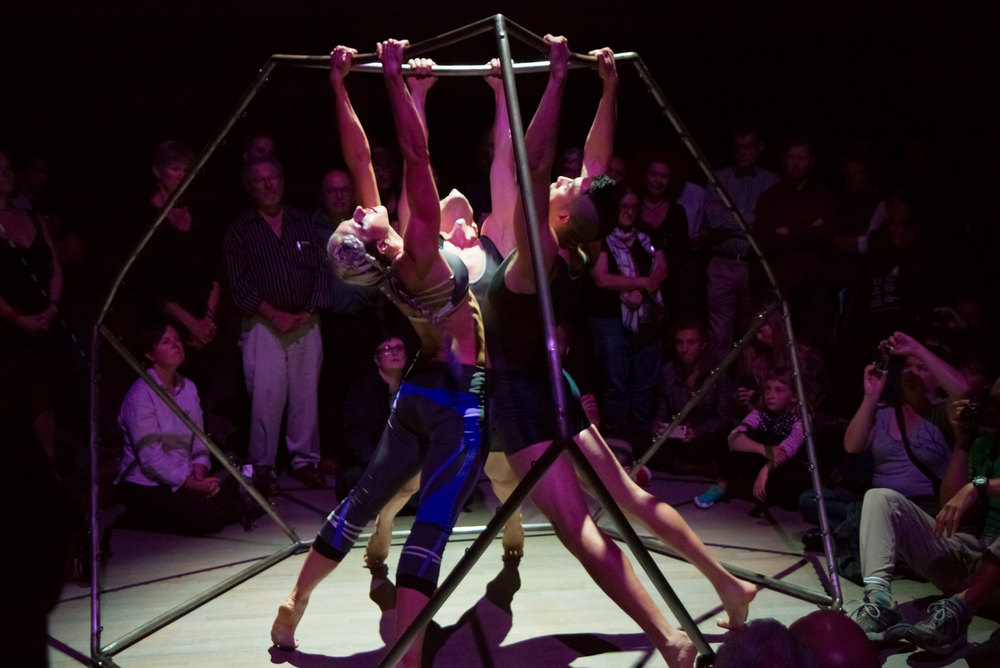
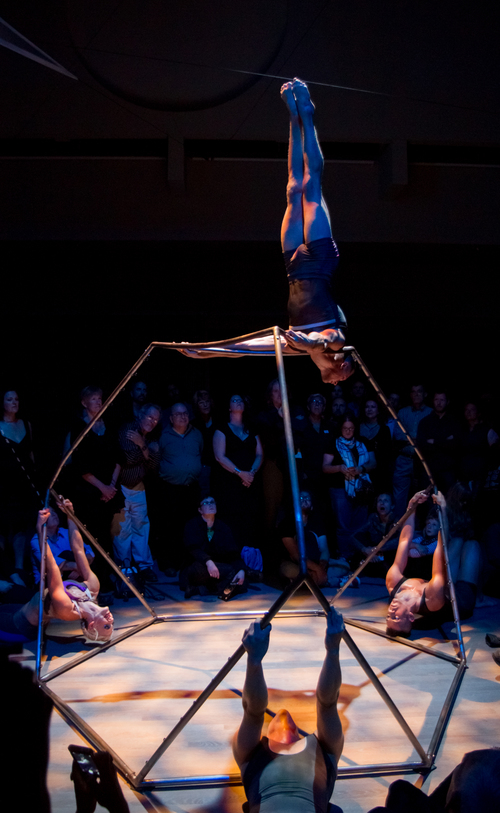
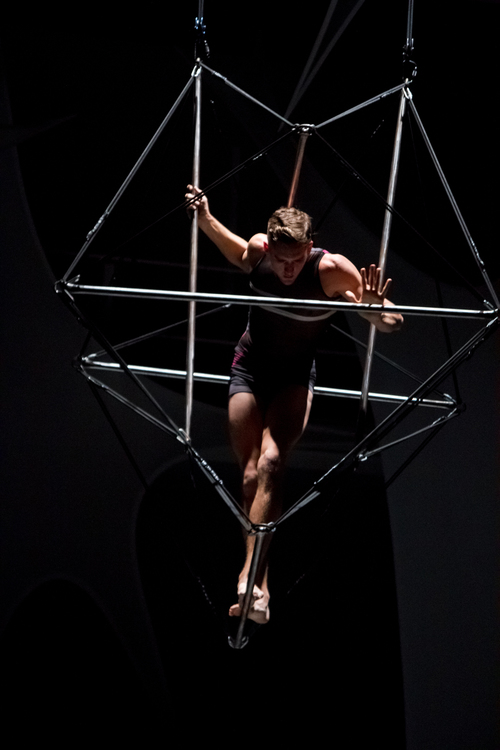
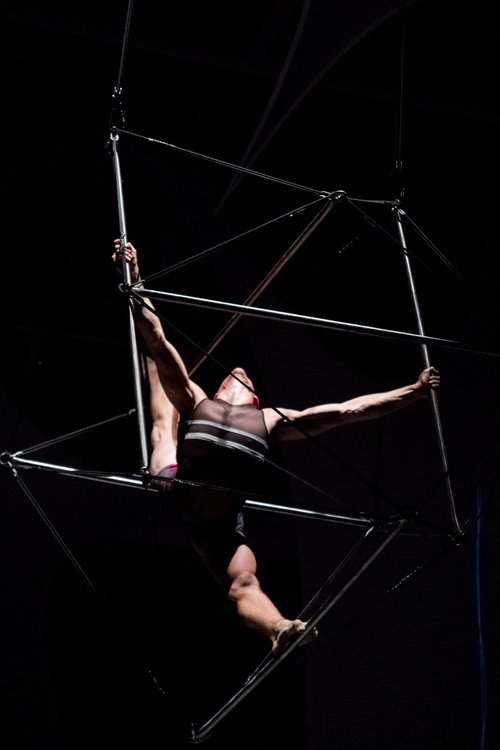
Media collaborators Mary Franck, Wesley Grubbs, and Johan Bichel Lindegaard have transformed this data and more into an immersive visualization of the creative process to the sound of Danish composer Toni Martin Dobrzanski and in a set designed by Erik Walker with lighting FX by William Brinkert. Travel through a larger-than-life neural forest experiencing memories, future self projections, and mirror neurons in action, while Capacitor’s unique cast of dancers, acrobats, contortionists and aerialists challenge notions of the creative process. Let them take you on a trip through multiple states of mind utilizing tensegrity apparatus.







 Time out of Time: